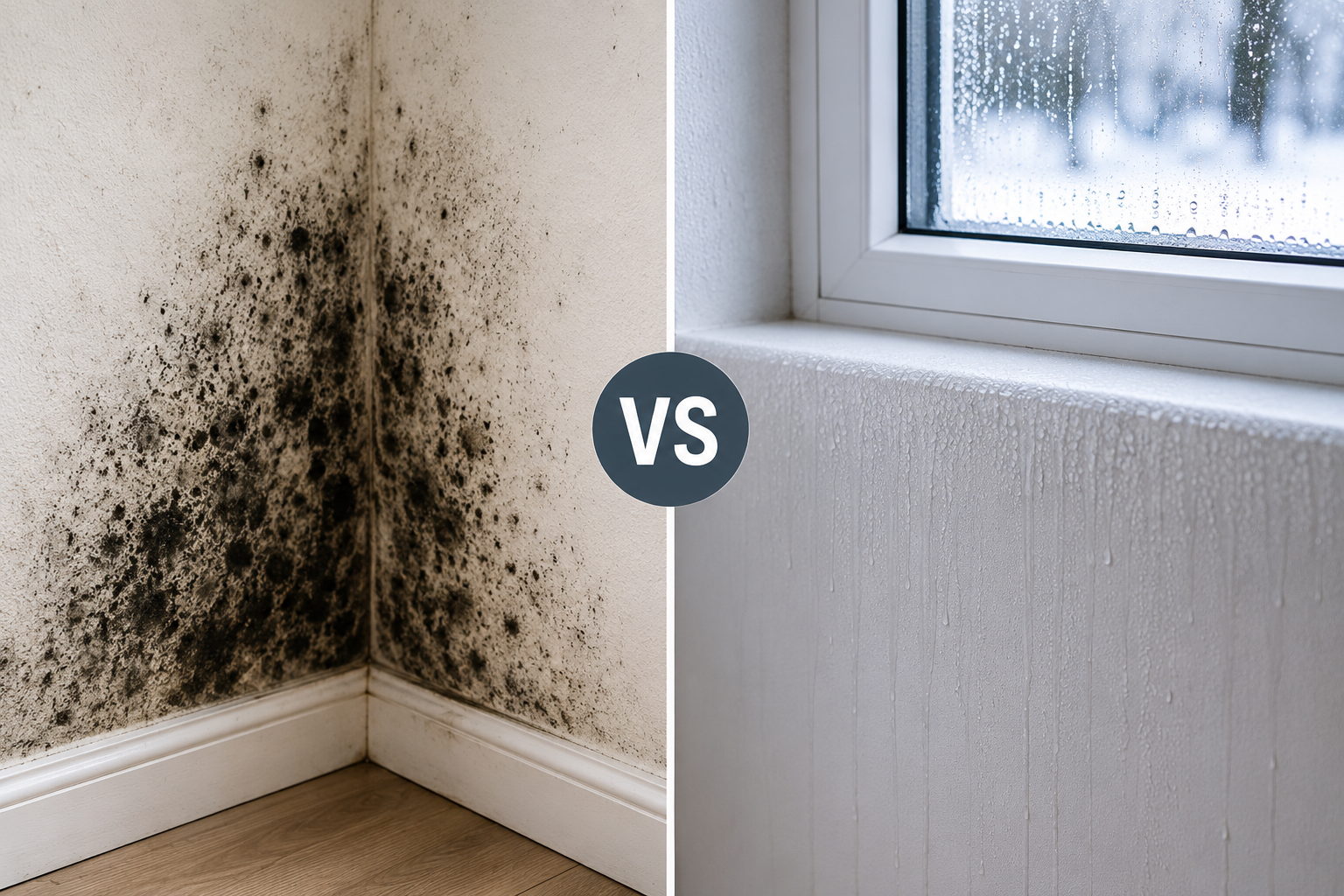
Mould on Walls vs Condensation: How to Tell the Difference
If you are trying to work out mould on walls vs condensation, you are dealing with one of the most common and most confusing moisture questions in a home. A wall can show dark specks, a faint stain, peeling paint, or a patch that feels damp, and it is not always obvious whether you are looking at active mould, condensation marks, old water staining, or a cold surface that keeps collecting moisture.
Quick Answer
The difference between mould on walls and condensation usually comes down to whether you are seeing moisture on a cold surface, recurring growth fed by dampness, or older staining left behind after a wall has already been affected.
Quick Tip
If the wall gets cold and wet in winter mornings, condensation is a strong clue. If the same speckled patch keeps returning after cleaning, mould is more likely.
Important
These problems overlap. Condensation can lead to mould, and older damp staining can sit beside both. The goal is to read the pattern more clearly before treating the wrong issue.
That confusion matters because the right response depends on what the wall is actually telling you. Condensation problems usually point to humidity, airflow, and room drying patterns. Wall mould points to repeated moisture staying long enough for growth to develop. Damp staining may suggest an older leak, a hidden moisture source, or material that has already been affected.
The goal is not to diagnose every wall issue from one photo or one spot. It is to understand the main clues so you can tell the difference more clearly and avoid treating the wrong problem. When people compare mould on walls vs condensation, they are usually trying to decide whether they are seeing surface moisture, recurring growth, or older damp staining. When people compare mould on walls vs condensation, they are usually trying to decide whether they are seeing surface moisture, recurring growth, or older damp staining. When people compare mould on walls vs condensation, they are usually trying to decide whether they are seeing surface moisture, recurring growth, or older damp staining. If you want the bigger diagnosis first, start with what usually causes mold on walls. If the patch still looks lighter and more superficial, compare that with early mildew on walls before you assume the wall is dealing with a broader mold problem.
Mould on Walls vs Condensation: Why People Confuse Them
The confusion usually happens because the visible signs can overlap. A cold wall can collect condensation and later develop mould. A damp wall can show staining without obvious mould. A musty smell can exist before anything dark appears on the surface.
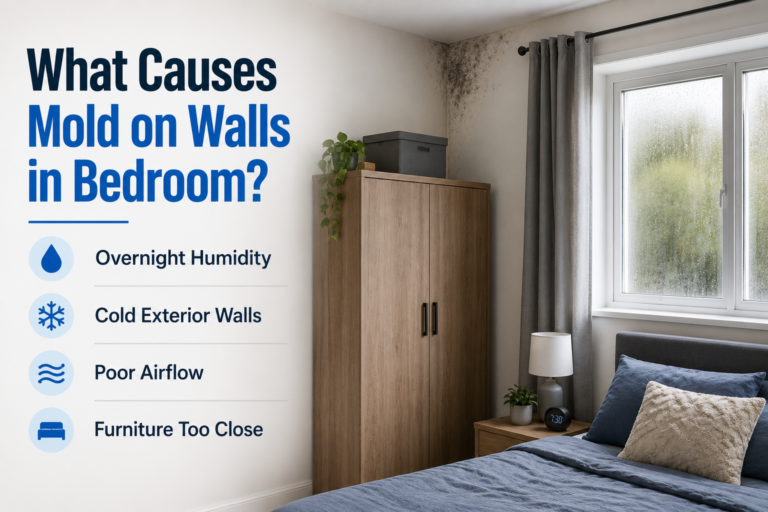
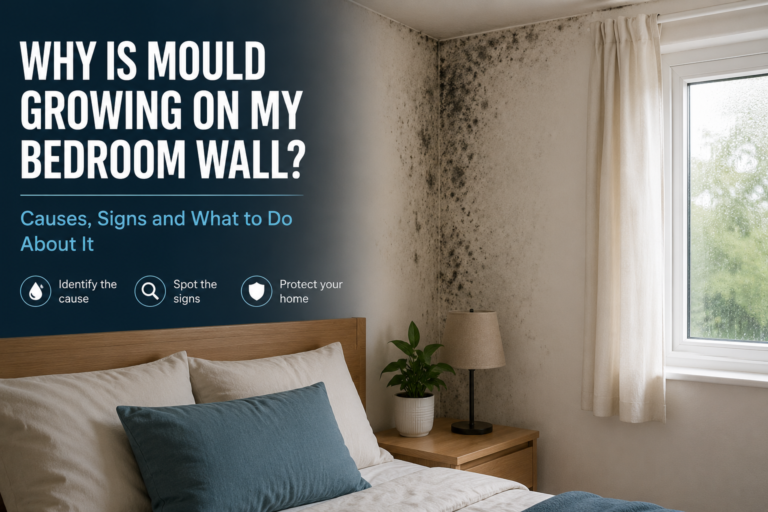
Many homeowners also first notice the problem in winter, in a bedroom corner, or behind furniture. If that sounds like your room pattern, it also helps to read if the mold keeps appearing on a bedroom wall before treating it as a whole-house issue. Those are classic places where both condensation and mould can show up. So the wall does not always give a single obvious answer.
- Does the wall get wet or cold regularly?
- Does the patch return in the same place?
- Is the room humid or poorly ventilated?
- Is the mark flat, spotted, spreading, or stained into the wall?
What condensation on walls usually looks like
Condensation usually starts as moisture on a surface rather than growth inside it. It often appears on cold exterior walls, corners of bedrooms, around windows, behind large furniture, or bathroom walls after steam-heavy use.
The early signs are often subtle. You may notice the wall feels cool and slightly damp. Paint may look patchy or slightly dull. In some cases, you see water droplets or a sheen on the surface. Over time, repeated condensation may leave faint marks or create conditions where mould can develop later.
Condensation itself is usually about the room environment. Warm indoor air meets a colder surface and leaves moisture behind. If that moisture dries quickly, the wall may stay mostly fine. If it returns often and dries poorly, the risk grows.
What wall mould usually looks like
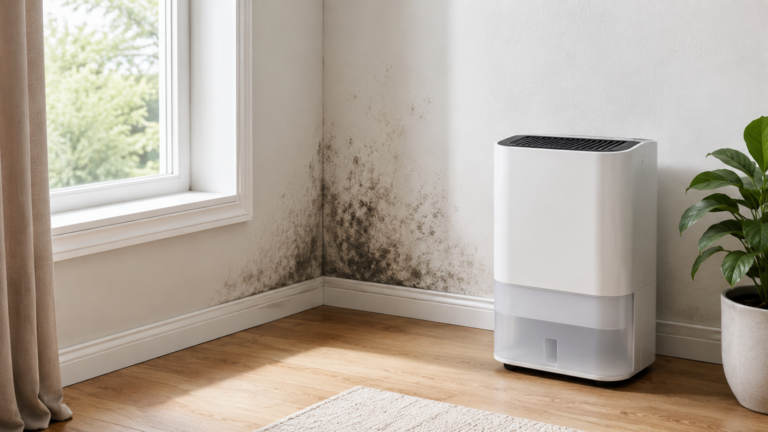
Mould on walls tends to look more like growth than moisture. It may appear as black, green, brown, or grey spotting, clusters or speckles rather than one flat stain, or visible return in the same place after cleaning.
Mould often feels more textured or more clearly there than a simple moisture mark. It also tends to come with other clues: a musty smell, poor airflow, repeated humidity problems, or a surface that stays damp long enough to support growth.
If you are already past the diagnosis stage and thinking about the next step, compare that with whether a dehumidifier can help with wall mold.
How damp staining fits into the picture
Damp staining is where many people get stuck. A stain may be yellowish, brownish, shadowy, or irregular. It may come from an old leak, slow moisture movement inside the wall, repeated wetting and drying, old condensation damage, or a hidden plumbing issue.
Staining does not always mean active mould. It also does not automatically mean the problem is over. A stain tells you the wall has been affected by moisture at some point. The key is figuring out whether the moisture pattern is still active.
If the stain keeps changing, darkening, growing, or feeling damp, it deserves more attention than an old stable mark.
Quick comparison: mould, condensation, or damp staining?
| Sign | More likely condensation | More likely mould | More likely damp staining |
|---|---|---|---|
| Visible water or damp surface | Yes | Sometimes | Sometimes |
| Speckled black or green spots | Less likely | Yes | Less likely |
| Flat yellow or brown mark | Less likely | Sometimes | Yes |
| Worse in winter mornings | Yes | Sometimes | Sometimes |
| Strong musty smell | Sometimes | Often | Sometimes |
| Repeats in same cold corner | Yes | Yes, if long-term | Sometimes |
What to check first in real life
Window-adjacent walls
These are some of the most common condensation zones. If the window gets wet and the nearby wall marks appear during colder weather, condensation is a strong candidate.
Bedroom corners
Closed rooms, overnight humidity, and cold exterior walls often make bedrooms a classic place for condensation-related wall problems.
Bathroom walls
Bathroom steam creates obvious moisture, but the real clue is whether the room dries out fast enough after use.
Walls behind furniture
Low airflow and cooler surfaces make these areas especially prone to condensation and later mould. If you want a more practical next check, try checking wall moisture more carefully or how moisture readings on walls actually work.
When the problem is probably condensation
- it gets worse in winter
- the wall is on an exterior side
- the room feels humid or stuffy
- windows also collect moisture
- the area is behind furniture or in a closed corner
- the marks are more about dampness than visible growth
In these cases, the wall is often reacting to room conditions.
When the problem is more likely mould
- you see clear speckled growth
- the patch returns repeatedly after cleaning
- the area smells musty
- the room stays damp for long periods
- the surface shows repeated spot development, not just a flat stain
That still does not tell you the whole cause, but it does suggest the wall has moved beyond simple occasional condensation.
When to take wall moisture more seriously
- the patch is spreading
- paint is bubbling
- the wall feels soft
- the room has repeated dampness
- the same location keeps changing
- you suspect a hidden leak, not just room humidity
At that point, surface cleaning alone is unlikely to be the full answer. Depending on the pattern, a moisture meter, better humidity control, or closer inspection may help you understand what is active and what is old. In other words, mould on walls vs condensation usually becomes clearer once you follow the wider moisture pattern in the room. In other words, mould on walls vs condensation usually becomes clearer once you follow the wider moisture pattern in the room.
If you are not sure whether you are dealing with condensation, wall mould, or older damp staining, it often helps to step back and look at the room pattern first. The wall usually makes more sense once you understand the moisture around it.
The EPA guide on mold and moisture is useful here because it explains how surface condensation and repeated dampness can lead to wall growth over time.
Frequently asked questions
Is condensation on walls the same as mould?
No. Condensation is moisture collecting on a cold surface. Mould is growth that can appear when moisture stays long enough.
Can condensation turn into mould?
Yes. Repeated condensation can create the kind of damp conditions mould likes.
Is damp staining always a leak?
Not always. It can come from older moisture, repeated condensation, or slow hidden dampness too.
How do I tell if a wall mark is active or old?
Look for change. If it is growing, darkening, damp, or returning in the same place, the moisture pattern may still be active.