Dehumidifier vs Air Purifier for Mold: Which One Helps More?
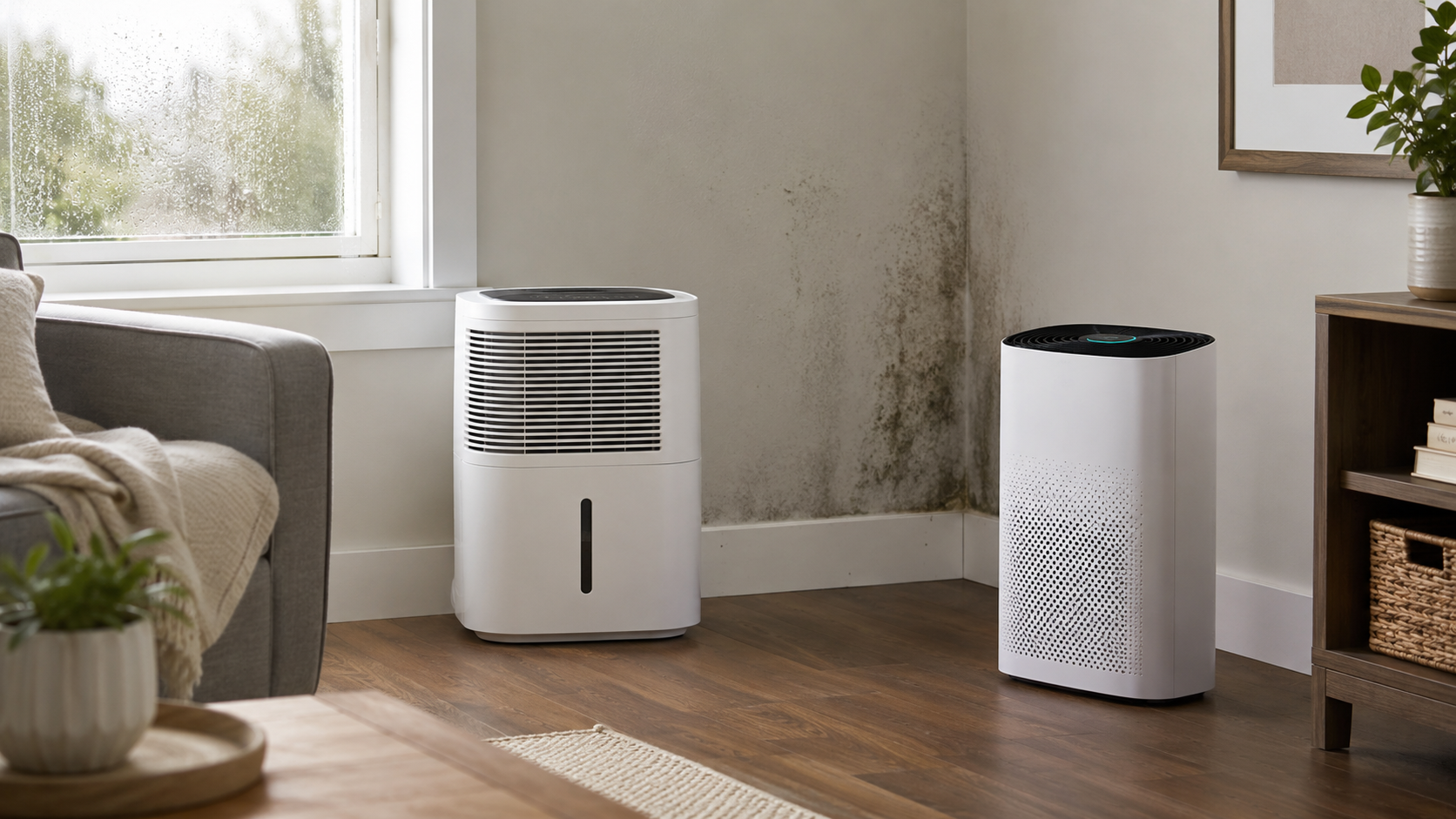
A general air-quality comparison is useful, but dehumidifier vs air purifier for mold is a more specific question.
Quick Answer
If your concern is mold on walls, basement dampness, or repeated condensation, a dehumidifier is usually the more useful first tool. If you want the underlying diagnosis first, it helps to see why mould grows on walls. An air purifier may help with room air feel, but it does not solve excess moisture.
Quick Tip
If surfaces are wet, windows sweat, or a room smells damp, start by thinking about moisture first, not filtration first.
Important
This article is narrower than a general dehumidifier vs air purifier guide. The real question here is not which appliance is better overall. It is which one actually helps more when mold or mold-prone dampness is part of the problem.
Once mold enters the conversation, the choice becomes less about abstract air quality and more about what is actually feeding the room problem.
That is the key difference from a broader dehumidifier-versus-purifier guide. A normal comparison asks what each device does in general. A mold-focused comparison asks which one changes the conditions that allow mold or mold-prone dampness to keep returning.
In most homes, that answer begins with moisture. Mold-friendly conditions usually start with repeated dampness, high humidity, poor drying, or condensation. That is why a dehumidifier often does more as a first response. An air purifier can still play a role, but it usually supports the environment after you understand the moisture pattern rather than replacing moisture control.
Before you assume it is mold
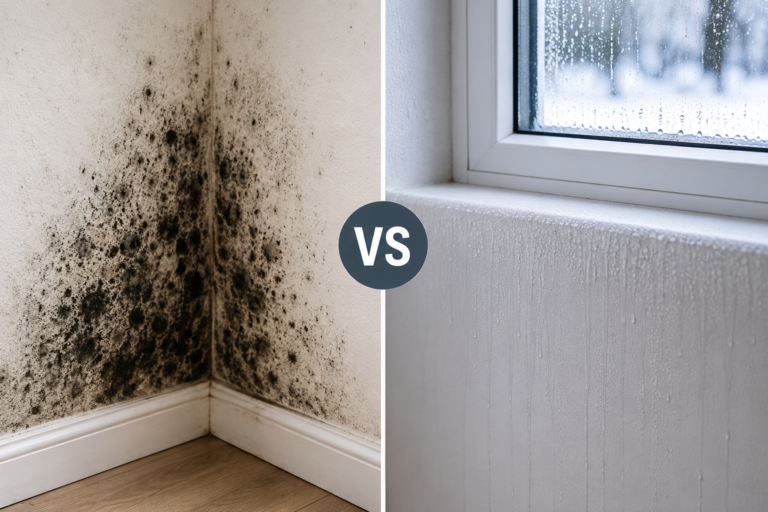
A musty smell or a dark patch on a wall does not always mean active mold is the full story. Condensation, trapped moisture, poor airflow, old stains, or damp materials can create similar warning signs. If the room has a broader dampness story, it can also help to step back and look at basement moisture problems or other room patterns first.
It usually makes sense to look at the wider pattern first: where the smell is strongest, when it gets worse, whether humidity stays high, and whether the surface is actually damp.
Dehumidifier vs air purifier for mold: why the comparison changes
If your room issue is simply dust or stale air, the purifier conversation is fairly straightforward. But mold-related conditions add another layer. The concern is not only how the air feels. It is also why the room keeps staying damp enough to support odor, repeated spots, or mold-prone surfaces.
That means the first question is no longer, Which machine cleans the air better? It becomes, Which machine changes the actual room conditions feeding the problem?
That shift usually points toward the dehumidifier when the room is damp, clammy, or condensation-prone.
What a dehumidifier helps with in mold-related situations
A dehumidifier lowers moisture in the air. That matters because moisture control affects how long surfaces stay damp, whether windows sweat, how quickly corners dry, and whether the room keeps feeling heavy or musty.
- damp basements
- bedrooms with overnight condensation
- rooms with repeated stale or clammy air
- spaces where mold-prone corners keep returning
- lower levels where drying is slow
In these rooms, the machine is not a magic mold fix. But it can reduce one of the most important conditions that allows mold-friendly patterns to keep repeating.
What an air purifier helps with in mold-related situations
An air purifier helps with room air handling. That can matter for comfort, stale-feeling air, and general particle reduction. But it does not dry walls, stop condensation, or reduce the moisture that keeps surfaces vulnerable.
This is why an air purifier often makes more sense as a second-step or support appliance in mold-related discussions rather than the first answer to a damp room.
If a room already feels dry enough but still needs better air handling, the purifier becomes more relevant. But when the room smells damp and behaves damp, moisture control should usually come first.
When an air purifier may not be enough
An air purifier may help with particles in the air, but it does not remove excess moisture from the room. If mold keeps returning, windows stay wet, or the air feels damp day after day, the issue may be humidity control rather than air cleaning alone. If you want the full comparison branch, read dehumidifier vs air purifier for broader air-quality differences.
In other words, cleaner air and drier air are not always the same thing.
Real home examples
Basement smell and dampness
If a basement smells musty and feels heavy, a dehumidifier is usually the more useful first step. The room likely needs drier air more than filtered air.
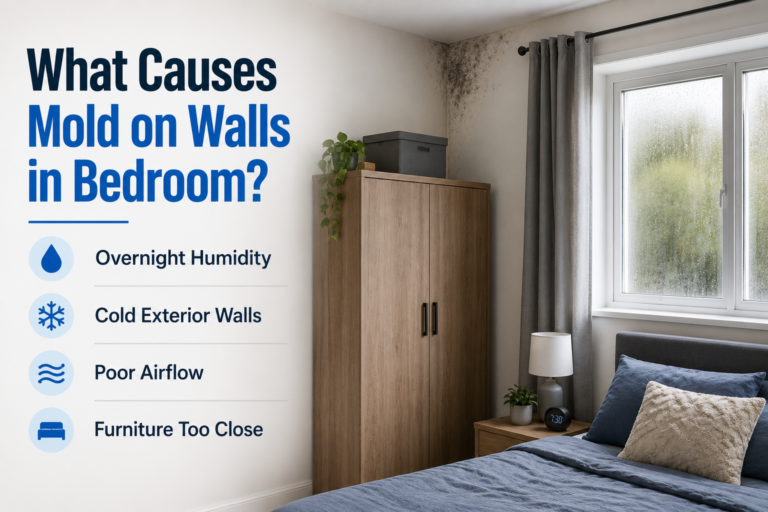
Bedroom condensation and wall mold
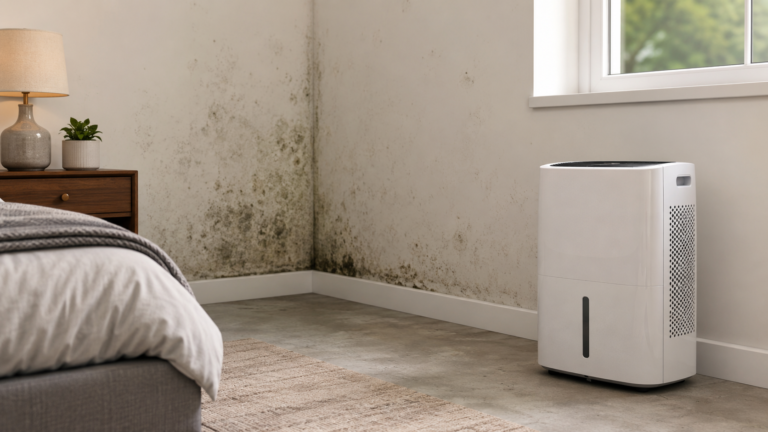
If the bedroom windows sweat overnight and mold-prone spots keep appearing near an exterior wall, a dehumidifier often addresses the room pattern more directly.
Musty room with no visible mold
This one depends on the room. If the smell is tied to damp air, humidity control comes first. If the room is dry but still stale, purification may help more.
Bathroom humidity and mold-prone corners
If the bathroom stays wet too long, a dehumidifier may help in some situations, but airflow and ventilation habits still matter heavily. A purifier is rarely the first answer there.
Which one should come first
- damp
- clammy
- musty
- condensation-prone
- slow to dry
An air purifier becomes more useful first when the room is not especially damp but still feels stale, dusty, or in need of better filtration.
If the room has both issues, the smarter first step is often whichever problem is easiest to prove. Wet surfaces and damp air point strongly toward moisture control. If the concern is more specific, you can also see whether a dehumidifier can help with wall mold, compare that with a basement-focused unit, or check whether recurring mold is really a humidity problem.
Common buying mistakes
- Buying a purifier for a clearly damp room
- Assuming a dehumidifier removes mold directly
- Treating all mold-related concerns as the same
Mold-related appliance decision checklist
| Room symptom | Better first tool |
|---|---|
| Wet windows and damp air | Dehumidifier |
| Musty basement | Dehumidifier |
| Stale but not damp bedroom | Air purifier may help more |
| Mold-prone wall corners with humidity | Dehumidifier |
| Cleaner-feeling air after moisture is controlled | Air purifier |
Next step
If mold is part of the concern, the most useful next step is usually to understand whether moisture, airflow, or air quality is driving the problem most strongly. Once that is clearer, the right tool becomes easier to judge.
If mold is part of the reason you are comparing appliances, start with the room’s moisture behavior. Once you know whether the problem is mainly dampness or mainly stale air, the product choice becomes much clearer. For a filtration-first angle, it can also help to compare that with best air purifier choices for mold-related concerns.
Frequently asked questions
Which helps more with mold, a dehumidifier or an air purifier?
Usually a dehumidifier, because mold-friendly conditions are mainly driven by moisture.
Can an air purifier remove mold from walls?
No. It does not dry or repair wall surfaces.
Should I buy both?
Sometimes, but if the room is clearly damp, a dehumidifier usually deserves priority.