Can a Dehumidifier Help With Mold on Walls?
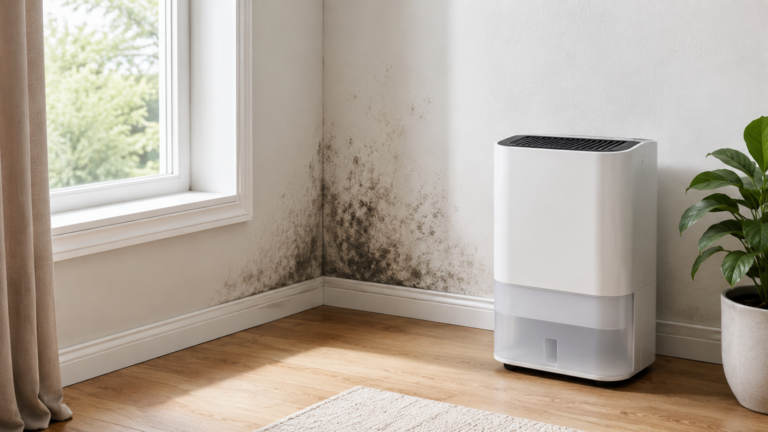
When people ask can a dehumidifier help with mold on walls, they are usually trying to decide whether the room problem is really about humidity or whether the wall needs more direct attention.
Quick Answer
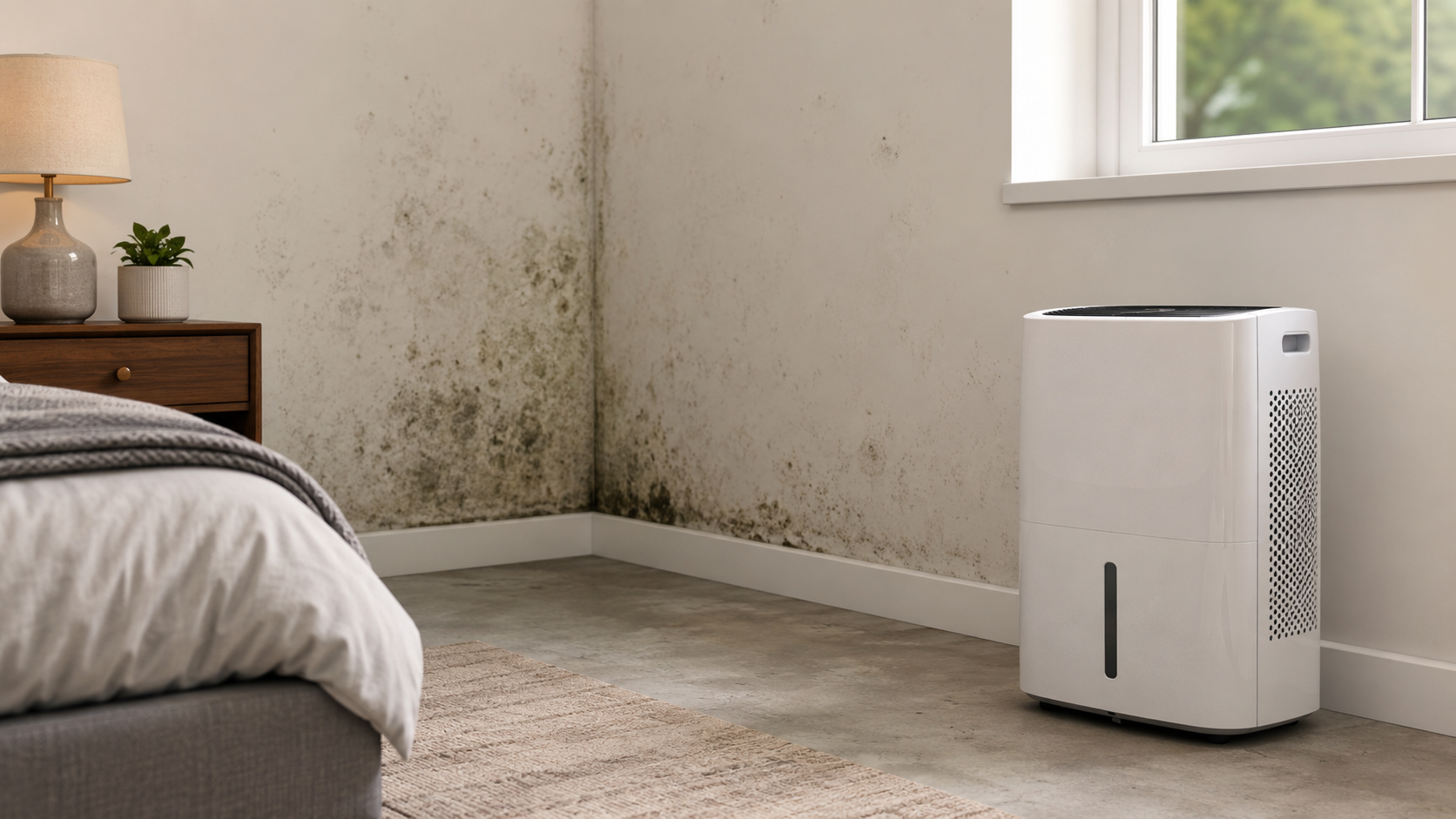
A dehumidifier can help if wall mold is being fed by high indoor humidity, condensation, or damp air, but it will not remove existing mold by itself or fix leaks and damaged materials. In most homes, it helps most when the goal is to keep humidity below 60%, and ideally around 30% to 50% when realistic.
Quick Tip
If the wall gets condensation, the room feels damp, or windows sweat often, a dehumidifier is more likely to help than if the wall has a known plumbing or structural leak.
Important
This article is different from a general wall mold causes guide. The question here is specifically whether humidity control is likely to change the problem enough to matter.
That is a very practical question, because buying a dehumidifier can help a lot in some homes and do very little in others.
The key is understanding how the mold developed. Wall mold often grows because the surface stays damp repeatedly. But the reason it stays damp matters. If the wall is collecting condensation, sitting in a humid room, or drying too slowly because of poor airflow, a dehumidifier can often help by improving the conditions around it. If the wall is wet because of a leak or repeated direct water entry, the dehumidifier becomes a support tool at best, not the main answer.
That distinction is what makes this article different from a broader wall mold guide. We are not asking why mold exists in theory. We are asking when a humidity-control product genuinely helps enough to be worth considering.
When a dehumidifier may help
A dehumidifier can be useful when the main issue is damp indoor air, persistent condensation, or a basement that never seems to fully dry out. It may also help if musty smells get worse after rain, during humid weather, or in rooms that already feel heavy and stale. If the moisture source is bigger than one patch, it also helps to understand common basement moisture problems or related room-wide patterns.
That said, a dehumidifier works best as part of a bigger moisture-control approach. If water is getting in through leaks, cracks, or drainage problems, lowering humidity alone may not solve the root cause.
Can a dehumidifier help with mold on walls when humidity is the cause?
A dehumidifier is most useful when the mold-prone wall is part of a room-wide moisture pattern. Common clues include:
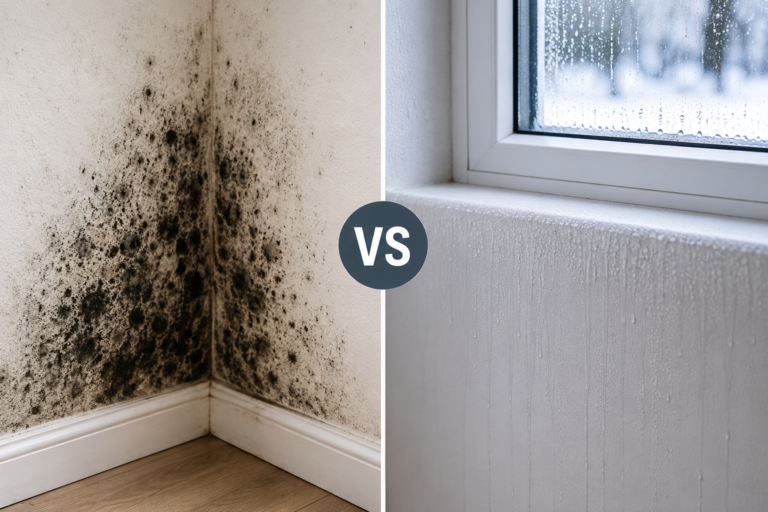
- windows that sweat
- heavy or clammy room air
- repeated damp corners
- mold near cold exterior walls
- moisture problems that worsen in humid weather
- slow drying after normal daily use
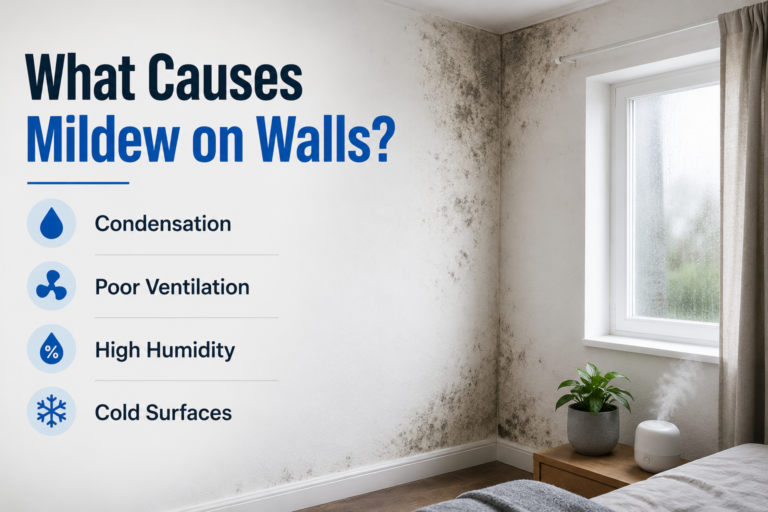
In these situations, a dehumidifier helps by reducing excess moisture in the air. That can lower condensation, shorten drying time, and make it harder for the same wall area to stay damp often enough to support recurring mold.
When it probably will not be enough
- there is an active plumbing leak
- the wall is being fed by outside water entry
- paint is bubbling because moisture is inside the wall
- the material feels soft or visibly wet
- the same area keeps getting soaked rather than simply staying humid
In those cases, lowering room humidity may make the space feel better, but it will not remove the water source driving the wall problem.
Practical examples
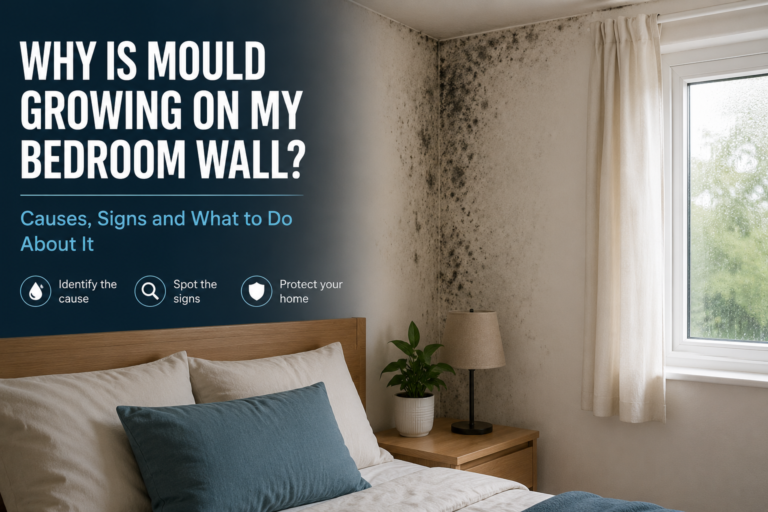
Bedroom wall mold near windows
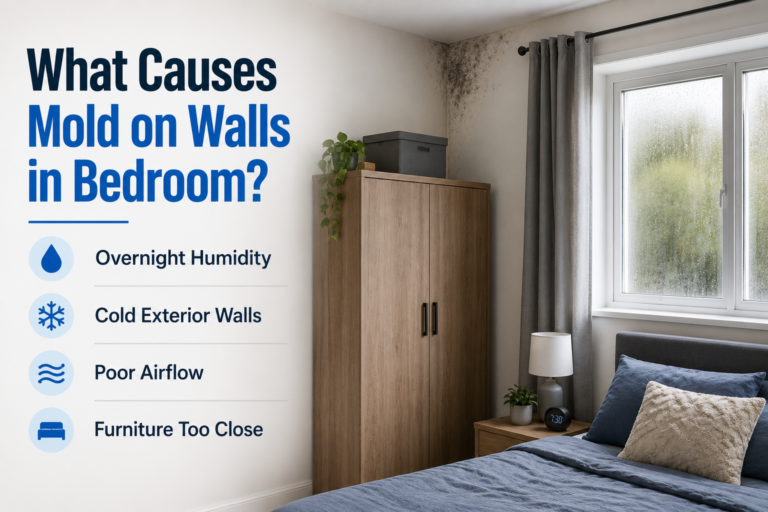
If mold keeps returning on the wall beside a bedroom window and that room gets overnight condensation, a dehumidifier may be very relevant. The room itself is likely part of the problem.
Basement wall dampness
This is why basement humidity can support mold even before water is visible, especially when walls stay cool and air movement is weak.
A basement wall that smells damp or feels clammy may improve if overall basement humidity comes down. Basements are one of the best examples of a room-wide moisture environment affecting wall behavior.
Exterior wall behind furniture
This is often an airflow and condensation problem. If the room is humid and the furniture blocks drying, humidity control plus better spacing may help more than people expect.
Bathroom-adjacent wall moisture
This depends on whether the dampness comes from steam-heavy room conditions or a hidden plumbing issue. The pattern matters.
What to check before buying
- Does the room feel humid overall?
- Are there condensation clues?
- Is the wall on an exterior side?
- Does the problem get worse in certain seasons?
- Is there a known leak?
- Does furniture block airflow near the wall?
If the room clearly behaves like a humidity problem, the dehumidifier is more likely to help. If the wall behaves like an isolated water-entry problem, the source deserves more direct attention first.
When an air purifier may not be enough
An air purifier may help with particles in the air, but it does not remove excess moisture from the room. If mold keeps returning, windows stay wet, or the air feels damp day after day, the issue may be humidity control rather than air cleaning alone. If you are still comparing devices, it is useful to see when an air purifier is not enough for mold.
In other words, cleaner air and drier air are not always the same thing.
Common mistakes people make
- Expecting the dehumidifier to remove the mold
- Ignoring room clues
- Using humidity control instead of fixing a leak
- Leaving furniture tight against a cold wall
Wall mold humidity checklist
A dehumidifier can help control humidity, but it is still important to recognize early wall mold signs so the moisture source is not missed.
| Question | Why it matters |
|---|---|
| Does the room feel damp? | Supports humidity as a cause |
| Do windows condense? | Strong room-moisture clue |
| Is the wall exterior-facing? | Higher condensation risk |
| Is there a known leak? | Product alone is not enough |
| Is airflow blocked? | Drying may stay poor even with lower humidity |
Next step
If mold is part of the concern, the most useful next step is usually to understand whether moisture, airflow, or air quality is driving the problem most strongly. Once that is clearer, the right tool becomes easier to judge.
If wall mold seems tied to damp room conditions rather than direct water entry, a dehumidifier may be a smart next step. The more clearly you understand the room pattern, the better that decision tends to work out. And if mold keeps returning after cleaning, it is worth treating recurrence as its own moisture question. It also helps to step back and review what usually causes mold on walls in the first place and, in lower-level spaces, whether to compare that with a basement-focused unit.
If you are still asking can a dehumidifier help with mold on walls, the EPA mold and moisture guide is worth reading because it explains why controlling indoor dampness matters most when humidity is part of the problem.
Frequently asked questions
Can a dehumidifier remove mold from walls?
No. A dehumidifier can help reduce the moisture that supports mold, but it does not remove mold that is already growing on the wall.
What humidity level helps prevent wall mold?
In most homes, wall mold becomes less likely when indoor humidity is kept below 60%, and preferably closer to 30% to 50% when the room can realistically stay there. For a broader reference point, see best basement humidity level and, if you want the threshold logic in more detail, what humidity level causes mold in basement.
Should I clean mold before using a dehumidifier?
Usually yes. Cleaning the visible mold and lowering the humidity work better together than relying on the machine alone.
Will a dehumidifier help if the wall mold comes from a leak?
Not by itself. If a leak is feeding the wall, the water source still needs to be addressed.