Mold Around Windows: Causes and Fixes
If you notice mold around windows, the first instinct is often to clean it and move on. That is understandable, especially when the patch looks small or seasonal. But mold around a window is rarely only a cleaning issue.
Quick Answer
If you have mold around windows, the most common cause is repeated moisture on or near the frame. That usually comes from condensation, trapped humid air, poor drying, or sometimes a leak around the window area.
Quick Tips
- Window mold is often a condensation issue first.
- Blinds and curtains can trap moisture against the glass and frame.
- Morning moisture patterns are especially useful clues.
- Cleaning helps, but stopping the moisture is what keeps mold away.
Why mold grows around windows
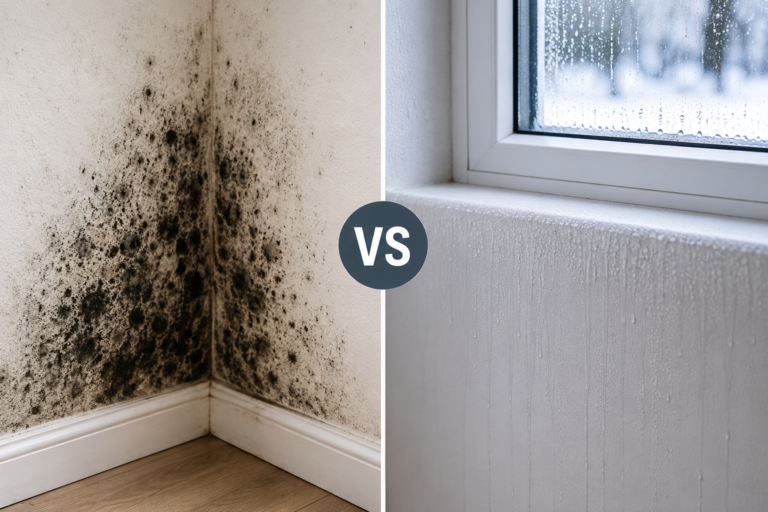
A window combines several things mold likes: cooler surfaces, repeated condensation, low airflow behind blinds or curtains, and nearby painted or wooden materials that stay damp too long.
Signs the problem is getting worse
- Condensation appears often on the same window
- The sill stays damp or wet after moisture appears
- Spots keep coming back in the same corners
- The area starts smelling stale or musty
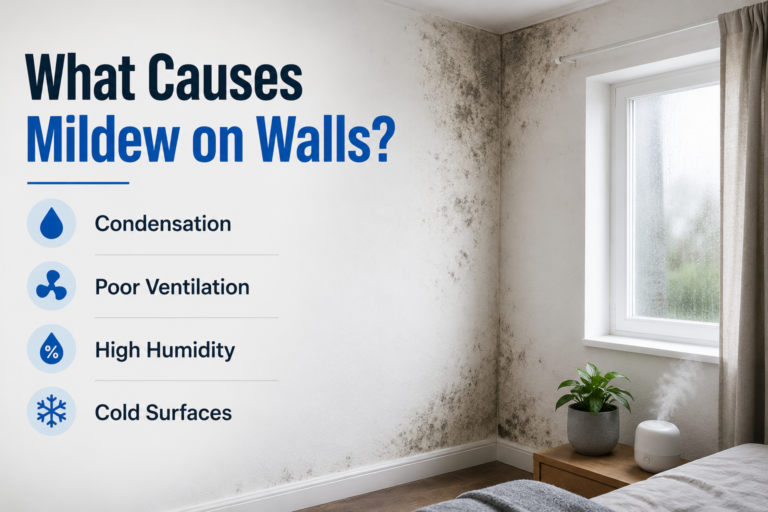
Common causes of mold around windows
- Indoor humidity is too high
- Poor airflow around the window
- Repeated overnight condensation
- Small leaks around the frame
| Check | What to look for | Why it matters |
|---|---|---|
| Glass | Frequent morning moisture | High humidity clue |
| Sill | Dampness or pooling | Mold-friendly surface |
| Corners | Recurring spots | Common condensation area |
| After rain | Different moisture pattern | Possible leak clue |
What to do first
Observe the pattern before treating it as purely cosmetic. Check whether the glass is wet in the morning, whether the mold is worse at the bottom corners, and whether the problem is seasonal or weather-linked.
Mistakes people make
- Cleaning the mold but not the moisture source
- Leaving water on the sill repeatedly
- Assuming the window itself is always the only problem
- Ignoring the fact that only one room may be affected
Important
The earlier you treat mold around windows as a moisture issue rather than a small cosmetic nuisance, the easier it usually is to manage.
What can happen if you ignore it
Frames can stay damp, paint can suffer, nearby walls may stain, and the smell can become more noticeable than the patch itself.
Useful follow-ups are Why Do My Windows Sweat?, How to Stop Condensation on Windows Overnight, and What Causes Mold on Walls and How to Prevent It.
Frequently asked questions
Is mold around windows always from condensation?
Not always, but condensation is one of the most common reasons.
Why is it worse in winter?
Because the glass is colder and more likely to collect moisture from indoor air.
Can I just clean the mold off?
You can clean the visible patch, but if the moisture pattern stays the same it often comes back.
Should I worry if only one window has mold?
Yes, because that often points to a room-specific airflow or humidity issue.
Need to understand the condensation pattern first?
If the same window keeps getting wet and mold-prone, the lasting fix usually starts with the moisture pattern feeding it.