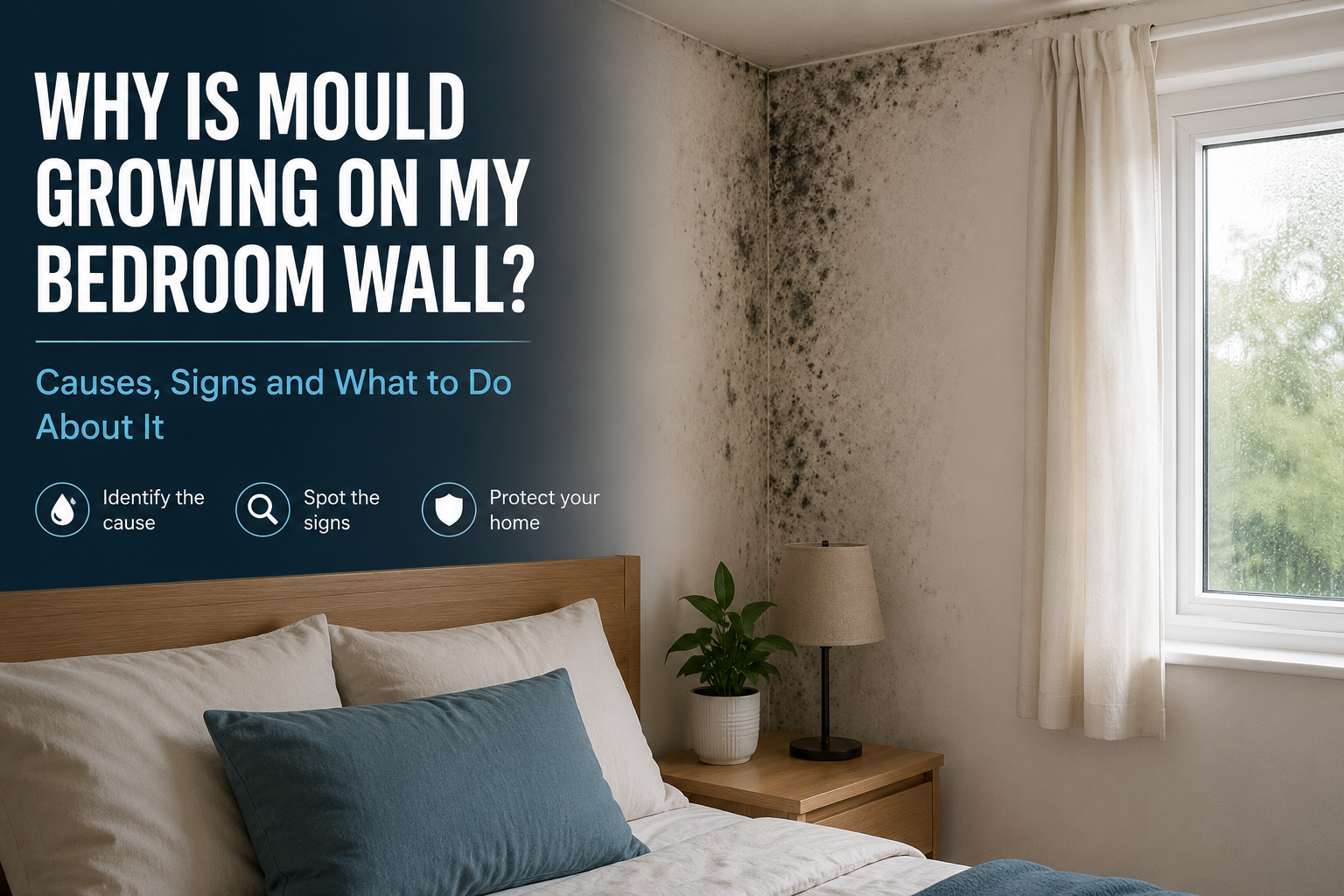
Why Is Mould Growing on My Bedroom Wall?
If you are asking why is mould growing on my bedroom wall, the room itself is often a big part of the answer. Bedrooms behave differently from most other rooms in the house. They stay closed for long hours, they collect moisture overnight, and they often have cooler walls, tighter furniture layouts, and less active ventilation than kitchens or living rooms.
That is why bedroom wall mould can appear even in homes that otherwise feel fairly normal. The wall is not always the only problem. Sometimes it is just the first place the room shows that humidity, condensation, or poor airflow have been building up in the wrong way.
The most useful approach is not to assume the wall is bad on its own. It is to look at the full room pattern and ask why this particular wall is staying damp enough for mould to return. In US searches, the same issue is often described as mold growing on bedroom wall surfaces, but the room clues are usually the same. In US searches, the same issue is often described as mold growing on bedroom wall surfaces, but the room clues are usually the same.
Severity Box
- 🟢 Low Risk -> light spotting, clear winter pattern, improves with airflow
- 🟠 Moderate Risk -> repeated return, stale room, clear condensation clues
- 🔴 High Risk -> spreading patch, soft wall, bubbling paint, or persistent dampness
Why bedrooms are so prone to hidden moisture
Bedrooms are moisture traps more often than people realize. Doors stay shut. Curtains stay closed. Airflow is weaker. People spend hours sleeping there, which adds moisture to the air. If the room has an exterior wall or a condensation-prone window, that moisture has a natural place to collect.
This is why bedroom wall mould often shows up in corners, behind furniture, or beside windows rather than in the center of a warm, open wall. If you keep wondering why mould is growing on your bedroom wall, those colder and less ventilated spots are usually the first places to check.
Why is mould growing on my bedroom wall? The most common reasons
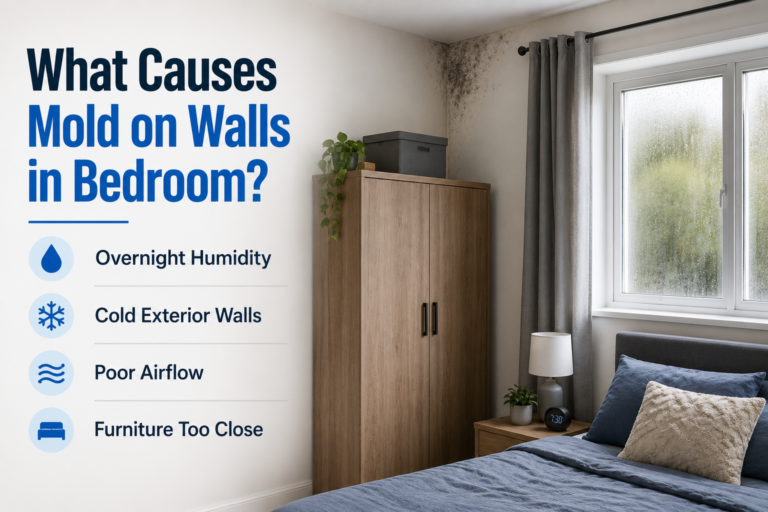
Overnight humidity
Bedroom humidity usually rises overnight because the room is closed and moisture from breathing stays trapped longer than it would in a larger open space. That may not cause obvious condensation every night, but over time it can make a wall more vulnerable.
Cold exterior walls
A bedroom wall that faces outside is more likely to stay cool, especially in winter or damp weather. That makes it easier for moisture in the room to settle on the wall surface.
Furniture blocking airflow
Beds, wardrobes, and dressers placed tightly against cold walls create one of the most common bedroom mould patterns. The wall gets less air, dries more slowly, and quietly becomes a problem zone.
Window condensation nearby
If a bedroom window sweats overnight, the nearby wall may be dealing with the same room moisture pattern. The wall may simply be showing it more visibly. If the windows also sweat in winter, compare it with if the windows also sweat in winter.
Poor room ventilation
A bedroom that rarely gets fresh airflow, especially during colder months, is more likely to hold dampness in corners and along colder surfaces.
Decision Flow
Condensation?
↓
Yes
↓
Ventilation problem or cold-surface pattern
No
↓
Possible hidden moisture, leak history, or a wall that is staying damp longer than it should
Signs the bedroom itself is feeding the problem
There are a few clues that the wall issue is tied to the room environment:
- windows are wet in the morning
- the room smells stale when closed
- the mould patch is near an exterior wall
- the same corner keeps changing
- bedding or fabrics feel slightly heavy or cool
- furniture sits close against the affected wall
These signs make humidity and condensation more likely than an isolated one-off stain. They also help explain why mould is growing on a bedroom wall instead of appearing randomly elsewhere in the house. They also help explain why mould is growing on a bedroom wall instead of appearing randomly elsewhere in the house.
Symptom Checklist
- Patch sits near an exterior wall or cold corner
- Window moisture shows up in the same room
- Furniture is tight against the affected wall
- The room smells stale after closed nights
What to check first in the room
Start with the wall position. Is it an outside wall? Is the mould in a corner or behind furniture? Is there a nearby window that also gets condensation?
Then look at how the room behaves: does the room feel stuffy in the morning? does the smell get worse when the room stays shut? is the patch strongest in colder months? does the wall behind furniture feel cooler than expected?
These are the clues that usually make the bedroom pattern much clearer. If you want the broader diagnosis, start with what usually causes mold on walls and how to tell mold from simple condensation.
A hygrometer can help if you want to confirm whether the room is regularly staying too humid overnight. If the wall itself seems suspicious beyond normal surface mould, a moisture meter may help compare that area with a drier wall nearby.
When it deserves a closer look
Take the room more seriously if the wall feels soft, paint is bubbling, the patch spreads quickly, or the mark behaves more like deep damp staining than surface spotting.
When it may be more than a bedroom humidity issue
- the wall feels soft
- paint is bubbling
- the patch spreads unusually fast
- there is a known plumbing source nearby
- the mark appears more like deep staining than surface growth
Those clues may point to a wall moisture problem that goes beyond normal bedroom humidity.
What can happen if you ignore it
Bedroom wall mould often stays small for a while, but the room may become more uncomfortable long before the patch looks dramatic. Morning stale air, recurring condensation, damp wall corners, and stronger smell are often the next stage.
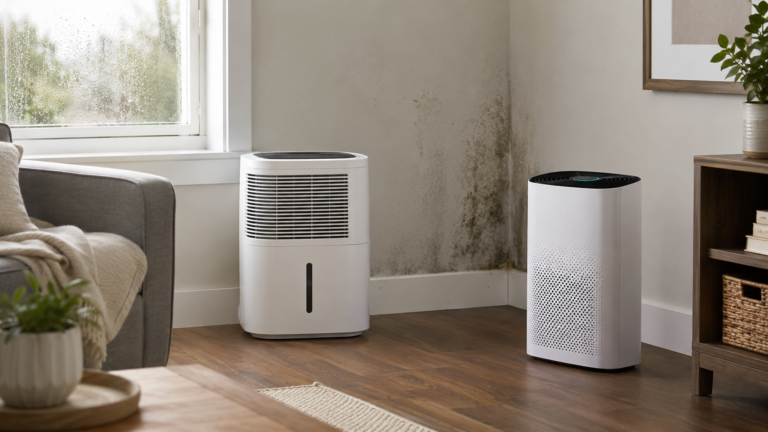
If furniture stays pressed against the wall and the room keeps behaving the same way, the problem tends to return even after cleaning. That is also when it helps to compare whether a dehumidifier can help with wall mold and if mold keeps returning to the same wall.
Bedroom wall mould checklist
| Check | What to notice | Why it matters |
|---|---|---|
| Wall position | Exterior-facing or cold corner | Higher condensation risk |
| Furniture placement | Tight against wall | Reduced airflow |
| Window pattern | Morning condensation | Bedroom humidity clue |
| Room smell | Stale after closed nights | Trapped air clue |
| Seasonal change | Worse in colder weather | Condensation pattern signal |
If mould keeps coming back on a bedroom wall, it usually helps to look at the room pattern as a whole, not just the patch itself. Bedroom humidity, wall temperature, and airflow often explain more than the surface alone.
Frequently asked questions
Why does mould grow on bedroom walls more than other walls?
Bedrooms often trap more moisture overnight and have weaker airflow than larger rooms.
Is bedroom wall mould usually caused by condensation?
Very often, yes, especially on cold exterior walls or behind furniture.
Should I move furniture away from the wall?
Yes, especially if the wall is cool and the room already shows humidity clues.
Does a wet bedroom window matter?
Yes. It usually means the room is carrying enough moisture to affect nearby surfaces too.