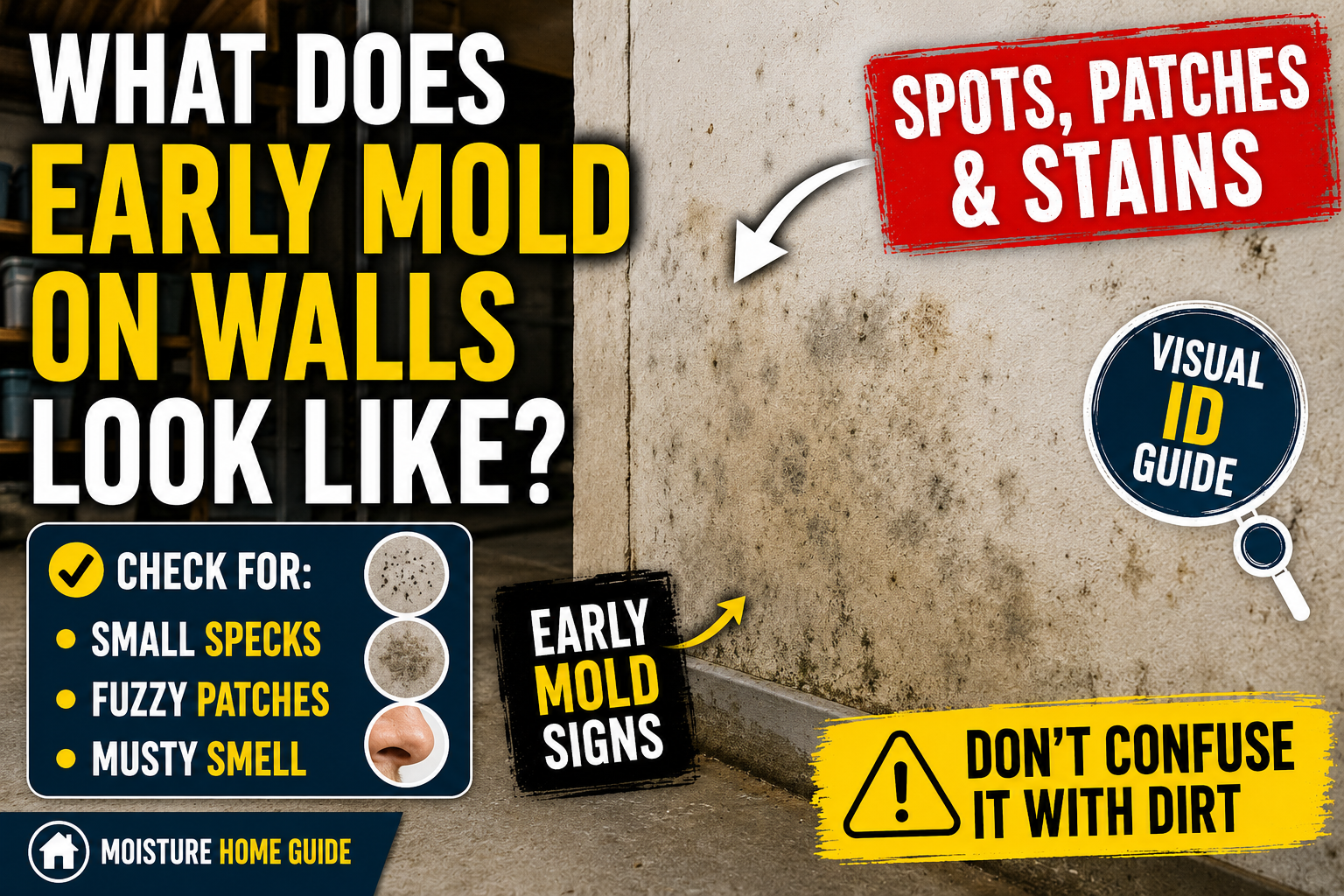
What Does Early Mold on Walls Look Like?
If you are asking what does early mold on walls look like, the short answer is that early mold often shows up as small irregular specks, faint fuzzy patches, or discoloration that keeps coming back after cleaning, sometimes with a musty smell nearby. The harder part is that appearance alone cannot confirm mold. Dirt, old staining, mildew, and mineral deposits can look similar, so recurrence, texture, and moisture clues usually matter more than color by itself.
Early mold often appears as small irregular specks, faint fuzzy patches, or discoloration that keeps returning after cleaning, sometimes with a musty smell. Appearance alone cannot confirm mold, because dirt, water stains, mildew, and mineral deposits can look similar.
What Does Early Mold on Walls Look Like at First?
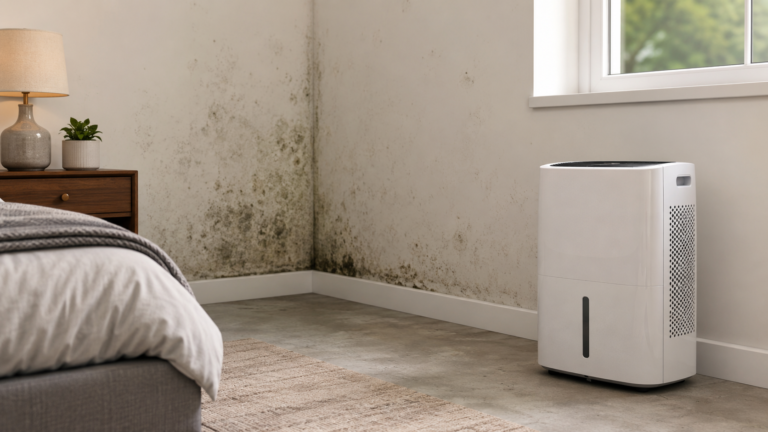
Early wall mold does not always look dramatic. In many homes, it starts as something easy to dismiss: a few dark dots, a pale patch near a corner, or a mark that seems to come back after you thought it was gone.
- Irregular specks rather than perfectly even dots
- Fuzzy or powdery patches
- Marks that keep returning after cleaning
- A nearby musty smell
- Other moisture clues around the same area
Possible Sign Comparison
| Possible sign | Typical appearance | Important limitation |
|---|---|---|
| Mold | Irregular specks, patchy return, sometimes fuzzy or slightly raised | Appearance alone still cannot confirm it |
| Dirt | Flatter surface residue that often wipes away more cleanly | May still look suspicious in a damp corner |
| Water stain | Flatter discoloration with a defined shape | Can return if the moisture source stays active |
| Mildew | Often flatter or powderier than raised fuzzy growth | Visual overlap with mold is still common |
| Efflorescence | White or chalky mineral residue on masonry surfaces | Still points to moisture even when it is not mold |
Common Early Signs of Mold on Walls
Small Irregular Specks or Clusters
One common early sign is a group of small specks that does not look perfectly even or deliberate. The pattern often matters more than the exact color.
Fuzzy, Powdery, or Slightly Raised Patches
Some early growth looks faintly fuzzy, powdery, or lightly raised compared with the paint around it. That does not prove mold by itself, but it is a more useful clue than color alone.
Marks That Return After Cleaning
If a mark seems to wipe away and then returns in the same place, that recurrence often tells you more than the first appearance.
A Musty Smell Near the Area
A localized musty smell can make a suspicious mark more concerning, especially when it sits near a cool corner, window edge, outside wall, or furniture-packed area.
Appearance alone cannot confirm mold. Visual clues help you decide whether the mark deserves more attention, but they do not identify the species or prove how serious the problem is.
Is It Mold, Dirt, or a Water Stain?
Dirt often wipes away more cleanly and does not usually return in exactly the same moisture-prone pattern unless the wall keeps getting dirty for a separate reason.
Water stains often have a flatter, more defined discoloration pattern and may return if the moisture source is still active, but they do not usually have the fuzzy or raised texture associated with mold growth.
Mold may recur if the moisture source remains, and the surface can look more irregular, patchy, or textured than a simple stain. If you need the broader background after the visual check, it helps to start with what causes mold on walls in general.
Could It Be Efflorescence Instead?
Sometimes a white or chalky mark on a wall is not mold at all. Efflorescence is a mineral deposit left behind when moisture moves through masonry and evaporates.
Why Color Alone Cannot Identify Mold
Color does not identify the species or danger level. Black, white, green, or brown marks can all be misleading when they are used as the only clue.
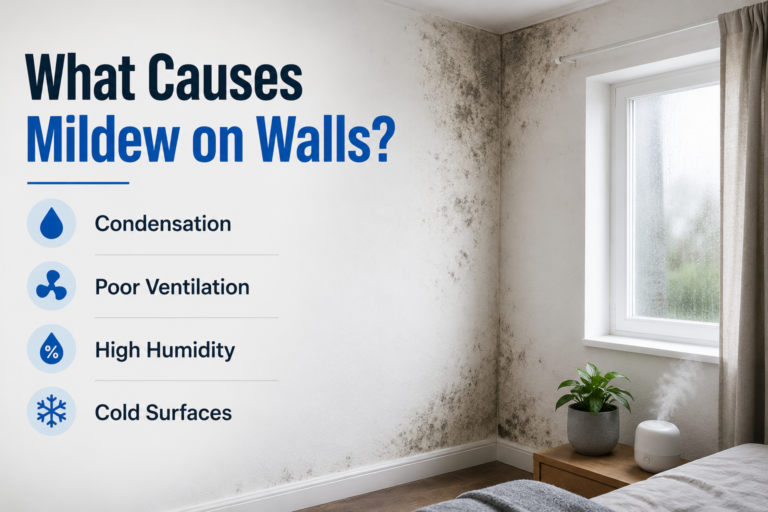
The same caution applies when people try to separate mold from mildew by sight only. What causes mildew on walls can overlap with mold-friendly conditions, and mildew is often described as flatter or powderier while some mold growth appears fuzzier or more raised.
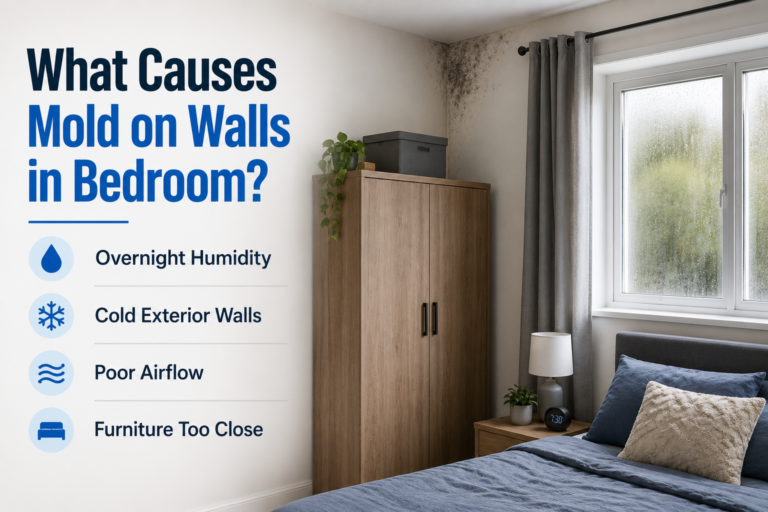
If the suspicious area is on a bedroom wall near a window, exterior corner, or furniture, it may also help to read what causes mold on walls in bedroom spaces so you can compare the room pattern as well as the mark itself.
When to Check the Wall for Moisture
If a mark keeps returning, the wall feels cool or damp, or the same area keeps looking slightly off, moisture testing can be useful. In that case, using a moisture meter on the wall is often more useful than debating whether a spot is dark enough or fuzzy enough to count.
Recurring marks, damp materials, or a persistent musty odor deserve more attention than one isolated cosmetic-looking spot.
When to Get a Professional Opinion
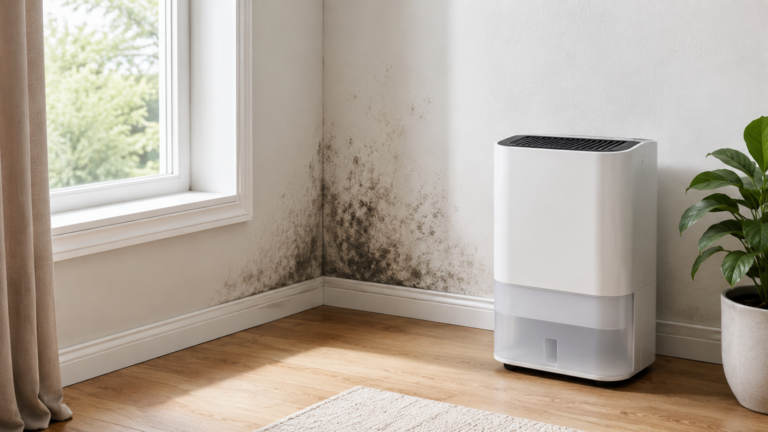
If the area keeps returning, spreads, smells musty, or appears alongside repeated dampness, a closer opinion may be worth it. And if you confirm that excess room moisture is part of the pattern, it may then make sense to compare whether a dehumidifier can help with mold on walls.
For general official background on moisture and mold, the EPA guide to mold and moisture in the home gives a useful baseline.
FAQ
What does early mold on walls look like?
It often looks like small irregular specks, faint fuzzy patches, or discoloration that keeps coming back in the same area.
What does beginning mold on walls look like?
Beginning mold is often subtle and may show up as slight spotting, patchiness, or a faint textured area rather than a large obvious patch.
Is moldy wall discoloration always visible?
No. Some problems stay subtle at first, which is why smell, recurrence, and moisture clues matter too.
How can I tell mold from dirt on a wall?
Dirt usually wipes away more cleanly and does not tend to reappear in the same damp-prone pattern.
Could it just be a water stain?
Yes. Water stains are often flatter and more defined, and they can return if the moisture source is still active.
Is white residue on a wall always mold?
No. On masonry surfaces, white residue may be efflorescence, which is a mineral deposit rather than mold.
Does the color show how dangerous the mold is?
No. Color alone does not identify the type of growth or tell you how serious the problem is.