Why Does My Basement Smell Musty After Rain?
If you are wondering why does my basement smell musty after rain, the short answer is that moisture has often entered the space, raised indoor humidity, or dampened porous materials such as concrete, wood, carpet, cardboard, or stored items. The smell may fade as the basement dries, but repeated rain-related odors usually mean there is a moisture source to find.
That is what makes this pattern worth paying attention to. A one-time stale smell after a storm is one thing. A basement that smells musty every time it rains is often showing a repeatable moisture behavior, and that gives you a better clue than a random odor ever could.
Why Does My Basement Smell Musty After Rain?
Rain changes how moisture behaves around a home. Soil becomes wetter, outdoor humidity rises, air movement changes, and basement materials may take longer to dry. That combination can make a basement smell musty even if you do not immediately see standing water.
The smell itself often comes from moisture settling into materials or air that stays trapped too long. In other words, the odor may not be coming from the rain directly. It is often coming from what the rain changes inside and around the basement.
If the general symptom is familiar even outside rainy weather, compare it with the broader guide to why a basement smells musty.
Rain Can Raise Basement Humidity Quickly
A basement can react to rain without taking in obvious water. When outdoor humidity rises, a lower-level room may start holding more moisture in the air even before anything visibly looks wet.
That is why some basements smell worse after rain even when the floor still looks dry. The room air itself can become heavier, condensation can form more easily on cool surfaces, and stale corners may take longer to clear out.
If you want the broader non-rain version of this pattern, it helps to compare it with why a basement can stay humid without rain.
Moisture May Be Entering Through Walls, Floors, or Window Wells
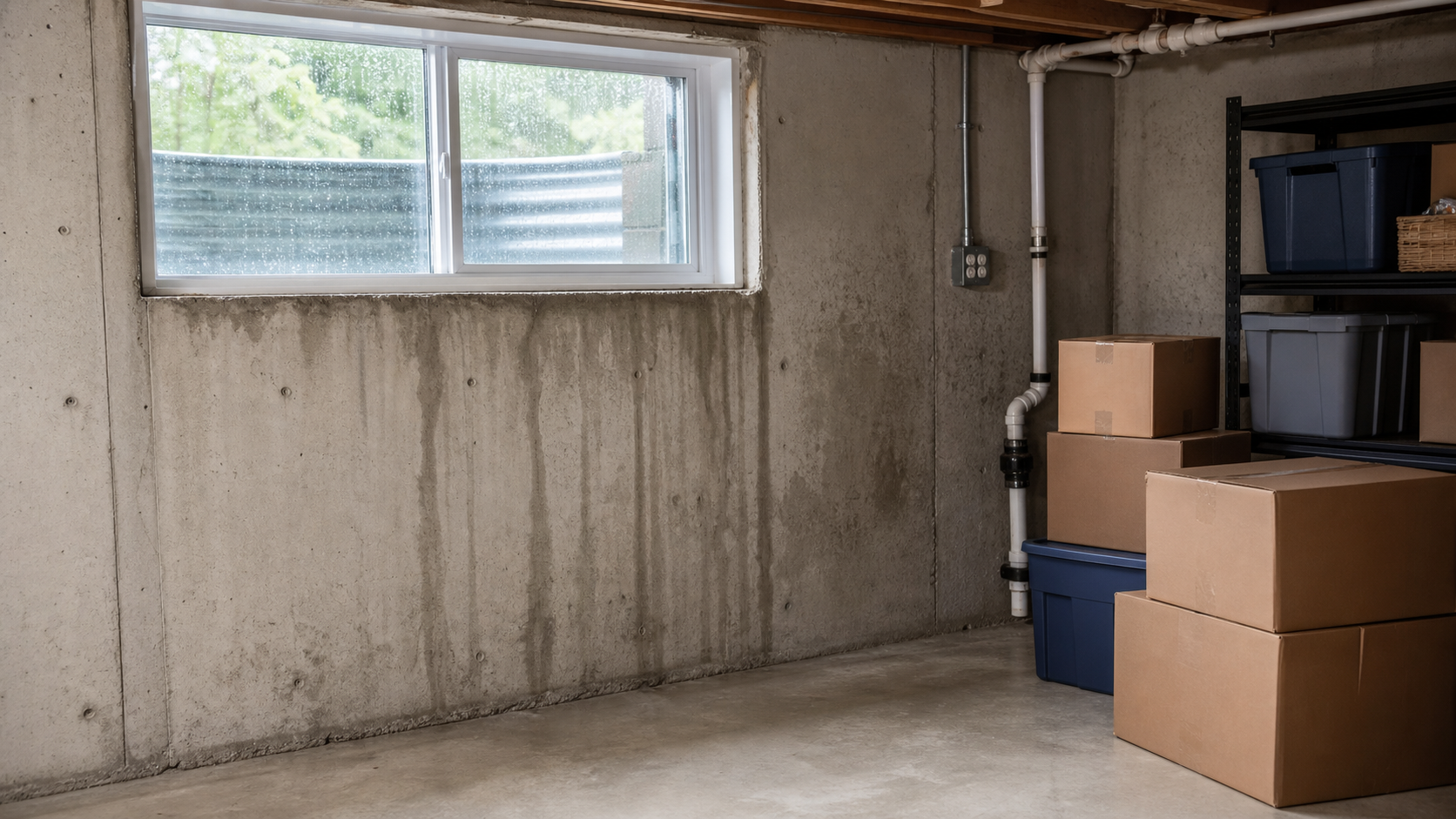
Sometimes the smell does point to moisture entering more directly. Rain can expose weak spots around:
- foundation walls
- floor edges
- basement windows
- window wells
- sump areas
- lower wall sections near the ground
This does not mean you need to jump straight to a major structural conclusion. But repeated odor after rain often means moisture is reaching the space somehow, even if it is happening lightly or intermittently.
Damp Materials Can Hold the Smell After the Air Feels Dry
One reason this problem is confusing is that the air may seem to improve before the smell fully goes away. That happens because materials often keep holding moisture after the room itself starts to feel less humid.
Common smell-holding materials include:
- carpet
- cardboard boxes
- paper storage
- wood shelving
- stored fabrics
- unfinished concrete or porous surfaces
So even when the basement feels better, the odor can linger because the materials are still drying.
Poor Drainage Outside the Home Can Make the Smell Worse
Rain-related basement odor is not always about what is happening inside. Sometimes the outside drainage pattern is part of the reason the basement keeps reacting.
Poor water movement around the home can increase moisture pressure near basement walls, window wells, and the surrounding foundation area. Even if no obvious pooling shows up indoors, that outside moisture pattern can still make the basement more humid and more smell-prone after rain.
This article is not turning into a full drainage or repair guide. The key point is simply that outside conditions can make an indoor musty smell worse.
What to Check First After It Rains
Start with the things that are easiest to compare while the smell is still noticeable.
1. Notice where the smell is strongest
Is it strongest near one wall, a window, a corner, a storage section, or the center of the room?
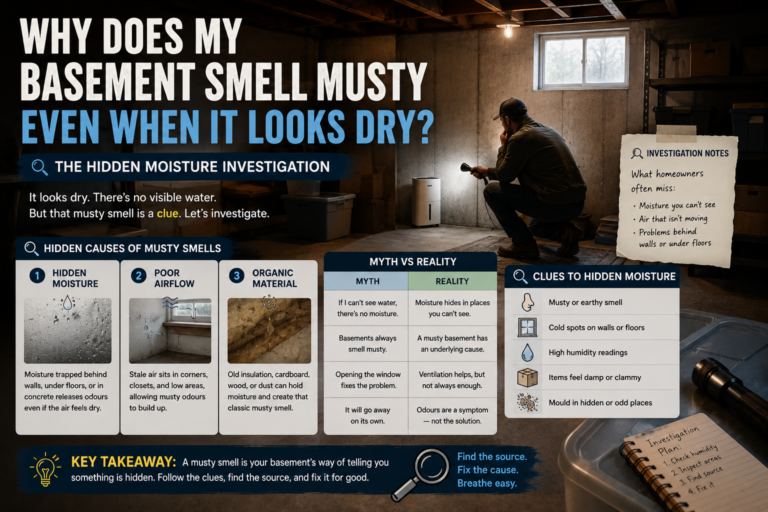
2. Check for obvious humidity clues
Look for:
- condensation on windows
- damp-feeling walls
- colder corners
- cardboard that smells stale
- fabric bins or stored items holding odor
3. Compare the air with the rest of the house
If the basement feels heavier than upstairs right after rain, the room may be reacting mainly through elevated humidity.
4. Look for damp materials, not just visible water
A basement can smell musty after rain because materials are absorbing moisture, even when there is no puddle to point at.
Practical rain-trigger checklist
| Possible cause | What to check first |
|---|---|
| Humidity spike after rain | Room feels heavier, windows fog, odor is room-wide |
| Light moisture entering walls or floors | Odor stronger near one wall or lower edge |
| Damp storage materials | Boxes, fabrics, or paper smell stale after rain |
| Window well or basement window issue | Odor strongest near basement windows |
| Poor outside drainage influence | Smell repeats after storms, even with little visible water |
When a Dehumidifier Helps and When It Does Not
A dehumidifier can help when the rain mainly causes a humidity spike in the basement air. In that situation, lowering the air moisture may reduce the musty smell and help the room dry faster.
It helps less when the main problem is:
- water entering through one spot
- materials that are already damp and holding odor
- repeated outside drainage issues
- localized wetness the air control alone cannot fix
That is why a dehumidifier can be useful, but it is not a complete answer to every rain-related basement smell. If the main next question is whether the room would benefit from one, the relevant buying-support page is best dehumidifier for musty basement. If the bigger issue is baseline humidity, use the guide to best basement humidity level.
For broader official guidance on indoor moisture and mold prevention, the EPA mold resources are a useful reference point.
How to Tell If the Smell Is a Warning Sign
A musty smell after rain deserves more attention when:
- it happens after every storm
- it is getting stronger over time
- one area consistently smells worse than the rest
- materials feel damp or stay stale
- walls or trim begin changing appearance
- the smell lasts long after the weather dries out
These signs do not automatically mean severe damage, but they do suggest that the odor is connected to a real moisture pattern, not just a passing smell.
How to Reduce Musty Basement Smell After Rain
The best approach depends on whether the smell is mostly in the air, in the materials, or tied to a repeated moisture source.
Start with the practical basics:
- improve airflow after rain
- open up crowded storage areas where possible
- remove or dry smell-holding materials
- check for repeated condensation
- monitor whether the basement is staying too humid
If the room remains heavily humid after rain, then comparing it with basement moisture problems gives a broader troubleshooting path.
When to Consider Professional Help
It makes sense to investigate more seriously if:
- the smell always returns after rain
- you notice one consistently damp wall or corner
- materials are staying wet
- paint or surfaces begin changing
- the odor is strong enough to suggest ongoing hidden moisture
The goal is not to alarm yourself. It is to recognize when the smell is part of a repeated pattern that is unlikely to solve itself.
If you keep asking why does my basement smell musty after rain, focus less on one isolated storm and more on whether the same moisture pattern repeats.
FAQ
Why does my basement only smell musty after it rains?
Because rain can raise basement humidity, dampen materials, or expose moisture movement through walls, floors, window wells, or nearby ground conditions.
Can rain make a basement smell musty even without visible water?
Yes. A basement can smell musty after rain because the air becomes more humid or because materials absorb moisture even when no puddles appear.
Will a dehumidifier remove a musty smell after rain?
It can help if the smell is mainly coming from damp air and high humidity. It helps less if wet materials or direct moisture entry are the real source.
How long should a basement smell musty after rain?
A brief smell that fades as the room dries is different from a smell that returns after every storm or lingers for days. Repeated or persistent odor usually means the moisture pattern is still active.
When should I worry about a musty smell after rain?
Pay closer attention if the smell keeps returning, gets stronger, becomes localized to one area, or starts coming with damp materials, visible changes, or slower drying.