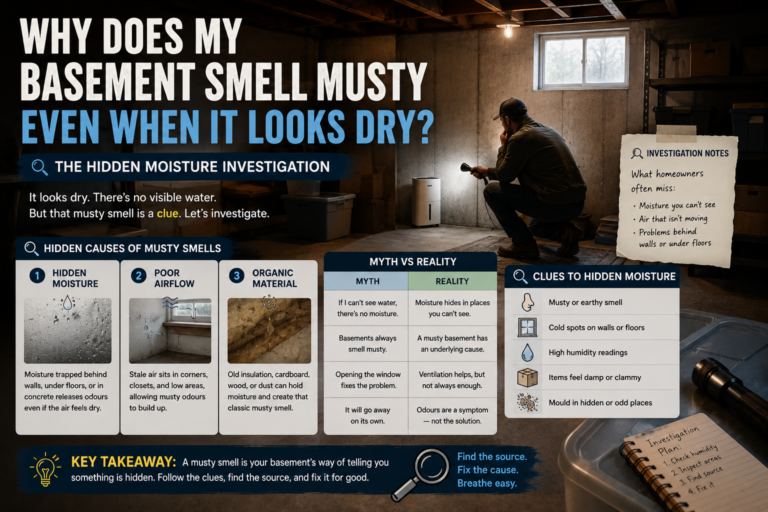
Why Does My Closet Smell Musty Even When It Looks Clean?
If you keep wondering why does my closet smell musty, even though it looks perfectly clean, you are dealing with one of the most common and most misunderstood home moisture problems.
Quick Answer
A closet usually smells musty because moisture gets trapped in a small enclosed space. Poor ventilation, slightly damp clothes or shoes, exterior walls, cardboard boxes, rugs, and absorbent fabrics can all hold stale moisture. It does not always mean visible mold, but it usually does mean the space is not drying well.
Quick Tip
A clean-looking closet can still have a moisture problem. Smell often shows up before discoloration, visible mold, or obvious wall damage.
Important
Do not assume a musty closet smell comes from clothing alone. In many homes, the smell starts with trapped moisture in the wall, low airflow, or a bedroom humidity issue that the closet reveals first.
Closets are excellent at hiding the conditions that create odor. They are enclosed, low-airflow spaces, often packed with fabrics, shoes, boxes, and belongings that absorb smell easily. That means a closet can smell stale or damp long before anything looks visibly wrong.
The clean appearance is exactly what makes this problem easy to misread. People open the closet, see no mold, no spilled liquid, no dirty laundry, and assume the smell must just be old clothes. Sometimes it is partly about fabrics, but more often the real issue is trapped moisture, stale air, or a wall and room combination that is not drying as well as it should.
Why closets smell musty so easily
Closets usually have three things working against them: limited airflow, soft absorbent materials, and lower visibility. Once the door closes, the air inside becomes more stagnant than the room outside. If the closet shares an exterior wall, sits near a bathroom, or already belongs to a humid bedroom, it can hold moisture even more easily.
Because closets are rarely aired out the same way as the rest of the room, small amounts of dampness can stay there longer. Clothing, cardboard, shoes, bags, and linens absorb that stale moisture and gradually hold the smell.
The most common causes of a musty closet
- Trapped humidity from the room as a whole
- Exterior wall condensation
- Poor airflow behind clothes and storage
- Damp items stored inside
- A nearby moisture source such as a bathroom wall or older leak
Signs the smell is linked to moisture
- It gets stronger when the closet has been shut
- The smell is stronger near the wall or floor
- Items stored inside start smelling stale
- The bedroom also feels a little humid
What to check first
Take a closer look at the back wall, corners, floor edge, and any area hidden behind storage. If possible, empty at least part of the closet and compare the smell with the door open versus closed.
Notice whether the wall feels cooler than the rest of the room. Look for subtle discoloration or stale patches on cardboard or fabric. If the closet is on an exterior wall, consider whether the issue is stronger in colder or wetter weather.
Common mistakes
- Using odor products without changing airflow
- Overpacking the closet
- Ignoring the bedroom outside the closet
- Assuming visible mold must appear first
What can happen if you ignore it
The smell may gradually spread into more fabrics, stored items, and the surrounding room. In some closets, it eventually leads to visible spots, stale clothing, warped boxes, or persistent dampness near the wall.
Ignoring it also makes diagnosis harder later, because once everything smells a little stale, the original source becomes less obvious.
Closet smell checklist
| Area | What to notice | Why it matters |
|---|---|---|
| Back wall | Coolness, smell, slight marks | Condensation clue |
| Floor edge | Stronger odor | Damp air may settle there |
| Clothes | Musty fabric smell | Closet environment issue |
| Door closed vs open | Odor intensity | Trapped air clue |
| Room outside | Similar humidity signs | Wider moisture pattern |
Suggested next reads: How to Reduce Moisture in a Closet, Bedroom Humidity, What Is a Moisture Meter for Walls?, and the Musty Smells section.
Frequently asked questions
Does a musty closet smell always mean mold?
No. A musty closet often comes from trapped humidity, stale air, or fabrics and storage materials holding moisture, even when no mold is visible.
How do I get rid of a musty smell in a closet?
Start by finding the moisture source, airing the space out, removing damp or odor-holding items, and checking whether the closet stays too humid.
Can a dehumidifier help a musty closet?
Sometimes, especially if the room or nearby area stays humid. It helps more when the smell is being caused by trapped moisture rather than one isolated damaged item.
Why does my closet smell musty even when clothes are clean?
Because the smell may be coming from the closet itself, not only the clothing. Walls, carpets, boxes, shoes, and stale air can all hold damp odor. If the closet seems to reveal a wider room pattern, it helps to compare that with signs your home has too much humidity.
Look beyond the clothes
If your closet smells musty even when it looks clean, that is usually a sign to look at airflow, wall conditions, and room humidity rather than just storage habits.