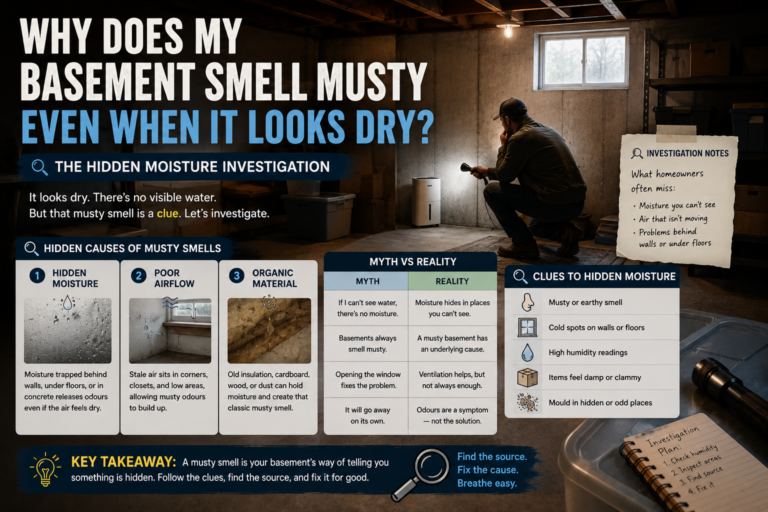
Musty Smell in a Bedroom: What Usually Causes It
A musty smell in a bedroom is easy to dismiss at first.
Quick Answer
If a bedroom smells musty, the cause is usually moisture staying too long in the room. The most common reasons are poor ventilation, window condensation, damp closets, blocked airflow, or fabrics and corners holding stale moisture.
Quick Tip
If the smell is strongest in the morning or after the room stays closed, your first clue is probably airflow and overnight humidity.
Important
A bedroom can smell musty long before you see visible mold or wall damage. Smell is often one of the earliest signs that moisture is lingering where the room is not drying properly.
Many people assume it is just stale air, laundry, or a room that needs a window open. Sometimes that is partly true. But when the smell keeps returning, especially after the room has been closed overnight or during damp weather, it usually means the bedroom is holding more moisture than it should.
Bedrooms are especially good at hiding this kind of problem. They are closed for long stretches, often cooler than the rest of the house at night, and full of soft materials that absorb smell. Curtains, carpets, bedding, clothing, upholstered furniture, and closets all make it easier for a room to trap stale air and moisture. That is why a bedroom can smell off even when it looks clean and dry on the surface.
Why bedrooms hold musty smells so easily
Bedrooms create a very specific indoor pattern. Doors stay shut. Windows may stay closed. Curtains often remain drawn. Airflow is lower than in the main living areas. At the same time, the room gains moisture overnight from breathing and loses warmth around windows and exterior walls.
That mix creates a space where moisture can settle quietly. The room may never look wet, but it may stay just damp enough in certain areas to develop a stale smell. Over time, that smell gets absorbed into fabrics, storage spaces, and corners that do not dry out well.
Common causes of a musty smell in a bedroom
Window condensation
Bedroom windows often show some of the clearest signs of overnight humidity. If the glass fogs up or the sill gets damp, nearby trim, curtains, and wall edges may start smelling musty over time.
Damp closets
Closets are classic trouble spots because they trap air. If the bedroom smells musty, the closet may actually be stronger than the room itself once you open it.
Exterior wall moisture
A cooler outer wall can hold condensation or stay colder than the room around it. This is especially likely behind furniture or in corners.
Low airflow behind furniture
Large dressers, beds, and wardrobes placed close to exterior walls can create hidden moisture pockets.
Fabrics holding stale moisture
Bedding, rugs, curtains, and even clothing can slowly absorb a musty smell if the room is too humid or poorly ventilated.
Signs the smell is linked to humidity
- The room smells worst in the morning
- The smell gets stronger in damp or rainy weather
- The window area feels wetter or cooler than the rest
- One side of the room smells stronger
What to check first
Open the closet. Check the window sill. Move anything large that sits against a cold wall. Smell the room at different heights, especially closer to the floor and corners. Ask whether the issue is strongest near fabrics, furniture, or one part of the room.
You should also notice whether the room tends to feel damp, heavy, or stuffy at the same time. A smell rarely travels alone in moisture-related rooms.
Common mistakes
- Washing fabrics without checking the room itself
- Blaming the closet only
- Ignoring window condensation
- Keeping furniture tight against problem walls
What can happen if you ignore it
A mild bedroom smell can slowly turn into stale fabrics, recurring condensation, closet odor, and mold-prone corners. More often than not, the problem becomes harder to locate because the smell spreads into the whole room over time.
The earlier you treat a musty bedroom as a moisture pattern instead of a simple odor issue, the easier it usually is to improve.
Bedroom musty smell checklist
| Check | What to notice | Why it matters |
|---|---|---|
| Window | Morning condensation | Overnight humidity clue |
| Closet | Stronger stale smell | Low airflow zone |
| Exterior wall | Cool or damp feel | Condensation risk |
| Fabrics | Bedding or curtains smell off | Moisture may be lingering |
| Furniture line | Mustiness behind large items | Airflow blockage clue |
Recommended next reads: Bedroom Humidity, Why Does My Room Smell Musty With No Mold Visible?, How to Reduce Moisture in a Closet, and the Musty Smells section.
Frequently asked questions
Why does my bedroom smell musty even when it is clean?
Because a musty smell is often caused by humidity, poor airflow, or hidden dampness rather than visible dirt.
Can a bedroom smell musty without mold?
Yes. A room can hold stale moisture long before visible mold appears.
Should I check the closet if the bedroom smells musty?
Yes. Closets often trap moisture and may reveal the source more clearly than the open room.
Is morning the best time to check?
Often yes, because overnight humidity patterns are usually most obvious then.
Treat the smell like a room pattern
If your bedroom keeps smelling musty, the most useful next step is usually not stronger fragrance. It is figuring out which part of the room is holding moisture and why it is not drying well.