Why Does My House Smell Musty After It Rains?
If your house smells musty after it rains, you are probably noticing a moisture pattern rather than a random odor problem.
Quick Answer
A house that smells musty after rain is usually reacting to extra moisture. The smell may come from damp walls, a basement, windows, soft materials, or areas where airflow is weak and moisture takes too long to dry out.
Quick Tip
If the smell appears mainly after rainy weather, treat the timing as a clue. Moisture patterns linked to weather are often easier to trace than constant year-round odors.
Important
A musty smell after rain does not always mean a major leak, but it often means your home is holding moisture somewhere more than it should. The earlier you understand where that pattern is coming from, the easier it usually is to manage.
The timing matters. A smell that appears or gets stronger after wet weather usually means some part of the home is responding to extra humidity, damp outdoor conditions, or moisture entering or lingering where it should not.
That does not automatically mean you have a major leak. In many homes, rainy weather simply makes existing weak points more obvious. A basement that already runs damp may smell worse. A cold wall may hold more moisture. A closet may trap stale air more noticeably. Window edges, carpeted corners, or stored items may begin to smell off because they are already close to the limit and rain pushes them further.
The good news is that the weather pattern gives you a useful clue. If the smell gets stronger after rain, you already know something about the source: moisture is involved, and it is likely reacting to humidity, airflow, or outdoor conditions rather than appearing completely at random.
Why rainy weather changes the smell inside a home
Rain does more than wet the outside of a building. It usually raises outdoor humidity, lowers drying speed, and affects cooler parts of the home that already struggle with moisture balance.
When outdoor air stays damp, your house may dry more slowly too. Basements may feel heavier. Exterior walls may hold more coolness. Windows may collect more moisture. Airflow may feel flatter and less effective. If there are materials in the home that already trap moisture, such as carpet, boxes, fabric, wood trim, or poorly ventilated closets, rainy weather can make their smell much more noticeable.
The most common places a rain-related musty smell starts
Basements and lower levels
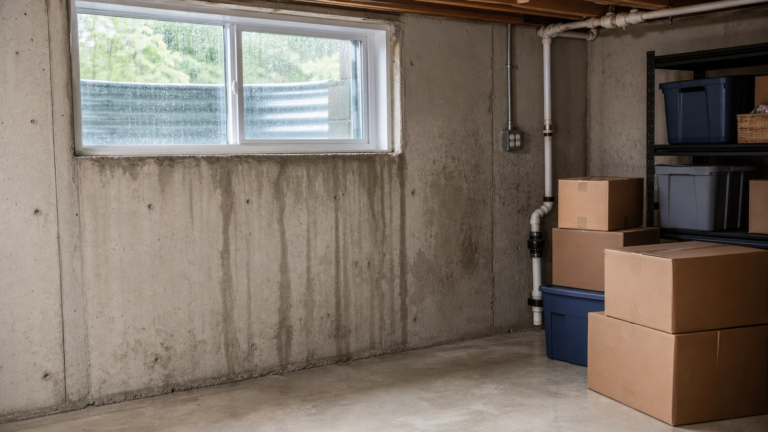
Basements are one of the first places to check when a house smells musty after rain. They often stay cooler, hold more moisture, and dry out more slowly than the rest of the house. Even if there is no standing water, a basement can still feed odor into the home through heavy, stale air.
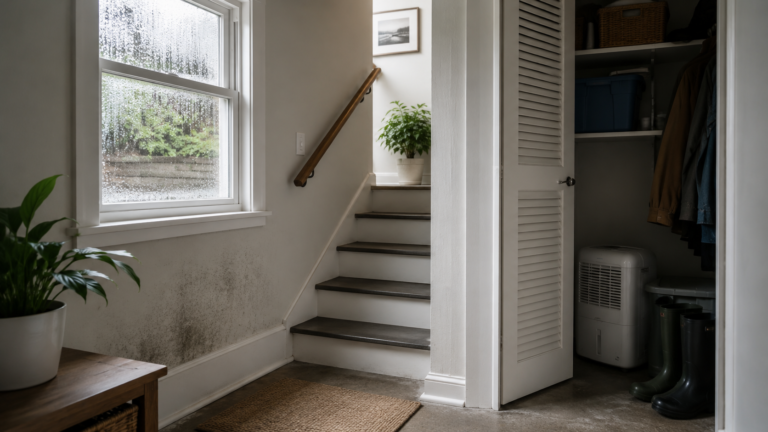
Look for clues such as damp corners, stale storage smell, condensation on cool surfaces, or a room that feels heavier than the upper floors.
Window areas
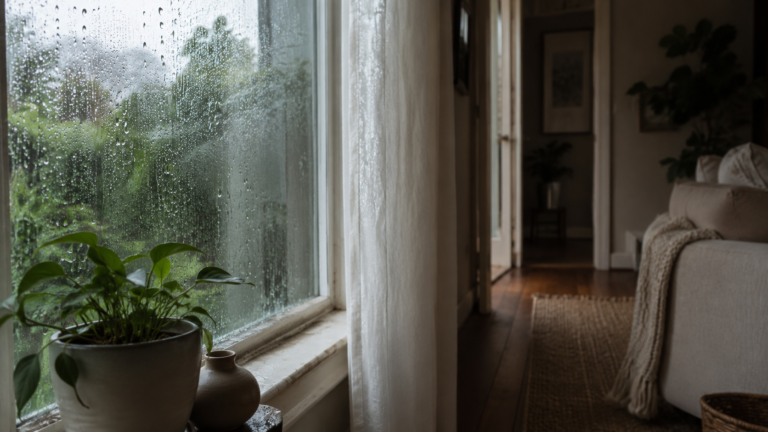
Rainy weather often raises humidity enough to make weak window areas more obvious. If a room already gets interior condensation or has poor airflow around the window, the sill, frame, or nearby wall may begin to smell stale or damp after wet weather.
This is especially common in bedrooms and living rooms where curtains, blinds, and furniture reduce drying.
Exterior walls
Cold exterior walls can collect moisture in humid weather, especially if airflow is poor or insulation is uneven. The wall may not look soaked, but it may still hold enough dampness to affect the smell of the room.
Closets and low-airflow corners
Closets, corners behind furniture, and tucked-away storage zones often react strongly to weather-related humidity. A closet may smell much worse after rain not because water is pouring in, but because the space was already stale and now has even less drying power.
Signs the smell is linked to moisture
- The smell gets stronger after rain and fades during dry periods
- One part of the house smells stronger than the rest
- The room also feels damp, stale, or heavy
- Other clues appear too, such as condensation, cool walls, or slow drying
What to check first after it rains
Start with the areas that are most likely to trap dampness. Basements, exterior wall corners, windows, closets, and any room that already feels more enclosed deserve attention first.
- Which room smells strongest?
- Does the odor seem higher, lower, or more concentrated near a wall?
- Is there condensation on windows?
- Do closets smell different from the room outside them?
- Does the basement smell heavier than usual?
- Do soft materials such as rugs or boxes smell stale?
These are often more useful than searching immediately for dramatic damage.
Common mistakes people make
- Using fragrance instead of diagnosis
- Checking only for visible mold
- Ignoring lower-level spaces
- Assuming the issue must be a roof leak
What can happen if you ignore it
The smell may remain just annoying for a while, but repeated damp conditions can slowly affect materials, create stale storage problems, encourage mold-prone spots, and make the home feel less fresh overall.
The biggest downside of ignoring it is that the pattern becomes normal. Once that happens, people often stop noticing the small clues that would have helped them identify the source earlier.
Rain-related musty smell checklist
| Check area | What to notice | Why it matters |
|---|---|---|
| Basement | Heavier smell after rain | Lower-level dampness often drives odor |
| Windows | Damp sill or condensation | Rainy humidity can reveal weak spots |
| Closets | Stronger stale smell | Low airflow spaces trap moisture |
| Exterior walls | Cool, musty, or slightly damp | Condensation may be involved |
| Stored items | Boxes or fabrics smelling stale | Materials often absorb moisture clues |
Useful next reads are Basement Smells Musty, Why Does My Room Smell Musty With No Mold Visible?, How to Reduce Moisture in Your Home Naturally, and the Musty Smells section. For a broader guide to why a house smells musty, compare the main whole-house diagnosis article too.
Frequently asked questions
Why does my house smell musty only when it rains?
Because rainy weather often raises humidity and slows drying, which makes hidden moisture problems more noticeable.
Does a musty smell after rain always mean a leak?
No. It can also be caused by high humidity, condensation, or damp areas that take too long to dry.
Should I check the basement first?
Often yes. Basements are one of the most common sources of weather-related musty odors.
Can windows cause a musty smell after rain?
Yes. If condensation builds up around them or airflow is poor, nearby surfaces can start to smell damp.
Use the weather pattern to your advantage
If the smell in your house reliably changes with rainy weather, that pattern is useful. The goal is not to guess harder. It is to follow the moisture clues more clearly so the source becomes easier to find.