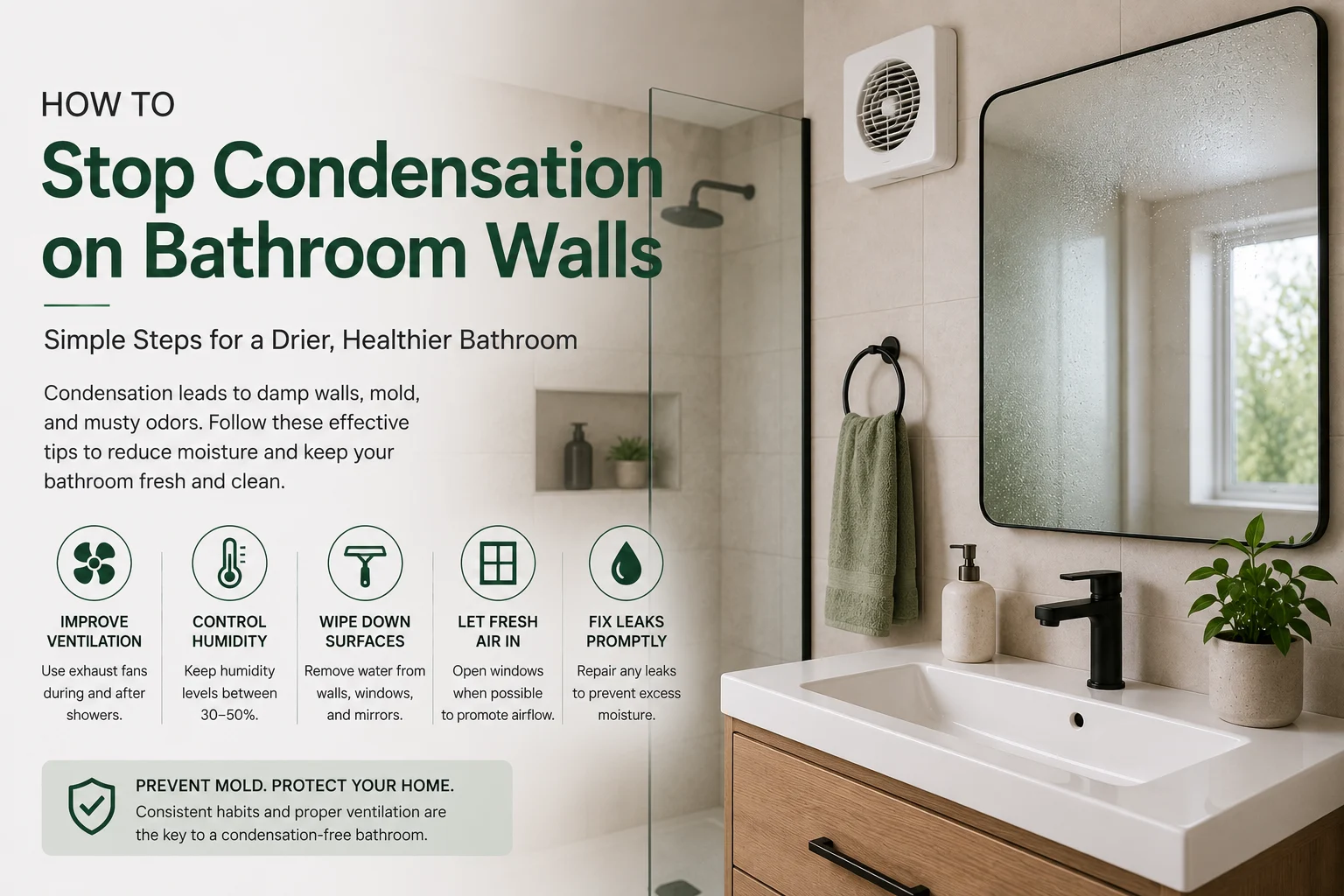
How to Stop Condensation on Bathroom Walls
Learning how to stop condensation on bathroom walls is one of the most practical moisture-control steps you can take in a home. Bathrooms create steam fast, and wall surfaces often take the hit.
Quick Answer
Bathroom wall condensation happens when warm steam hits cooler wall surfaces and stays there. The best fixes are better ventilation, quicker drying, less trapped steam, and lower overall bathroom humidity.
Quick Tips
- Bathroom walls that stay wet too long are the real issue, not just visible steam.
- Drying time matters as much as steam amount.
- Windowless bathrooms need extra airflow strategy.
- Wall condensation often comes before mold problems.
Why bathroom walls get condensation
Warm moisture-heavy air from a shower hits a cooler wall surface and forms water on it. The same thing happens on mirrors and windows, but walls can hold the moisture more subtly and for longer.
- Limited ventilation
- Cooler exterior walls
- Weak fan use
- Long hot showers
- Closed doors and little air exchange
Signs the moisture is becoming a problem
- Walls stay visibly wet
- The room smells damp later
- Ceiling corners and wall edges keep showing spots
- Paint, caulk, or wall finish starts reacting
Common causes of repeated wall condensation
| Cause | Why it matters |
|---|---|
| Weak or short fan use | The room does not clear moisture well enough |
| Steam-heavy routine | The shower creates more moisture than the room can handle |
| Poor wall temperature balance | Cool walls collect condensation more easily |
| Trapped moisture after showering | Steam stays in place too long |
What to do first
The most useful question is not whether you see steam, but how long the room stays damp. Run the fan longer, open the room up when you can, and wipe the wettest areas if the walls stay visibly damp.
Mistakes people make
- Treating all bathroom condensation as harmless
- Turning off the fan too soon
- Ignoring wall corners and edges
- Waiting until mold appears
Important
The earlier you improve drying and airflow, the easier it usually is to stop the bathroom from repeating the same damp cycle every day.
What can happen if you ignore it
Repeated bathroom wall condensation can lead to musty smells, mold-prone corners, damp paint, staining, and a room that never feels fully dry.
Bathroom wall condensation checklist
| Check | What to look for | Why it matters |
|---|---|---|
| Wall surface | Visible moisture after shower | Drying problem |
| Ceiling corners | Damp spots or repeated marks | Mold-prone area |
| Fan | Run time and effectiveness | Main moisture control tool |
| Room smell | Stale or damp after use | Lingering humidity |
Useful next reads are Bathroom Condensation After Shower: What It Means, How to Prevent Mold in the Bathroom, and How to Reduce Moisture in Your Home Naturally.
Frequently asked questions
Is condensation on bathroom walls normal?
Some is normal right after a shower. The concern is when the walls stay wet too long.
How do I know if my fan is not doing enough?
If the room remains damp well after use or the walls keep collecting moisture, ventilation may be underperforming.
Can wall condensation lead to mold?
Yes. Repeated damp surfaces create conditions mold can use over time.
Should I wipe bathroom walls after every shower?
Not always, but in moisture-prone bathrooms it can help reduce lingering wetness while you improve the bigger airflow problem.
Need the bathroom-wide moisture picture too?
If the walls keep staying wet, the wider bathroom drying pattern usually matters just as much as the steam itself.