Are Basements More Humid Than Upstairs? Why It Happens and What to Do
Yes, basements are often more humid than upstairs, and in many homes that is completely normal. A basement sits lower in the house, stays cooler, and has more contact with the ground than the main floor, so it often holds moisture differently from the rooms above it.
That does not automatically mean something is wrong. The more useful question is whether the basement is only somewhat more humid than upstairs, or whether the difference comes with other clues like musty air, condensation, or materials that start feeling damp. That is what helps separate a normal structural difference from a moisture issue worth watching more closely.
Short Answer
Basements are often more humid than upstairs because they are lower, cooler, closer to ground conditions, and usually get less airflow. In many houses, that difference is normal. It becomes more important when the basement stays noticeably damper over time and also starts showing signs like stale air, condensation, or damp-feeling storage materials.
Key Takeaways
- A basement often feels more humid than upstairs because lower levels stay cooler and more enclosed.
- The best comparison is to measure both levels at the same time of day, not rely on feel alone.
- A mild, stable difference is usually less concerning than a growing gap plus musty smell or condensation.
- The pattern over several days matters more than one isolated reading.
Are Basements More Humid Than Upstairs in Most Homes?
In most homes, yes.
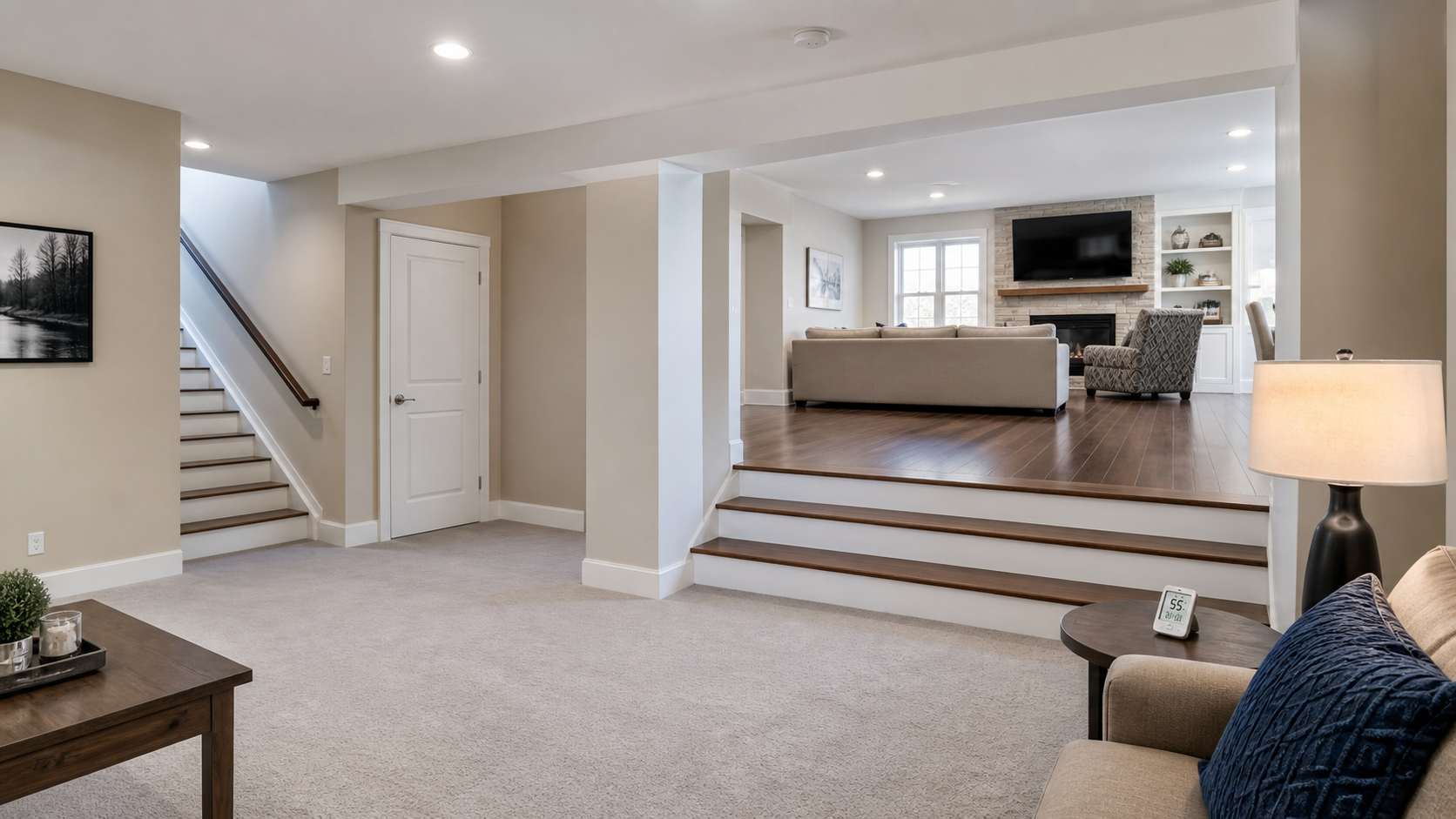
A basement is not just another room on a different level. It sits in a part of the house that behaves differently from the main floor. Even a finished basement can feel cooler, heavier, or slightly more humid than upstairs because the space is naturally slower to warm up and slower to dry out.
Upstairs rooms usually get more airflow, more sunlight, and more daily temperature movement. Basements are often more enclosed and more stable in temperature, but that stability can also mean moisture lingers longer. So if your basement feels more humid than upstairs, that is not unusual by itself.
The key is not expecting both levels to behave exactly the same. The key is noticing whether the difference stays mild and predictable, or whether it starts coming with signs that the basement is holding more moisture than it should.
How to Tell if Your Basement Is Actually More Humid
Before assuming the basement is the problem, compare it directly with the upstairs instead of relying only on feel. Humidity can shift by time of day, weather, and airflow, so a side-by-side comparison is much more useful than one quick reading.
A practical approach is to:
- take one reading in the basement and one upstairs
- check them at the same time of day
- repeat the comparison over several days
- notice smell, condensation, and how stored materials feel as well as the number itself
A simple hygrometer is usually enough for that comparison. If you are not sure whether you need to measure room air or a specific material, humidity meter vs moisture meter explains the difference.
| What to compare | Basement clue | Upstairs clue |
|---|---|---|
| Humidity reading | Stays higher for longer | Returns to normal faster |
| Air feel | Heavier or clammy | More neutral or dry |
| Surface behavior | Cool surfaces collect moisture more easily | Less condensation overall |
| Stored items | Cardboard or fabrics smell stale | Items stay fresher |
Why Basements Tend to Hold More Moisture
A few structural factors explain most of the difference.
Contact with the ground
Basement walls and floors are surrounded by soil or built directly against foundation materials that stay cooler and follow a different moisture pattern than upper floors. That does not mean water is entering the basement. It means the lower level exists in a naturally different environment than the main floor.
Cooler temperatures
Temperature matters because relative humidity changes when air cools. Because basements are usually cooler, the relative humidity there can read higher even if the actual amount of water vapor in the air has not increased. In plain terms, the basement may register as more humid than upstairs partly because the same air behaves differently in a cooler space.
Less airflow
Many basements have fewer windows, less natural cross-ventilation, and more stagnant corners than upstairs rooms. When air movement is limited, moisture is slower to leave the space, so the basement can feel heavier even when the rest of the house feels comfortable.
Different lower-level conditions
A basement often behaves like its own moisture zone within the house. Air movement, temperature, and enclosure conditions are simply different downstairs than they are on the main floor. That is why a basement can feel more humid than upstairs even when the entire house is experiencing the same general weather.
How Much More Humid Is Normal?
There is no single universal number that defines a normal basement-to-upstairs humidity gap.
Climate, season, construction type, finishing materials, and ventilation all affect the comparison. Because of that, it is more useful to judge the difference by pattern than by chasing a specific offset between floors.
A small or moderate gap is usually less important if:
- the difference stays fairly stable
- the basement still feels dry enough to use comfortably
- there is no musty smell
- you are not seeing condensation or damp-feeling storage materials
The difference becomes more meaningful when it is persistent and also comes with other moisture clues. In other words, the question is not only whether the basement is more humid, but also what else happens when it is.
If your main goal is to understand what humidity range you should actually aim for downstairs, best basement humidity level covers that separately.
When the Difference May Point to a Moisture Problem
A basement being more humid than upstairs becomes more important when the gap is not just noticeable, but persistent and uncomfortable.
Watch more closely if:
- the basement smells musty even when it looks clean
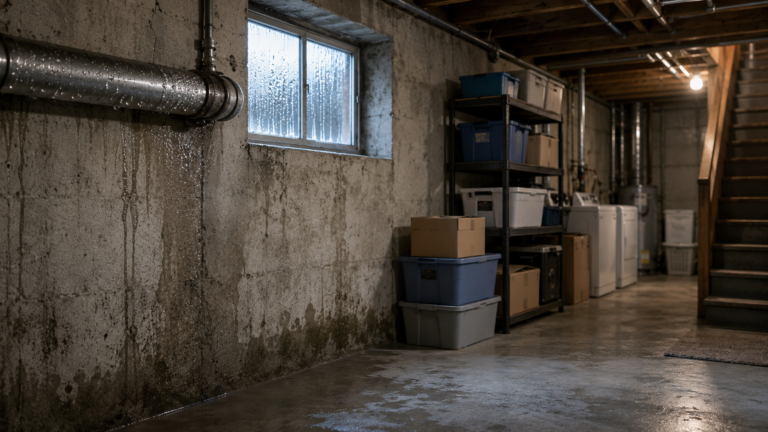
- windows or other cool surfaces collect condensation
- stored cardboard, blankets, or fabrics start smelling stale
- the air feels clammy for days at a time
- the basement stays noticeably more humid than upstairs across several days, not just one reading
Those clues do not explain the cause by themselves. They simply suggest that the normal basement-vs-upstairs difference may be crossing into a broader moisture pattern.
If the basement feels unusually humid beyond this basic structural difference, why a basement can stay humid even without rain is the better next read.
What Should You Check First?
Before assuming the basement has a serious moisture problem, keep the first checks simple.
- compare readings upstairs and downstairs
- check them at the same time of day
- repeat the comparison over several days
- notice whether there is a musty smell
- look for condensation on cool surfaces
- pay attention to stale or damp-feeling storage materials
- see whether the gap stays stable or starts growing
If the pattern starts looking less like a normal difference between floors and more like a wider basement issue, compare it with basement moisture problems.
If several areas of the house already feel sticky or heavy, it may also help to compare the pattern with broader signs your home has too much humidity.
FAQ
Are basements usually more humid than upstairs?
Yes. In many homes, that is a normal structural difference because basements are cooler, lower, and less ventilated than the main floor.
Does a more humid basement always mean something is wrong?
No. A basement can be somewhat more humid than upstairs without there being a serious problem. What matters is whether the difference stays mild or comes with musty odor, condensation, or damp-feeling materials.
Should I measure basement humidity separately from upstairs?
Yes. Basements often behave differently from the rest of the house, so separate readings give you a much clearer picture than relying on one reading elsewhere in the home.
What matters more: the number or the pattern?
The pattern. A slightly higher basement reading without other symptoms is very different from a basement that stays more humid for days and also smells musty or feels clammy.