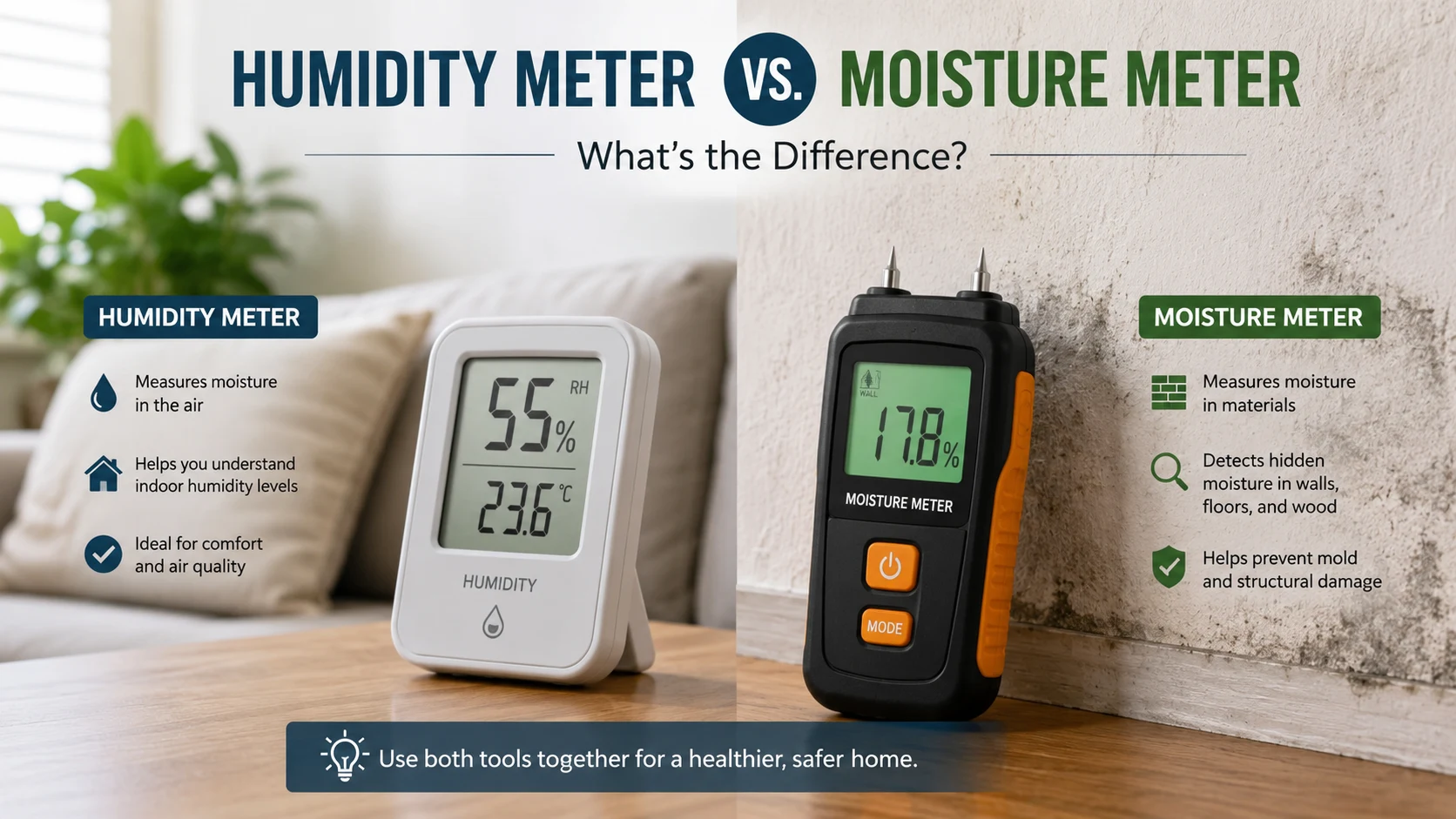
Humidity Meter vs Moisture Meter: What’s the Difference?
If you are comparing humidity meter vs moisture meter, you are already asking a smart question.
Quick Answer
Use a humidity meter when you want to understand the moisture level in the air. Use a moisture meter when you want to check whether a wall, floor, trim, or other surface is holding too much moisture.
Quick Tip
If your room feels damp, start with a humidity meter. If one wall looks suspicious, a moisture meter is usually the better tool.
Important
These tools are not interchangeable. A humidity meter helps explain room conditions. A moisture meter helps investigate specific materials. Many homeowners buy one when they actually need the other.
A lot of homeowners know they need some kind of moisture tool, but they are not always clear on which one fits the problem they are trying to solve. The result is often confusion, wasted money, or readings that do not answer the actual question that brought them there.
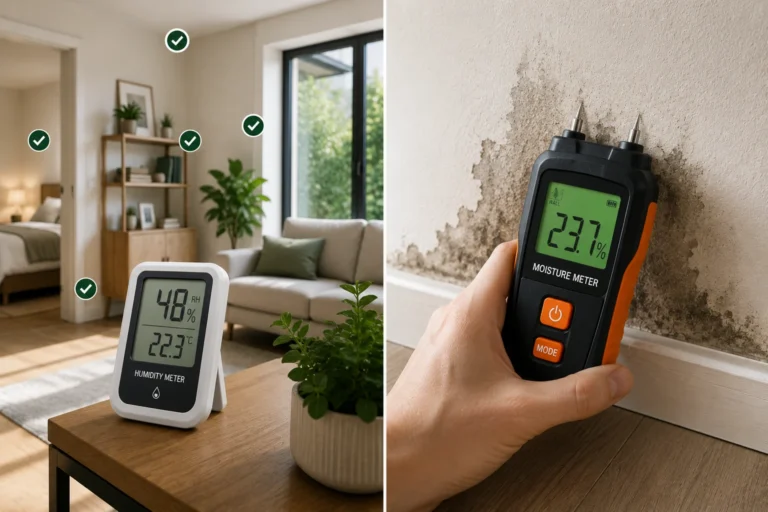
The simplest way to think about it is this: a humidity meter tells you what the air is doing, while a moisture meter tells you what a material is doing. Both are useful. They just serve different parts of the home-moisture puzzle.
What a humidity meter measures
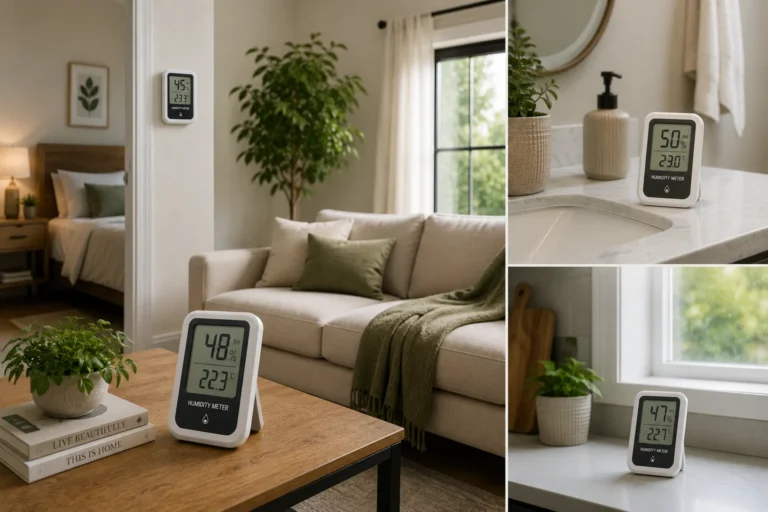
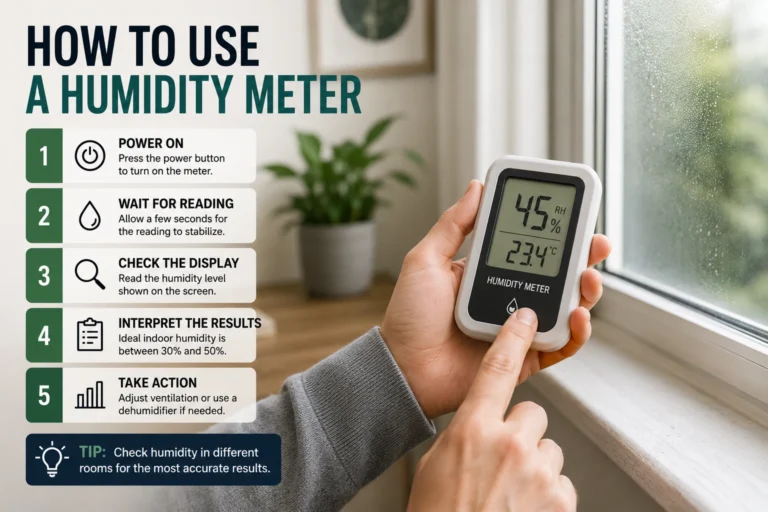
A humidity meter, often called a hygrometer, measures how much moisture is in the air. In a home setting, it helps answer questions like whether a bedroom is too humid at night, whether a basement air pattern is too damp, or whether whole-home humidity is high enough to explain condensation.
- Wet bedroom windows or overnight humidity
- A basement that feels clammy
- A room that feels heavy or stale
- Checking whether ventilation changes helped
What a moisture meter measures
A moisture meter checks how much moisture is inside a material such as drywall, wood, trim, or flooring. It is more useful for questions about a suspicious wall, repeating stain, bubbling paint, or damp trim.
- A stained wall that may still be active
- A suspicious patch near a window
- Trim or flooring that may be holding extra moisture
- Comparing a damp-looking area with a dry one
The simplest way to choose between them
Use a humidity meter if the issue is about the room atmosphere. Use a moisture meter if the issue is about a specific wall, floor, or material. That alone solves most confusion.
Real home situations where each tool helps
| Situation | Better first tool | Why |
|---|---|---|
| Wet bedroom windows | Humidity meter | The issue is likely overnight room moisture |
| Damp wall stain | Moisture meter | You want to know whether the material is still wet |
| Musty closet | Humidity meter first | The room pattern matters before the wall check |
| Clammy basement | Humidity meter first | You need the air pattern before the material check |
Some situations benefit from both tools. A bedroom with wet windows and a musty exterior wall is a good example. A bathroom with lingering condensation and a suspicious paint bubble is another.
Which tool should you use first?
Check whether the space is holding moisture in the air before checking random surfaces.
Separate a cold-feeling wall from a material that may actually be holding moisture.
Improve air movement or moisture control before assuming a hidden leak.
Check whether the issue is localized to the material rather than the room air.
The room smells musty but walls look fine
Start with a humidity meter.
A musty smell can come from damp air building up before visible damage appears. If the room smells stale but the walls look normal, the first question is whether the space is holding too much moisture in the air. That is where a humidity meter is more useful than opening a wall or checking one surface at random. If the room also shows other signs your home has too much humidity, that supports the same direction.
A wall feels damp to the touch
Use a moisture meter.
Touch can be misleading because a wall can feel cold without actually being wet. A moisture meter helps separate “this feels cool” from “this material may still be holding moisture.” If you need more context on that kind of check, this guide explains how a moisture meter reads a wall.
Humidity reads high but the walls are dry
The humidity meter has already answered the main question.
At that point, the room is more likely dealing with poor ventilation, trapped moisture, or excess indoor humidity than with one clearly wet wall. The next step is usually to improve air movement or adjust moisture control in the room, not assume there is automatically a hidden leak. If a dehumidifier is already in use, the next question may be what dehumidifier setting to use.
There are stains on the wall but room humidity is normal
Use a moisture meter.
That pattern may point to localized moisture, an older stain that needs checking, or a surface problem that is not really about the room air as a whole. A normal room reading does not automatically clear the wall itself.
When both tools are useful together
In those situations, the humidity meter explains the room pattern and the moisture meter helps confirm whether the surface is being affected. This is why the tools often complement each other rather than compete.
Common mistakes people make
Using a moisture meter on freshly painted surfaces
Fresh paint can affect the surface and make interpretation less useful. A wall may need time to settle before a reading means much.
Comparing readings from different materials as if they meant the same thing
Drywall, wood, and trim do not always behave the same way. A reading in one material should not be assumed to mean the exact same thing in another.
Checking room humidity right after showering or cooking
Short-term moisture spikes can distort the picture. A room reading is more useful when it reflects typical conditions, not only a temporary burst of steam.
Assuming a cheap hygrometer is perfectly calibrated out of the box
Basic humidity meters can still be useful, but a low-cost reading should be treated as a decision aid, not as a flawless laboratory number.
Comparison table
A simple way to understand the difference is this: a humidity meter measures the moisture in the air, while a moisture meter checks whether a material itself is holding water. One tool answers a room question. The other answers a surface question.
If the main goal is to decide which tool answers your question faster, this comparison is the most useful place to start.
| Humidity meter (hygrometer) | Moisture meter | |
|---|---|---|
| What it measures | Water vapor in the air, usually shown as relative humidity | Moisture inside a material such as drywall, wood, or flooring |
| Where you use it | A room, basement, closet, bedroom, or any enclosed space | Walls, wood trim, drywall, subfloor, or other building materials |
| What it can’t tell you | Whether one specific wall or stain is wet inside | Whether the room air itself is too humid |
| When it’s the right tool | When you want to know if the space needs better airflow or a dehumidifier | When you want to know if a stain, damp spot, or suspicious wall area may still be active |
The key difference is simple: one tool helps you understand the air in the room, while the other helps you check the condition of a material. If your question is mainly about whether the room needs a healthier moisture target, use this only as a starting point and see the guide on what humidity level to aim for.
Helpful next reads include What Is a Humidity Meter and Do You Need One?, What Is a Moisture Meter for Walls?, Signs Your Home Has Too Much Humidity, and the Moisture Tools section. If you want help understanding what wall moisture readings usually mean, the next guide breaks down how to read higher and lower numbers in context.
How we approach tool guides: this comparison is based on how humidity meters and moisture meters are designed to work, common manufacturer guidance, and practical homeowner use cases, not affiliate rankings. When a guide includes hands-on readings, we label that clearly. This guide does not include hands-on readings; it explains what each tool measures and when each one is more likely to answer your question. We update guides as first-hand material is added.
Important limitation: These tools can help clarify what may be happening, but they do not diagnose structural problems. If you suspect a leak inside a wall, persistent mold behind a surface, or damage to the building itself, a professional inspection is the right next step. No consumer meter replaces that.
Frequently asked questions
Is a hygrometer the same as a humidity meter?
Yes. In home use, people usually mean the same thing.
Can a moisture meter tell me if a room is humid?
No. It checks materials, not air.
Which tool should I buy first?
That depends on the problem. For humid rooms, start with a humidity meter. For suspicious walls or stains, start with a moisture meter.
Do homeowners ever need both?
Yes. They are especially useful together when a room has both air moisture issues and suspicious surfaces.
Start with the symptom, not the gadget
Air problems and wall problems are related, but they are not the same. The right tool choice makes home moisture diagnosis much easier.
Which tool should I use first for a musty basement?
Start with a humidity meter if the whole basement feels heavy or stale, because that tells you whether the air is staying too damp overall before you investigate one wall or corner.
Which tool should I use first for a damp wall stain?
Start with a moisture meter when one wall patch, stain, or repeated mark is the main concern. It helps compare that area with a drier section nearby.
Do I ever need both tools for one moisture problem?
Yes. A humidity meter helps you understand the room air, while a moisture meter helps compare suspicious materials. Together they are useful when both the room and one wall section seem involved.
Can a moisture meter replace a hygrometer?
No. A moisture meter checks materials, while a hygrometer or humidity meter checks air moisture. They answer different questions, even when the same problem affects both.