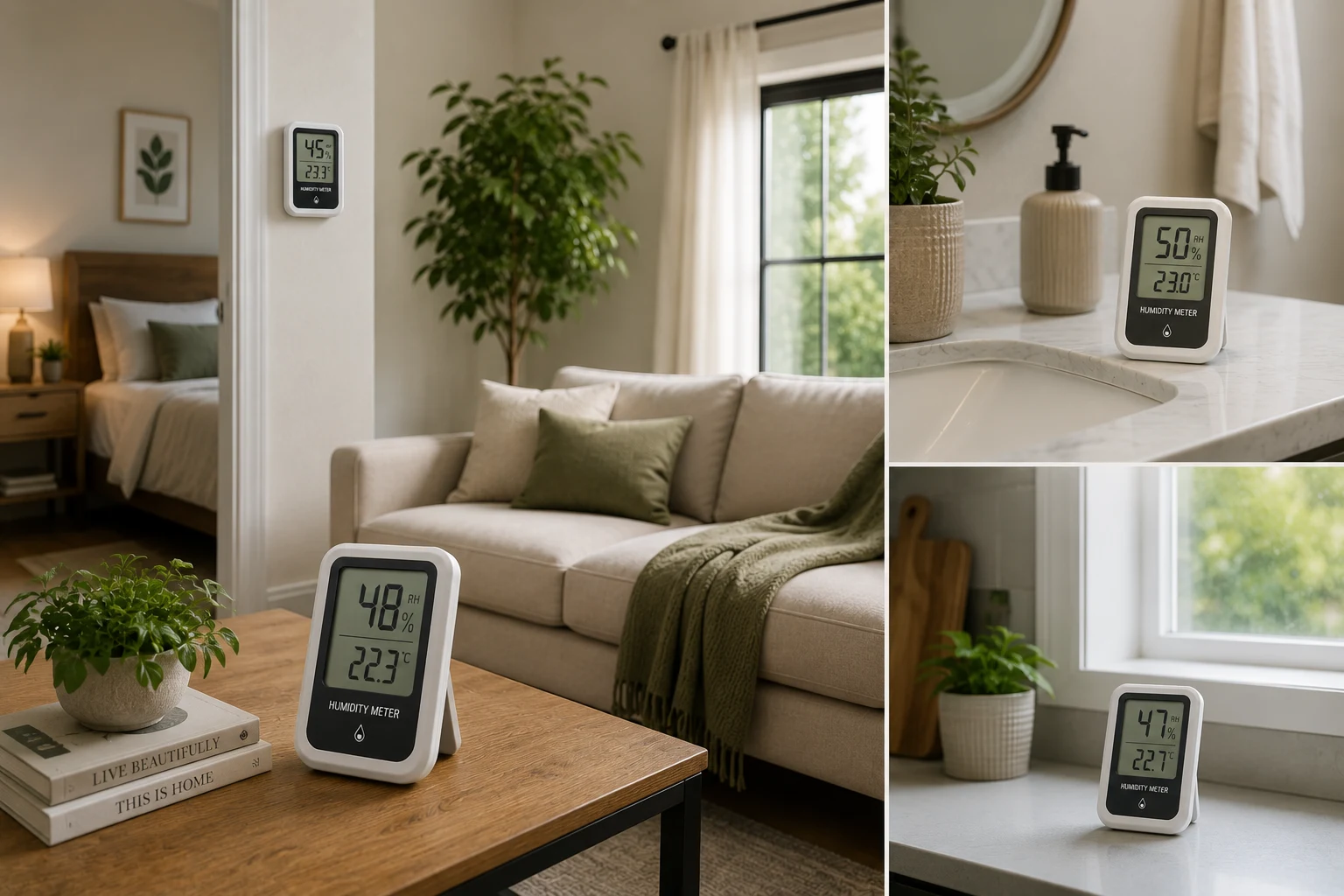
What Moisture Meter Readings Mean on Walls
Understanding what moisture meter readings mean on walls can save homeowners a lot of confusion.
Quick Answer
Wall moisture meter readings help you compare suspicious areas with clearly dry ones. They can point to hidden dampness, but the most useful interpretation comes from patterns, repeat readings, and comparison, not one isolated number.
Quick Tip
A moisture reading by itself is less helpful than a dry-wall comparison nearby. The pattern often matters more than the exact figure.
Important
Moisture meter readings do not automatically prove a leak or mold problem. They are clues. The smartest way to use them is to compare materials, locations, and timing.
It is easy to assume a moisture meter will give one simple answer: wet or dry, safe or unsafe, problem or no problem. In real homes, it is usually more nuanced than that.
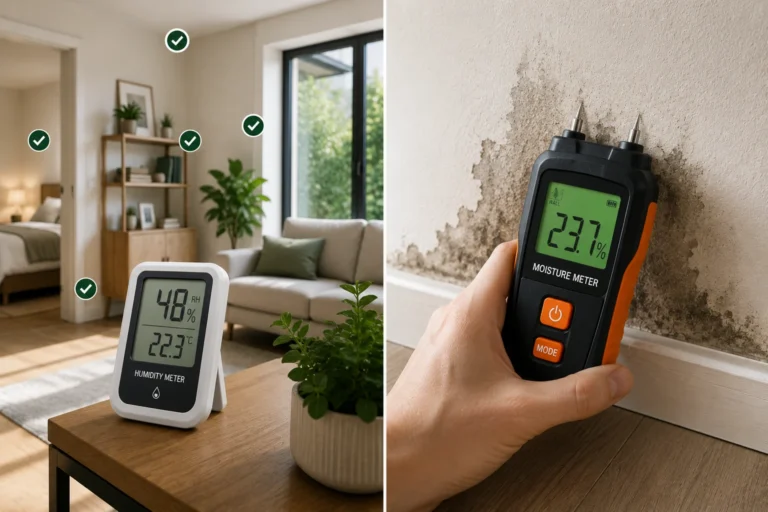
A moisture meter is most useful as a comparison tool. It helps you see whether one part of a wall is behaving differently from another part that seems normal. That difference matters far more than chasing a single reading in isolation. If one spot near a stain or cool patch reads consistently higher than nearby dry areas, that is useful evidence. If everything reads similarly, the wall may not be holding unusual moisture even if the surface looks imperfect.
What moisture meter readings on walls are really telling you
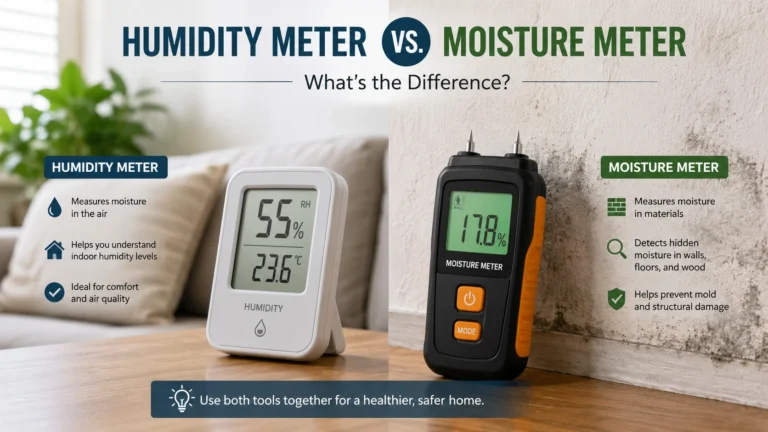
A wall moisture reading gives you information about how much moisture the material appears to be holding relative to normal conditions. That may include drywall, trim, wood framing areas you can reach, or painted wall surfaces depending on the meter type.
The reading does not tell you the full story by itself. It does not identify the exact cause. It does not confirm mold. It does not tell you how long the dampness has been there. What it does do is help you decide whether a suspicious area deserves more attention than the rest of the wall.
Why one number is not enough
Many people want to know what counts as too high. That is understandable, but the most useful approach is not to obsess over one number alone. Wall materials vary. Meter types vary. Paint, texture, and material density can all affect the reading.
That is why a single number without context often causes more confusion than clarity. The smarter question is how does this reading compare with nearby areas that seem dry and normal?
Material and surface context matters
Different wall materials can respond differently, which is one reason moisture readings need context. Painted drywall, masonry, wood trim, and other surfaces do not always behave the same way on a meter.
That means a reading should not be compared too casually across different materials as if every surface followed the same pattern. A more useful comparison is usually one area versus a nearby area made of the same material and finished in a similar way.
How to compare readings the useful way
Start by testing an area of the same wall or nearby wall that looks and feels normal. Then test the suspicious area. If possible, test several points around it.
- One patch consistently reading higher
- An edge of the wall reading differently from the center
- A stain area reading above nearby clean wall
- A window-side area reading above an interior wall
Repeat the comparison later if needed, especially if the same wall area seems to keep reading differently over time.
How to read differences more usefully
A single reading is usually less useful than a comparison. In real homes, the better question is not “Is this number perfect?” but “Is this area reading differently from similar nearby areas?”
Repeated readings also help separate a pattern from a one-time anomaly. If the same section keeps reading higher than nearby dry-looking wall areas across more than one check, that usually deserves more attention than one isolated spike.
What can cause higher wall readings
- Hidden leaks
- Condensation on cold walls
- Old water damage
- Poor airflow
- Surface differences or coatings
What to do if one area reads much higher than another
If one wall area reads clearly higher and the location also matches other clues such as smell, staining, bubbling paint, or cool dampness, the reading deserves attention.
- Is the wall near plumbing?
- Is it on an exterior wall?
- Is it close to a window?
- Does it worsen after rain?
- Does it match a visible stain or musty smell?
The meter reading helps narrow the question. It does not replace broader observation.
When a higher reading deserves more attention
A higher reading becomes more meaningful when it keeps showing up in the same place or starts clustering across the same section of wall. That is especially true when the area also matches other clues such as visible staining, a musty smell, or a damp feel.
That still does not prove the cause by itself. It simply means the wall is worth checking again rather than being judged from one pass alone. If you want the broader tool context first, it helps to review what a moisture meter for walls is actually used for.
Common mistakes when reading wall moisture
- Trusting one spot too much
- Ignoring the wall type
- Assuming a high reading automatically means mold
- Forgetting timing
Wall reading checklist
| Question | Why it matters |
|---|---|
| Did I compare with a dry area? | Gives useful context |
| Is the wall near a window or bathroom? | Helps explain the pattern |
| Is there a stain or smell too? | Strengthens the clue |
| Did I test more than one point? | Helps avoid overreading one spot |
| Does the reading change over time? | Useful for tracking active moisture |
Frequently asked questions
What is a high moisture reading in a wall?
That depends on the meter and material, which is why comparison with a dry area is usually more useful than chasing one exact number.
Can a moisture meter confirm a leak?
Not by itself. It can show that a material may be holding extra moisture, which supports further investigation.
Do wall readings prove mold?
No. They only indicate moisture, not mold presence.
Should I retest the wall later?
Yes, especially if the issue may be weather-related, leak-related, or tied to room use.
Use the reading as part of the pattern
If a wall reading seems high, compare, retest, and look at the full wall pattern so the number becomes part of a clearer diagnosis.