What Is a Moisture Meter for Walls?
If you are asking what is a moisture meter for walls, you are probably already dealing with a suspicious sign: a damp patch, a stain that keeps returning, bubbling paint, a musty smell, or a wall that feels colder or softer than it should.
Quick Answer
A moisture meter for walls measures or estimates moisture in building materials so you can compare a suspicious area with a nearby drier one. It helps you investigate hidden dampness, recurring stains, and changing wall patches more confidently, but it does not identify the exact source by itself.
Quick Tips
- A moisture meter checks material moisture, not air humidity.
- It is useful for walls, trim, floors, and suspicious damp spots.
- Compare one area to another for better context.
- It does not replace fixing the moisture source.
What a wall moisture meter does
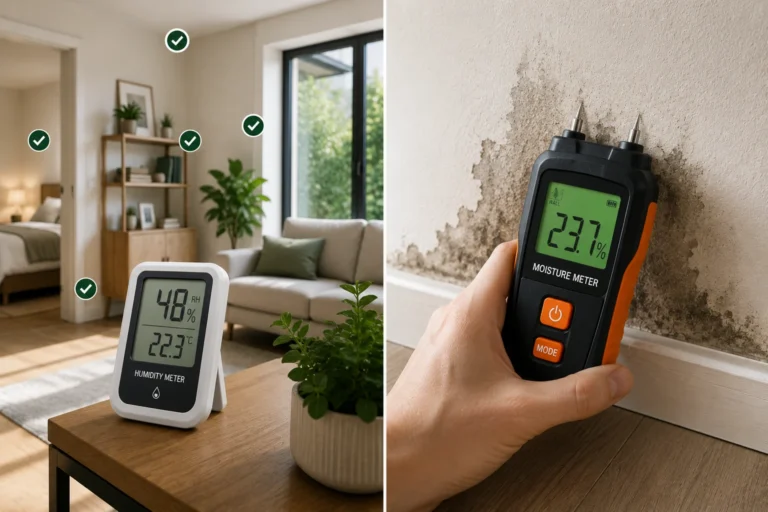
A wall moisture meter measures the moisture level in a building material such as drywall or wood trim. In practical terms, it helps you compare suspicious areas with drier areas nearby.
When it is useful
- You have a stain that keeps coming back
- You suspect a slow leak
- Paint is bubbling or peeling
- A room smells musty near one wall
- You want to compare a suspicious area with a normal one
When a Moisture Meter Helps Most
- Bubbling or peeling paint that may be hiding dampness behind the finish
- A recurring wall stain that never seems fully resolved
- A damp corner that feels cooler or slower to dry than nearby areas
- Comparing one suspicious wall with a nearby dry wall for context
- Checking whether the same patch is changing over time instead of guessing once
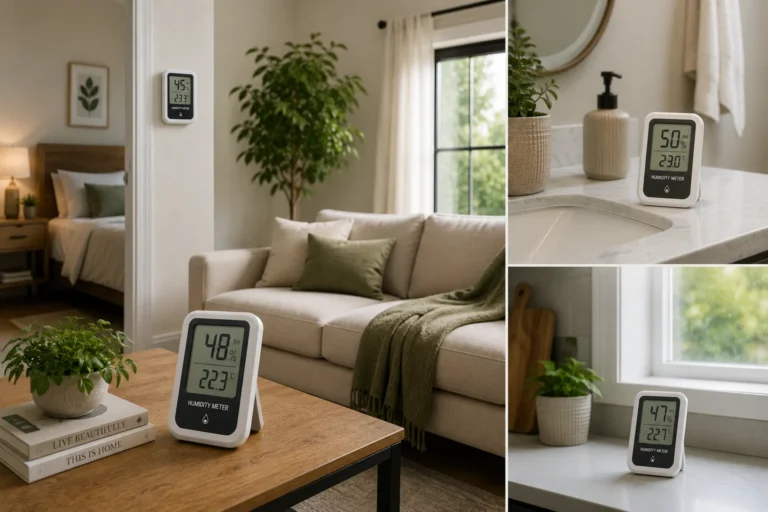
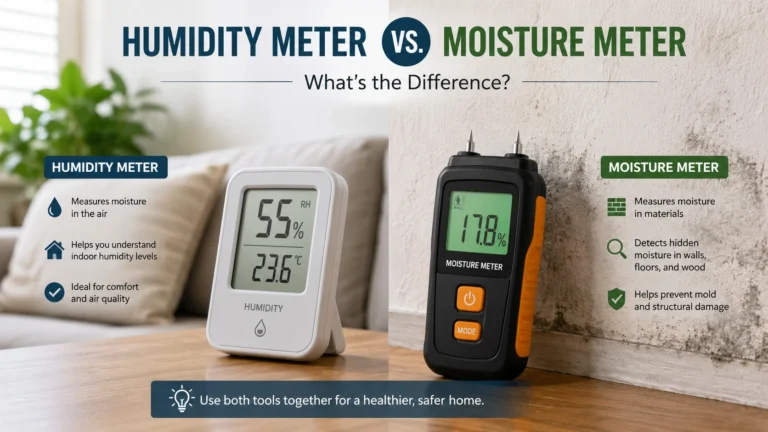
How it differs from a humidity meter
| Humidity meter | Moisture meter |
|---|---|
| Measures moisture in the air | Measures moisture in a material |
| Useful for rooms that feel damp | Useful for walls, trim, and suspicious surfaces |
| Helps explain room conditions | Helps check whether a building material is wet |
What kinds of wall problems it can help investigate
- Damp walls or repeated damp patches
- Hidden leaks behind painted surfaces
- Window-adjacent moisture or repeated condensation zones
- Exterior wall issues with poor airflow
How to use one at home
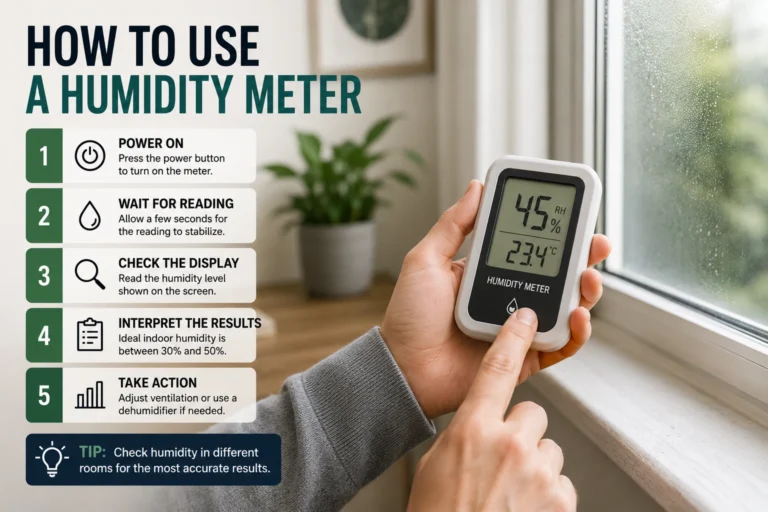
Read the instructions for your model and use the tool comparatively. Test a clearly dry area first, then the suspicious area, and check a few spots around the edge instead of just one point.
A Practical Way to Compare Readings
Start by comparing one wall zone with another instead of trying to judge one number in isolation. Read a clearly dry area first, then the suspicious patch, then the surrounding edge. If the same location keeps reading higher over repeated checks, that is usually more useful than one standalone result. Surface readings can also be a first step before deciding whether deeper inspection is warranted.
Mistakes people make with moisture meters
- Taking one reading in isolation
- Using it like a mold detector
- Assuming a dry-looking surface means the wall is dry inside
- Ignoring the reason the wall got wet
What It Can Confirm — and What It Cannot
- It can help compare readings between suspicious and drier areas.
- It can help identify wetter wall zones worth watching more closely.
- It can help track whether one patch is changing over time.
- It can support a broader moisture investigation with better evidence.
- It cannot identify the exact moisture source by itself.
- It cannot confirm a mold type or replace a full professional inspection.
- It cannot interpret every wall material using one universal threshold.
What a meter cannot tell you
A moisture meter cannot tell you exactly what caused the dampness, how long it has been there, or whether mold is definitely present. It gives better evidence, not a complete diagnosis.
| Use case | Why it helps |
|---|---|
| Repeating wall stain | Checks whether moisture is still active |
| Bubbling paint | Adds context on dampness behind the finish |
| Musty wall area | Supports odor clues with material evidence |
| Window-side wall | Good for condensation-related checks |
Useful next reads are What Is a Humidity Meter and Do You Need One?, Humidity Meter vs Moisture Meter: What’s the Difference?, Damp Walls: What They Usually Mean, and How to Tell If You Have Mold Behind Walls.
Use it if the wall stain keeps returning, if the mark looks more like early mildew, or if the room moisture problem may be broader.
If you are unsure how to interpret the readings on a damp wall, the next guide breaks down what higher and lower numbers usually mean in context.
Where to Test First on a Suspicious Wall
Start with the area that already looks or feels different, then compare it with a nearby section that seems normal. A moisture meter is most useful when it helps you compare patterns instead of relying on one isolated number.
- Test the most suspicious spot first, such as a stain, corner, bubbling paint area, or section that feels cooler than the rest.
- Check a drier-looking section nearby so you have a baseline from the same wall or a comparable wall.
- Repeat the reading in a few nearby points instead of trusting a single tap, especially if the mark returns after rain, condensation, or seasonal humidity.
If several nearby readings point to the same damp pattern, that is usually more useful than one isolated high number. The goal is to compare zones and repeat the check, not jump to a deeper diagnosis from one measurement alone.
Frequently asked questions
Is a moisture meter for walls worth buying?
It can be very useful if you are dealing with suspicious stains, damp walls, or repeating moisture clues.
Can a moisture meter detect mold?
No. It detects moisture in materials, not mold itself.
How is it different from a hygrometer?
A hygrometer measures air humidity. A moisture meter measures moisture in a material or surface.
Can I use it on drywall?
Yes, many homeowners use moisture meters to compare drywall areas when a leak or damp patch is suspected.
Can a moisture meter help with a stain that keeps returning?
Yes. It can help you compare whether the same area is still reading wetter than nearby wall sections, which is useful when a stain keeps returning.
Can it tell if one wall is wetter than another?
Usually yes, in a comparative sense. That is one of the most practical ways homeowners use a moisture meter when one wall seems more suspicious than the next.
Need to compare the wall clue with the room air clue?
Use a humidity guide next if you want to understand whether the wall issue sits inside a wider room or whole-home moisture pattern.