Damp Walls: What They Usually Mean
When people notice damp walls, they often go straight to the most dramatic explanation. But a damp wall is not one single problem. It is a symptom.
Quick Answer
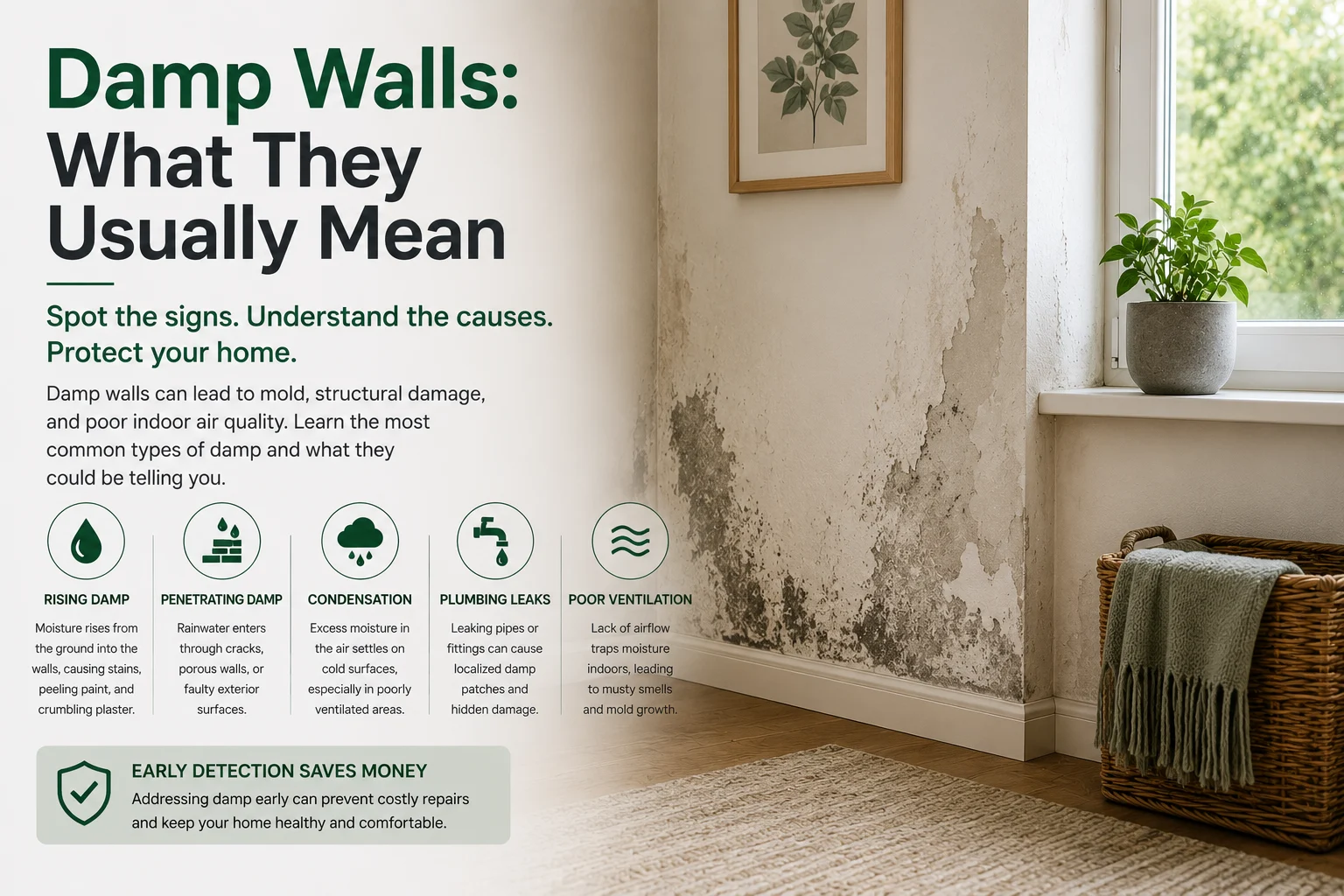
Damp walls are usually a sign of repeated moisture, not just a random surface issue. The most common causes are condensation, leaks, poor ventilation, cold exterior walls, or old water damage that never fully dried.
Quick Tips
- A damp wall is a clue, not a diagnosis by itself.
- Repeated dampness matters more than one isolated mark.
- Exterior walls and furniture-backed walls deserve extra attention.
- The pattern often reveals the cause.
What a damp wall may be telling you
A damp wall usually means one of two things: moisture is entering from somewhere, or moisture in the room is settling on that wall often enough to keep it from drying properly.
Common signs that a wall is staying too wet
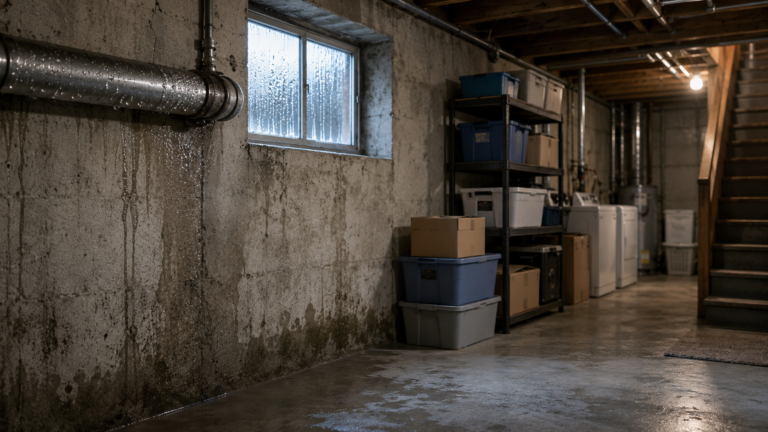
- A cool, dark, or discolored patch
- Peeling paint or bubbling finish
- A musty smell nearby
- Repeated staining in the same area
- Dampness behind furniture
The most common causes of damp walls
- Condensation on colder wall surfaces
- Hidden leaks
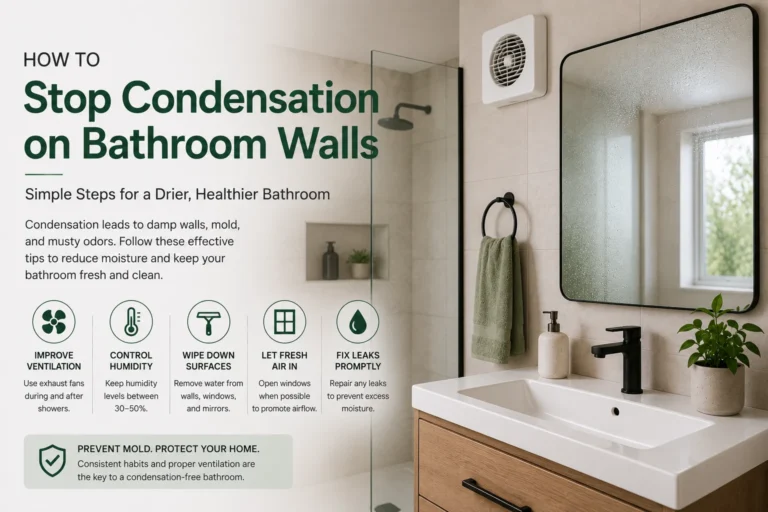
- Poor ventilation in bathrooms, bedrooms, or low-airflow rooms
- Old water damage that never fully dried
| Question | Why it matters |
|---|---|
| Is the wall exterior-facing? | Condensation risk is higher |
| Is furniture blocking airflow? | Dampness can hide there |
| Does it worsen after rain? | Possible leak clue |
| Does it worsen in winter? | Strong condensation clue |
What to do first
Look at the pattern. Is the wall near a window, bathroom, pipe, or exterior corner? Does it worsen after rain, after showers, or in colder weather? If possible, compare the suspicious section with a clearly dry part of the wall.
Mistakes people make
- Repainting too soon
- Assuming every damp wall is a leak
- Ignoring room airflow
- Leaving large furniture pressed against problem walls
Important
A damp wall is worth taking seriously even before it becomes severe because the longer the pattern continues, the harder it can be to tell where it began.
What can happen if damp walls are ignored
Mild dampness can turn into repeated staining, musty smells, mold-prone areas, surface damage, and slower room drying in general.
Useful next reads are What Is a Moisture Meter for Walls?, What Causes Mold on Walls and How to Prevent It, when wall mildew appears before broader mold, and Signs Your Home Has Too Much Humidity.
Frequently asked questions
Are damp walls always a leak?
No. Condensation and trapped humidity are also very common causes.
Why is one wall damp and not the others?
That wall may be colder, closer to moisture, or getting less airflow than the rest.
Can damp walls lead to mold?
Yes. Repeated dampness creates conditions mold can use over time.
Should I use a moisture meter on a damp wall?
Yes, if the issue keeps returning and you want better evidence of whether the wall is still wet.
Need better proof of what the wall is doing?
If a damp patch keeps returning, a wall moisture tool can help you compare suspicious areas with drier ones before you guess at the cause.