What Causes Mildew on Walls? Early Signs and Fixes
If you are wondering what causes mildew on walls, the short answer is usually this: too much surface moisture, for too long, in a room that does not dry properly. The longer answer is more useful, because mildew is often one of the earliest visible warnings that a wall is staying damp more often than it should.
People often use the words mildew and mold as if they mean exactly the same thing. In everyday home use, they overlap a lot, but there is still a useful distinction. Mildew is often thought of as the early, surface-level, easier-to-see moisture growth that shows up on painted walls, bathroom ceilings, window edges, and cool corners. It is usually flatter, lighter, and more directly tied to damp surfaces and weak ventilation. Mold, on the other hand, is often used more broadly for recurring or deeper moisture-related growth problems.
You do not need to panic over every small patch. But you also should not ignore mildew if it keeps returning. In many homes, mildew on walls is not the final problem. It is the first clear sign that the room moisture balance is off.
Key Takeaways
- Mildew on walls usually points to repeated surface moisture, not random staining.
- Condensation, weak ventilation, and cool wall surfaces are the most common triggers.
- Recurring patches in the same spot usually mean the room is still feeding the problem.
- Early mildew is easier to manage when you fix the room conditions before damage spreads.
Why mildew often appears before broader wall mold
The goal here is not to get overly technical. The practical reason to separate mildew from mold is that mildew often points to repeated surface dampness before the problem becomes more established or more widespread.
- the room stays humid too long
- the wall surface cools down too much
- the area gets repeated condensation
- airflow is poor
- the moisture source is small but consistent
That makes mildew useful as an early warning. If you spot it early, you often have a better chance to fix the conditions before the room develops a more persistent moisture pattern. For the broader causes of mold on walls, use the main wall mold guide.
Early signs of mildew on walls
Faint speckling or light surface spotting
This may appear white, grey, greenish, or dull black depending on the surface and room conditions.
Repeated marks in the same place
If the same wall corner, ceiling line, or area near a window keeps showing spots after cleaning, the room is likely feeding the problem.
Slight musty smell near the wall
The smell may be light at first, but it often appears before the wall looks obviously affected.
Wall feels cool or slightly damp
A wall does not need to look wet to be staying damp too often.
Paint or finish starts looking uneven
In some cases, surface moisture shows up through dull paint, patchiness, or slight texture changes.
What causes mildew on walls?
Condensation on cold walls
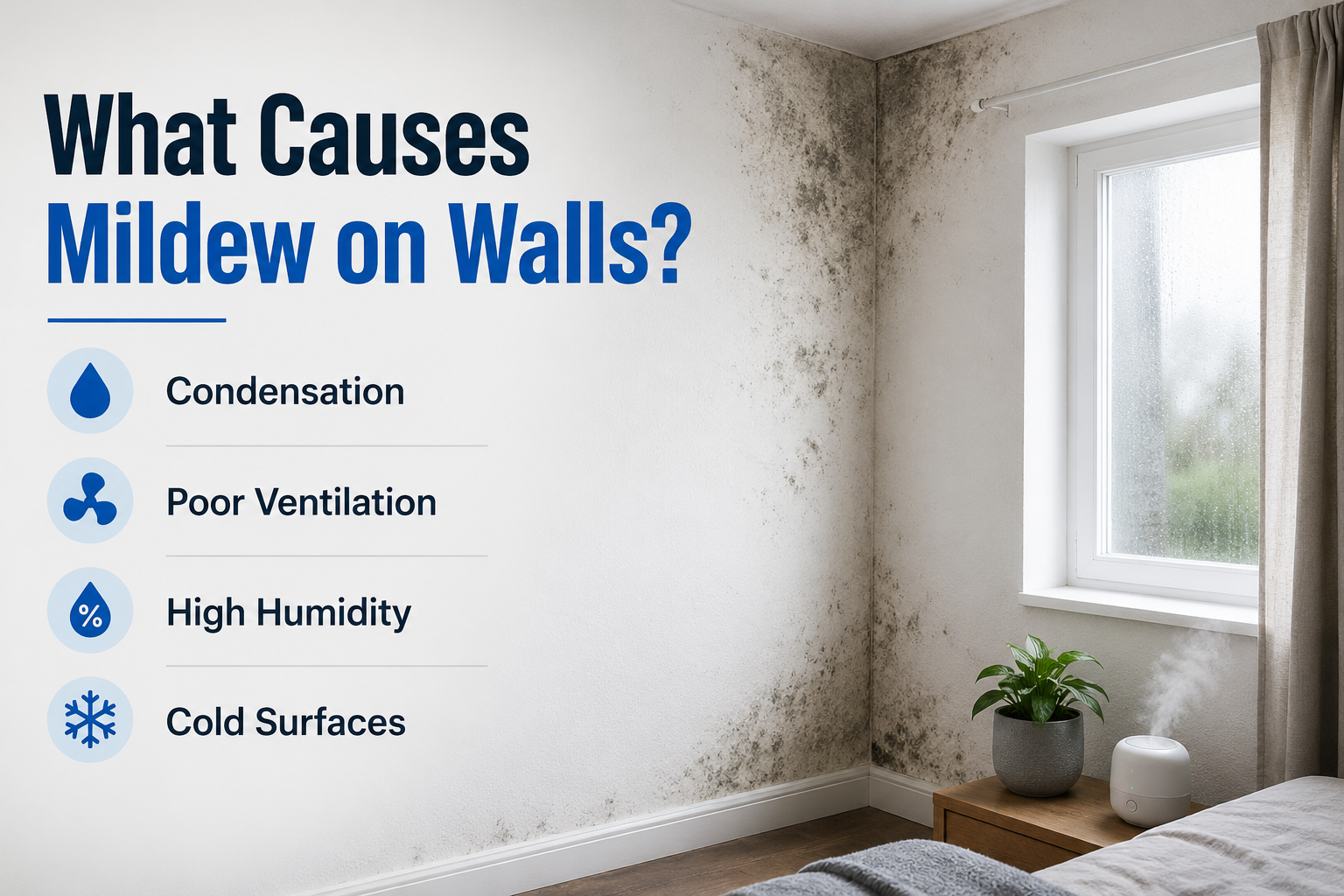
One of the most common causes is condensation. Warm indoor air carries moisture. When that air hits a colder wall surface, especially in winter or in poorly insulated rooms, the moisture settles on the wall.
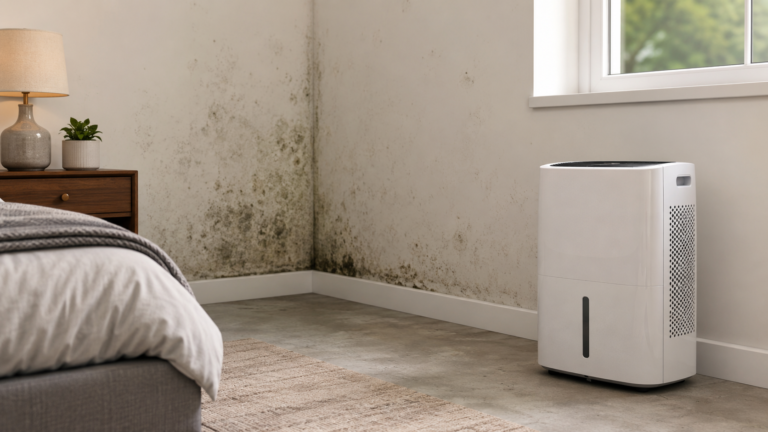
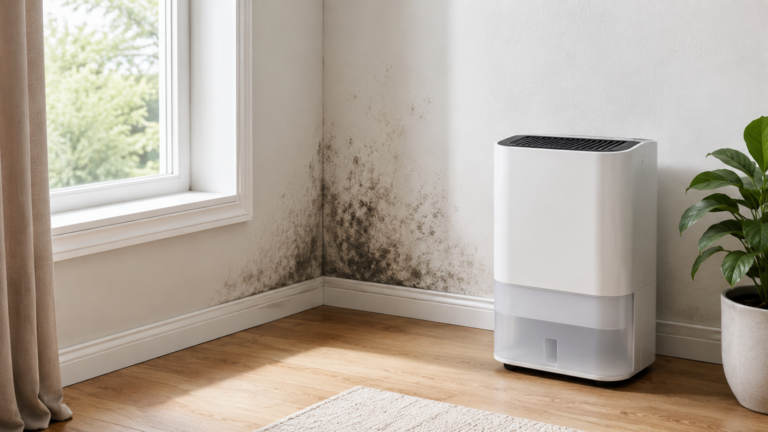
This is why mildew often appears on exterior walls, bedroom corners, walls behind furniture, window-adjacent areas, and bathroom walls. If the condensation happens often enough and the surface does not dry well, mildew gets the conditions it needs.
Poor ventilation
Rooms with weak airflow are some of the most mildew-prone spaces in a home. Bathrooms, basements, bedrooms, and closed storage rooms often struggle here.
- steamy bathrooms that stay wet too long
- bedrooms that feel stuffy in the morning
- closets that smell stale
- corners that never seem to dry properly
Mildew is often the visual result of air that is too moist and too stagnant. That is also when when the room is staying too humid overall becomes a useful comparison.
High indoor humidity
If the home is carrying too much moisture overall, walls become more vulnerable. You may notice this first through sweating windows, damp-feeling rooms, and stale air.
Walls blocked by furniture or storage
A surprising number of mildew patches start behind something. Wardrobes, shelves, beds, sofas, and storage units reduce airflow and trap cool, stale air near the wall.
Repeated bathroom or shower steam
Bathroom mildew is especially common because steam hits walls repeatedly. Even if the room looks clean, poor fan use and slow drying can make the same ceiling corner or upper wall section vulnerable again and again. If one wall seems more suspicious than the rest, compare it with if one wall seems more suspicious than the rest.
Older moisture damage that never fully stabilized
In some homes, mildew appears where a wall had an older moisture event. Even if the original issue no longer looks dramatic, the area may still be more vulnerable to dampness or slow drying.
Quick Tip
If the patch sits on a cold exterior wall or beside a wet window, look at condensation and drying patterns before assuming a hidden leak.
Where mildew on walls usually appears first
Bathroom walls and ceilings
Bathrooms are one of the most common places because steam builds quickly and dries slowly if ventilation is weak.
Bedroom corners
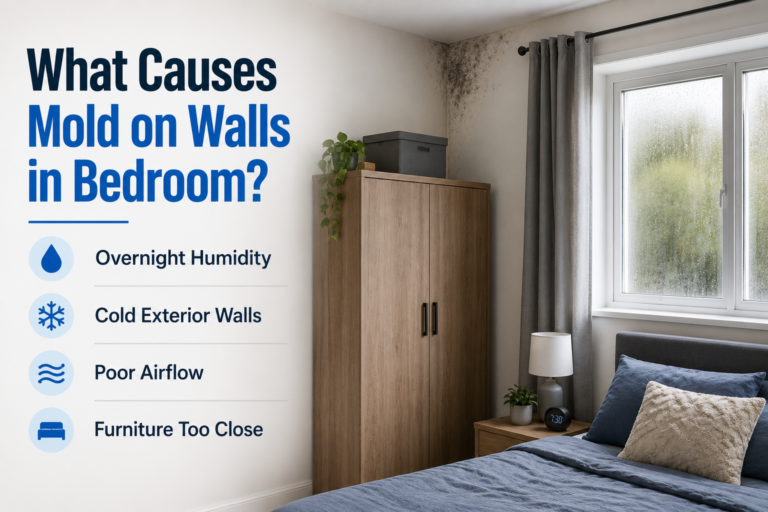
Bedrooms often trap overnight humidity, especially in colder months when windows stay shut.
Around windows
Condensation and cool surfaces make these areas classic mildew zones. That is especially true when the problem starts near cold windows in winter.
Behind furniture
Large items against exterior walls create exactly the kind of stagnant zone mildew likes.
Basements and lower-level walls
These spaces are cooler and often hold moisture longer than upstairs rooms.
How to tell if it is probably mildew and not something else
- it stays near the surface
- it appears where condensation is common
- it comes back after simple cleaning
- the room also has humidity clues
- it sits in a corner, near a window, or in a steam-heavy room
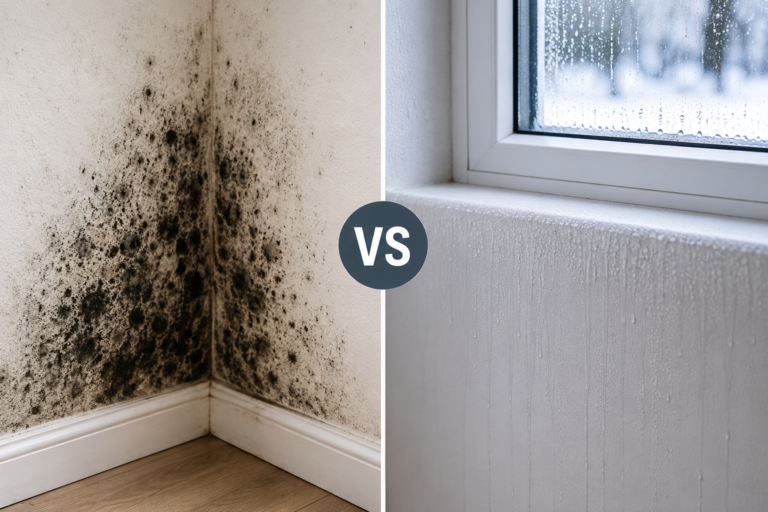
It is less likely to be just dust if the patch repeats in the same damp location. It is less likely to be only old staining if it keeps changing or showing up fresh. And if you are not sure whether it is mildew or condensation, use the comparison guide before assuming the cause.
What to do first
Reduce the surface moisture pattern
You do not need to start with extreme solutions. First, ask why that wall keeps staying damp.
Improve airflow
Move furniture slightly away from cold walls if possible. Let problem corners breathe. Open up airflow in rooms that stay stale.
Watch room humidity
If windows sweat, bedrooms feel damp, or the bathroom stays wet too long, the mildew may be part of a bigger humidity pattern.
Clean visible surface growth carefully
Cleaning the visible area may help you reset the surface, but if the moisture pattern does not change, the patch often comes back.
Check whether the room dries properly
The real question is not only can I clean this. It is why is this spot getting damp often enough for mildew to return.
Common mistakes people make
- Painting over it too quickly
- Treating mildew as only a cleaning issue
- Ignoring repeated return
- Assuming mildew always means a severe leak
When to look closer
- it keeps returning after cleaning
- the wall feels soft or unusually damp
- the room smells musty regularly
- the affected area grows
- there are other moisture signs nearby
- the wall is near plumbing or a known damp zone
If that happens, the issue may be moving beyond light surface mildew into a broader moisture problem.
Don’t Ignore This
- the same corner keeps showing new spots after cleaning
- paint starts bubbling or the wall feels softer than usual
- the room smells musty even when the wall looks mostly dry
What can happen if you ignore it
- more condensation-prone surfaces
- more musty odor
- slower drying
- more visible wall damage
- more recurring mold issues
That is why mildew is best treated as a warning sign, not just a cosmetic annoyance.
Practical wall mildew checklist
| What to check | What it may mean |
|---|---|
| Wall is on an exterior side | Higher condensation risk |
| Room feels humid or stale | Moisture may be lingering too long |
| Window nearby gets wet | Condensation pattern is likely involved |
| Furniture blocks airflow | Wall may be drying poorly |
| Patch returns in same place | Moisture conditions are still active |
Wall Check Before You Leave the Room
- Check whether the wall is colder than nearby surfaces.
- Notice whether the patch is near a window, corner, or blocked wall.
- Look for stale smell, not just visible spotting.
- Compare the area after dry weather and after humid weather.
Frequently asked questions
Is mildew on walls the same as mold?
Not exactly in everyday home use. Mildew is often treated as an early, surface-level moisture growth, while mold is a broader term for recurring moisture-related growth.
What causes mildew on walls most often?
Usually condensation, high indoor humidity, poor ventilation, or a wall that stays cool and damp too often.
Can mildew on walls appear without a leak?
Yes. Many cases come from repeated surface moisture and room humidity rather than a visible leak.
Should I worry if mildew keeps coming back?
Yes. Repeated return usually means the room conditions still support it, even if the patch looks small.