What Humidity Level Causes Mold in a Basement?
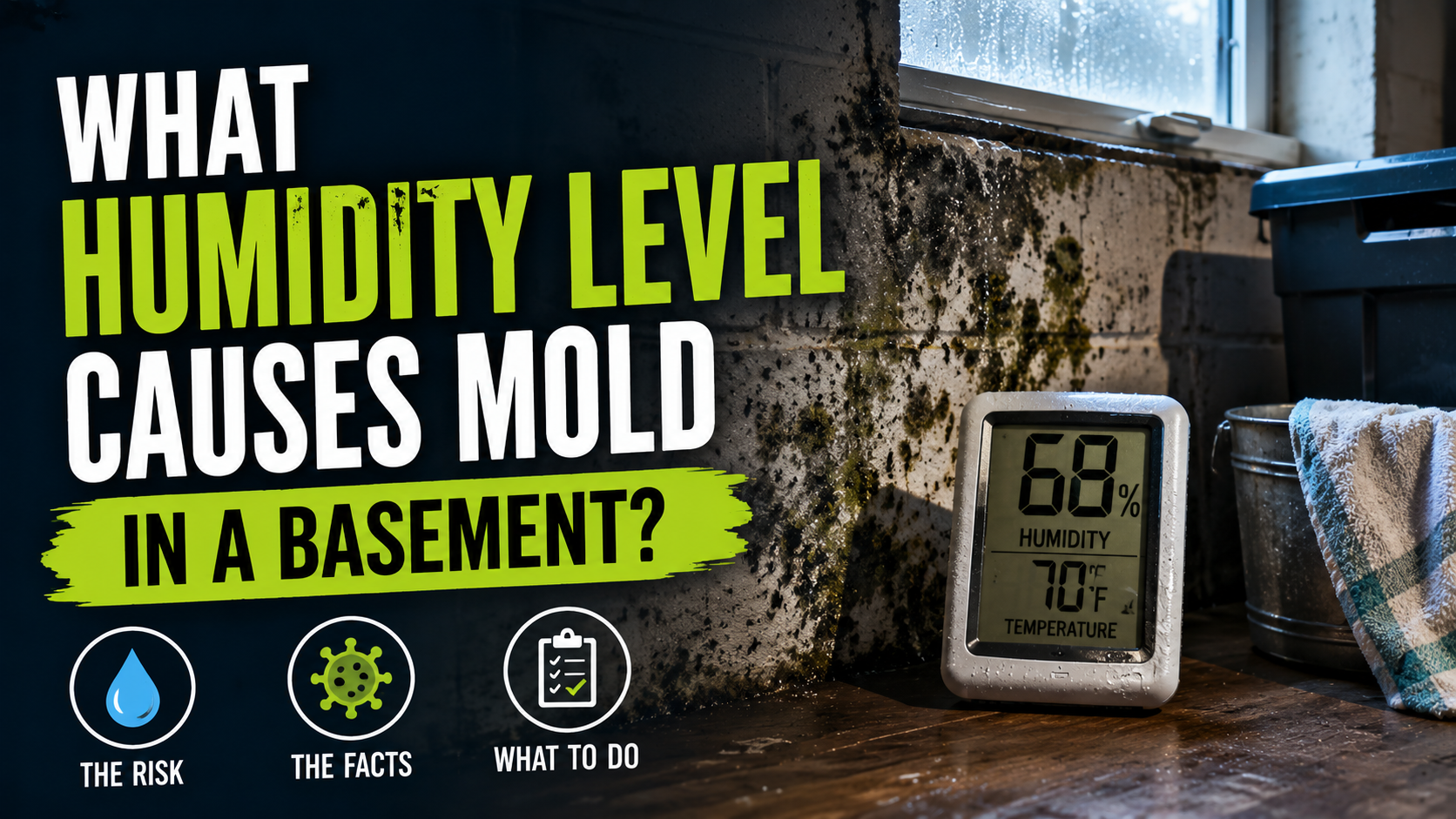
If you are asking what humidity level causes mold in basement conditions, the practical answer is that mold risk starts rising when basement humidity stays too high for too long, especially once relative humidity regularly moves above about 60%. Mold does not usually appear because of one short spike alone. It becomes more likely when moisture, cool surfaces, poor airflow, and time all come together in the same space.
That distinction matters. A basement can have a slightly humid day without immediately becoming a mold problem. What creates risk is a repeated pattern: humid air, slow drying, condensation, and surfaces that stay damp longer than they should. If you keep asking what humidity level causes mold in basement spaces, the short answer is that risk rises once readings stay above 60% long enough for surfaces to stay damp. This article focuses on that threshold of risk so you can understand when basement humidity is no longer just uncomfortable, but potentially supportive of mold growth.
Quick Answer
In most basements, mold risk starts becoming more serious when relative humidity stays above 60% for extended periods, especially if the space also has condensation, poor airflow, musty smell, or damp surfaces. The higher the humidity and the longer it stays there, the more likely mold growth becomes.
Keeping basement humidity between 30% and 50% is generally considered the safest range for discouraging mold growth over time.
Why humidity matters so much in a basement
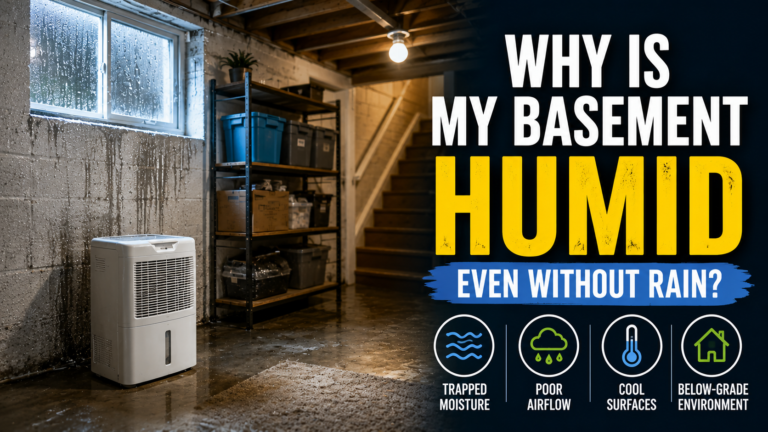
Basements are naturally more moisture-prone than many other parts of a house. They are usually cooler, get less airflow, and often dry more slowly than upstairs rooms. That makes them one of the easiest places for humidity to shift from “slightly damp” to “mold-friendly.”
Humidity matters because mold does not need standing water in every case. It often needs only the right environment:
- enough moisture in the air
- cool surfaces where condensation forms
- poor circulation
- repeated dampness
- enough time for the pattern to continue
That is why a basement can look mostly dry and still be at risk. Moisture may be lingering in the air, settling on walls, feeding stale corners, or affecting cardboard, fabrics, and stored materials.
If you want the broader baseline for a healthy target range, best basement humidity level is the companion piece. This article stays focused on the point where humidity becomes risky enough to support mold.
What humidity level causes mold in basement spaces?
In some basements, the same pattern can create mold risk even when there is no puddle or visible leak, so it is also worth understanding how basement humidity can cause mold without visible water.
As a practical rule, once basement humidity regularly stays above 60% relative humidity, mold risk starts climbing.
That does not mean mold appears instantly the moment the number touches 60. It means the environment is becoming more favorable, especially if the basement also has cold walls, musty air, or recurring condensation.
Risk becomes more concerning when:
- humidity stays elevated for days at a time
- the basement already smells musty
- walls or corners dry slowly
- windows or pipes collect moisture
- the basement is closed up with weak airflow
This is why humidity should be judged as a pattern, not just as one reading.
Humidity ranges explained
The best way to think about basement humidity is in tiers of risk.
| Relative Humidity | What it usually means in a basement | Mold Risk |
|---|---|---|
| 30%–50% | Usually a comfortable and controlled range | Lower |
| 50% to 60% | Starting to get humid in some basements | Mild to moderate |
| Above 60% | The basement is becoming moisture-supportive | Elevated |
| Mid to high 60s and above | Conditions are increasingly mold-friendly if sustained | High |
This table is not a guarantee chart. It is a practical way to interpret risk. Mold growth depends on more than the number alone, but once the basement regularly lives above 60%, the environment becomes much more forgiving to damp corners, stale surfaces, and repeated moisture. That is usually the range homeowners mean when they ask what humidity level causes mold in basement rooms.
Why one reading is not enough
A single humidity number can be misleading. A basement might hit a higher reading for a short time during a storm or a humid afternoon without developing a major problem. What matters more is whether the humidity stays high often enough for the room to remain damp.
Humidity is best evaluated over several days rather than from a single measurement. Looking at patterns over time provides a much more accurate picture of basement moisture conditions.
That is why it helps to check:
- dry weather vs humid weather
- morning vs evening
- after rain
- after laundry use
- after the basement has stayed closed for a while
A basement that stays above the risk range repeatedly is telling a very different story than one that briefly spikes and then drops back into a healthier zone.
Signs humidity is already supporting mold
The number matters, but the room matters too. In many basements, the earliest warning signs appear before visible mold becomes obvious.
Musty smell
A repeated stale or earthy smell is often one of the first clues that moisture is lingering too long.
Condensation on cool surfaces
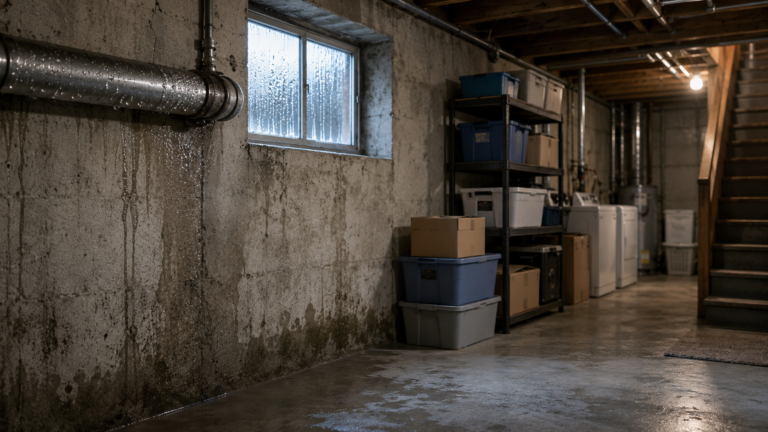
Windows, pipes, and colder corners often reveal high humidity faster than the room itself.
Repeated mold-prone corners
If the same area keeps showing spotting or discoloration, the basement may already be supporting mold conditions.
Slow drying
If surfaces, fabrics, or stored items never seem to dry properly, the room may be staying too humid for too long.
Paint or wallpaper begins to peel
Long-term excess humidity can slowly affect wall finishes even before obvious mold spreads. Paint may start lifting, bubbling, or peeling away from the surface, especially on cooler exterior walls.
Wallpaper can also begin to loosen at the edges or detach in areas with poor ventilation. When that happens alongside condensation, musty smell, or damp air, it often suggests the basement has been staying too humid for longer than it should.
Stale storage materials
Cardboard, books, blankets, and luggage often absorb basement moisture early.
If visible wall issues are part of the pattern, what causes mold on walls helps separate wall symptoms from broader basement humidity.
Why basements vary so much
Not every basement reacts the same way to the same humidity reading. That is why two homeowners can compare numbers and still have different real-world risk.
A basement may become more vulnerable because of:
- colder wall surfaces
- low ventilation
- finished vs unfinished layout
- storage pressed against walls
- humid regional climate
- laundry or utility moisture
- previous dampness that never fully resolved
In some basements, 58% may already feel a little too close to the edge because the room is cool and stale. In others, the same reading may be less concerning if the basement is open, well-ventilated, and dries well. The number still matters, but room conditions shape how risky it becomes.
For the room-wide diagnostic side, basement moisture problems covers the bigger picture.
How to reduce the risk before mold becomes a bigger problem
Monitor humidity instead of guessing
A hygrometer gives you a better answer than smell or intuition alone. It lets you see whether the basement is occasionally humid or consistently risky.
Take readings in different parts of the basement instead of relying on a single location, since humidity often varies near exterior walls, storage areas, and corners.
Watch for repeated condensation
Moisture on windows, pipes, or cool walls often means humidity is already feeding the problem.
Improve airflow where possible
Stale corners and furniture-packed walls dry slowly. Better airflow reduces how long moisture stays trapped.
Avoid letting storage block walls completely
Cardboard and fabrics absorb moisture easily, and tightly packed storage makes wall drying worse.
Use humidity control if the basement stays elevated
If the basement regularly sits in a risky humidity range, a dehumidifier often becomes the practical next step. That is where signs your basement needs a dehumidifier and best dehumidifier for basement fit naturally into the cluster.
Do not rely on one fix alone
If mold has already started returning, humidity control helps, but the room pattern still needs attention. For that next layer, can a dehumidifier help with mold on walls and will a dehumidifier stop mold coming back are the right supporting articles.
Quick practical rule to remember
If basement humidity is regularly above 60%, and the room also has musty smell, condensation, damp corners, or recurring mold-prone spots, the environment is already leaning toward mold support rather than simple comfort issues.
That is the threshold where prevention matters most.
FAQ
What humidity level causes mold in a basement?
In practical terms, mold risk starts rising when basement humidity stays above about 60% for extended periods, especially if the room also has condensation, poor airflow, or musty smell.
Can mold grow below 60% humidity?
It is less likely in a well-controlled basement, but no single number guarantees safety in every situation. Surface moisture, condensation, and poor drying still matter.
Is 70% humidity in a basement bad?
Yes. In most basements, that is a high-risk level if it persists. At that point, the environment is much more supportive of mold growth.
Does one humid day mean mold will grow?
Not usually. The bigger issue is sustained humidity over time, not one short spike.
How do I know if humidity is already too high?
Look for repeated musty smell, clammy air, condensation, slow drying, and recurring damp corners. Those signs often confirm what the humidity reading is already suggesting.
What is the ideal humidity level for a finished basement?
In most cases, keeping relative humidity between 30% and 50% helps reduce the risk of condensation, stale odors, and mold growth in a finished basement. That range is usually low enough to discourage excess moisture while still keeping the space comfortable.
If you want a more practical breakdown of target ranges and how to interpret them in real conditions, best basement humidity level covers that in more detail.
Conclusion
The simplest working answer is that basement mold risk starts becoming more serious once humidity regularly stays above 60% relative humidity, especially when the room is cool, slow to dry, and prone to condensation. Mold is usually not caused by one isolated number. It is caused by a repeated moisture pattern that the basement supports over time.
If the basement is already showing early warning signs, the next step is not guesswork. It is checking the humidity pattern, comparing it against a healthier range in best basement humidity level, and using the wider context from basement moisture problems to decide whether the room needs active moisture control.
The sooner excess humidity is identified, the easier it becomes to prevent musty odors, condensation, and mold from turning into long-term basement problems.
The EPA’s mold guidance is also a useful external reference when you want a simple official explanation of why moisture control matters.
Recommended Schema
Primary schema: Article
Recommended additions: FAQPage
FAQ entities to mark up
- What humidity level causes mold in a basement?
- Can mold grow below 60% humidity?
- Is 70% humidity in a basement bad?
- Does one humid day mean mold will grow?
- How do I know if humidity is already too high?
- What is the ideal humidity level for a finished basement?