Should I Run a Dehumidifier All Day in the Basement?
Should you run a basement dehumidifier all day to keep moisture under control? That is the practical question many homeowners reach once the machine is already in the room and the basement still feels damp. If you are wondering should I run a dehumidifier all day in the basement, you are probably trying to balance comfort, moisture control, and cost without making the room harder to manage. This is one of the most common practical questions basement owners ask, because the answer is not simply yes or no. In practice, should you run a basement dehumidifier all day depends on how wet the air still feels and whether the room is actually moving toward a steadier humidity range.
Quick Answer
Sometimes yes, especially during the first drying phase or in a basement that stays very humid. But a basement dehumidifier should not need to run all the time forever just to keep the room stable. Once humidity is under control, the better pattern is usually cycling as needed to stay in a practical range rather than running nonstop without clear progress.
Quick Tip
If your basement still feels clammy after hours of use, the issue may be less about runtime and more about room conditions, humidity target, or the unit’s fit for the space.
Important
Long runtime is not automatically a problem. In a damp basement, it may be normal at first. The more important question is whether the machine is moving the room toward a stable humidity range or just running without much effect.
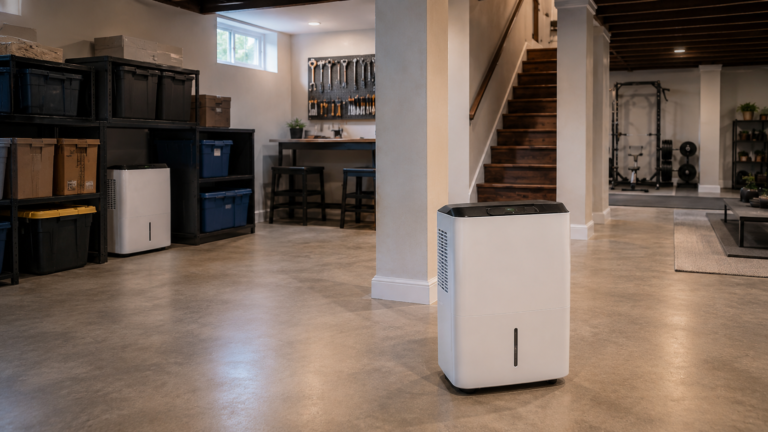
A basement behaves differently from the rest of a home. It often dries more slowly, collects more humidity, and holds stale air longer. That means a dehumidifier may need to run more than it would in a bedroom or living area. But that does not automatically mean nonstop operation is always the best strategy. What matters more is whether the machine is actually moving the basement toward a healthier, drier balance.
This article is different from a buying guide because the machine is already part of the conversation. The question now is how to use it well, not just how to choose one. If you are still deciding on the equipment itself, start with choosing the right basement dehumidifier.
Should a basement dehumidifier run all the time?
People often worry that if the machine runs for many hours, something must be wrong. Sometimes the concern is about electricity. Sometimes it is about safety. Sometimes it is simply that the basement never seems to feel fully dry and the unit appears to run constantly.
Basements make this question more common because they are naturally more likely to need ongoing humidity control. A room upstairs may only need occasional help. A basement may need longer, steadier correction before it feels noticeably different.
Sometimes constant runtime is normal at first
If the basement starts out damp, stale, or strongly humid, long runtime can be completely normal during the first correction phase.
It should usually cycle more once the room stabilizes
After the basement reaches a better humidity range, many units should begin cycling rather than running nonstop every hour of the day. If you need a target to measure against, it helps to compare the reading with the best basement humidity level rather than guessing from room feel.
Endless runtime with little change is a warning sign
If the machine runs all the time and the basement still feels clammy, smells musty, or shows condensation, that usually points to a sizing, placement, or room-condition issue rather than a simple runtime question. That is where why is my basement still damp after using a dehumidifier becomes the more useful next comparison.
That is why runtime has to be understood in context. A dehumidifier working hard in a damp basement is not necessarily a problem. It may simply be doing exactly what the room needs. If you are still comparing capacities, it helps to start by checking the right dehumidifier size first.
When all-day use makes sense
Very damp basement
If the basement feels clearly clammy, smells musty, or has obvious humidity clues such as condensation and stale storage, longer runtime may be completely reasonable, especially at the beginning.
After humid weather
Some basements need extra runtime after several humid or rainy days because the room has absorbed more moisture than usual.
During the first correction phase
If you are starting from a damp baseline, the machine may need extended use before the room gets closer to a stable target. This is often different from maintenance mode later.
When all-day use may not be necessary
Not every basement needs nonstop operation once conditions improve. If the room reaches a reasonable humidity level and stays there, continuous running may simply waste energy or overwork a machine that could cycle more intelligently.
This is where adjustable humidity control matters. In many basements, the goal should be a stable range rather than endless operation for its own sake. If the basement moisture pattern is broader than runtime alone, compare it with the bigger basement moisture picture.
What humidity target usually makes sense
A practical target often falls in a moderate indoor range rather than as dry as possible. The exact number depends on the room and season, but the important idea is that the basement should feel drier, less stale, and less prone to condensation or musty odor. If the room reaches that range more easily over time, you usually do not need to run a basement dehumidifier all day forever.
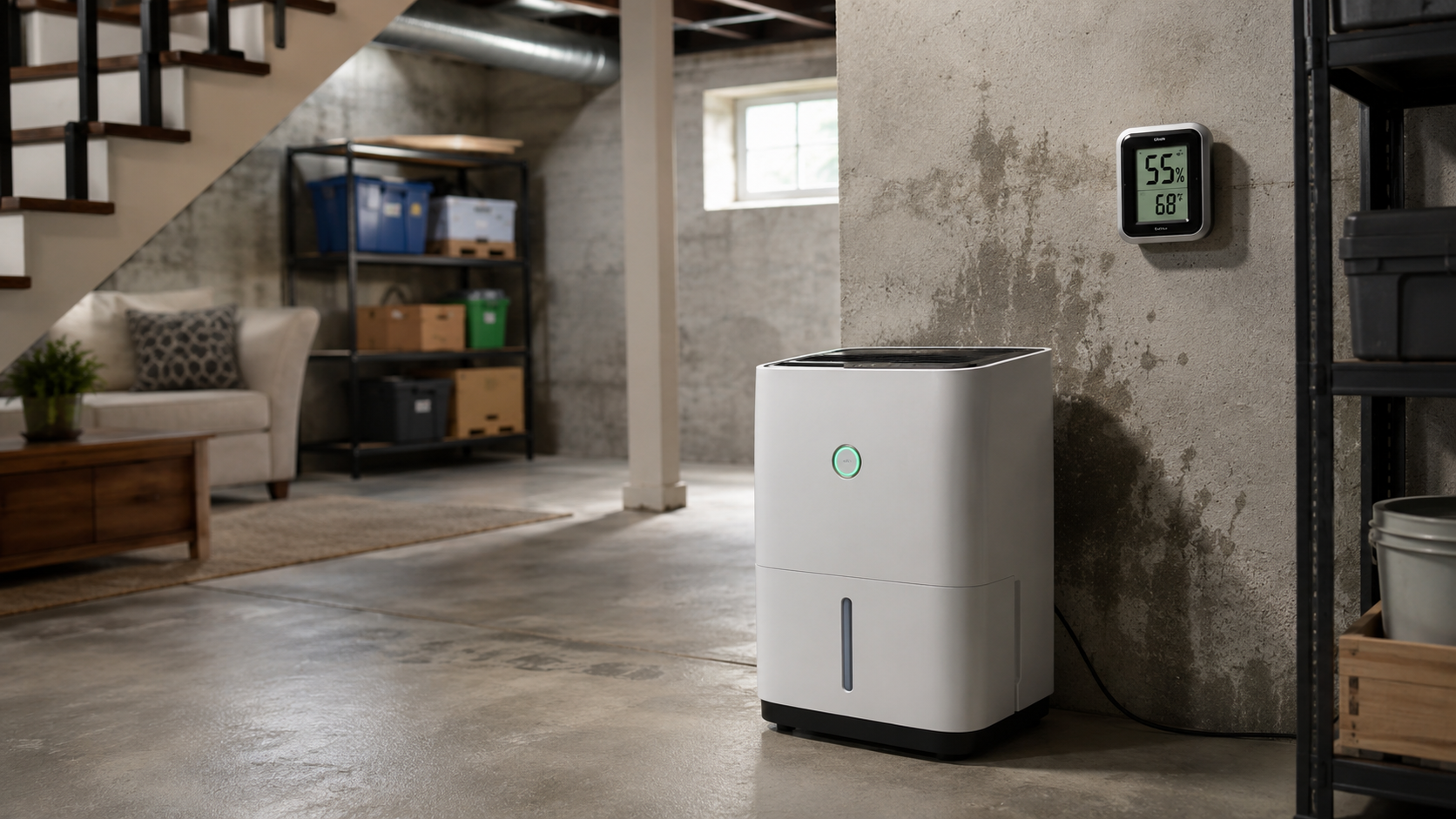
A hygrometer helps here because it tells you whether the machine is changing conditions or only making noise. If you need a broader baseline, compare that with signs humidity is still too high.
For a practical energy and moisture benchmark, the ENERGY STAR dehumidifier guide is useful because it explains why steady humidity targets matter more than simply letting a unit run without a plan. That matters here because should you run a basement dehumidifier all day is really a question about measurable progress, not just runtime.
How to judge whether runtime is helping
Instead of focusing only on the number of hours, ask what the basement is doing.
- Is the air less heavy?
- Are smells improving?
- Are windows or pipes collecting less condensation?
- Do stored fabrics smell better over time?
- Does the room dry faster after normal use?
These are better measures of success than runtime alone. If you want to measure humidity more accurately, compare the tools in this humidity meter vs moisture meter guide. And if you are still asking should I run a dehumidifier all day in the basement, those measurements usually answer the question more clearly than runtime alone.
Cost and practicality without overthinking it
It is reasonable to care about energy use, especially in a room that may need longer dehumidifier sessions. But it is usually more practical to think in terms of results.
If the machine needs longer runtime because the basement is truly damp, that is part of correcting the room. If the machine runs all day and the basement barely improves, then the bigger question may be room conditions, drainage setup, or whether the unit is a poor fit.
Another useful test is what happens after several damp days in a row. If odor, condensation, and heavy air all improve, then should you run a basement dehumidifier all day becomes easier to answer because the room is clearly responding. If those signals stay the same, the issue is probably bigger than runtime alone.
Signs nonstop runtime may mean something else is wrong
The basement still smells musty
If odor does not improve, the room may still be carrying too much moisture. If you are still deciding whether the space needs active control at all, revisit signs your basement needs a dehumidifier.
Humidity stays high
A hygrometer reading that never really drops suggests the unit may be undersized, badly placed, or set too high. If the size still looks uncertain, check what size dehumidifier you need for a basement.
Only one area improves
That often points to airflow or layout problems. A machine in the wrong spot can leave corners, walls, and storage-heavy sections feeling unchanged, which is why where to place a dehumidifier in a basement matters more than many people expect.
The room still feels damp after several days
A persistent damp feel usually means the basement is holding more moisture than the machine is removing. If the room pattern still seems broader than runtime alone, compare it with best dehumidifier for basement before assuming the machine only needs more hours.
Common mistakes people make
- Turning the machine off too early
- Running without measuring humidity
- Assuming constant runtime means failure
- Ignoring the basement’s broader moisture pattern
Basement dehumidifier runtime checklist
| Question | Why it matters |
|---|---|
| Is the basement still clammy? | Suggests longer runtime may still be needed |
| Has odor improved? | Strong sign of progress |
| Are windows or pipes still condensing? | Helps judge room conditions |
| Do you know the humidity level? | Useful for smarter runtime decisions |
| Is the unit running hard with little change? | May point to fit or room issues |
If your basement dehumidifier seems to run a lot, judge it by what the room is doing, not by the hours alone. A basement that is actually improving tells you more than the runtime number ever will.
Frequently asked questions
Is it bad for a basement dehumidifier to run 24/7?
Not always. It can be normal during the first drying phase or in a very humid basement, but constant runtime should usually ease once the room stabilizes.
Should a basement dehumidifier cycle off?
In many cases, yes. Once the basement reaches a practical humidity range, cycling is often a sign that the unit is maintaining conditions rather than chasing them constantly.
Why is my basement dehumidifier always running?
Usually because the room is still carrying too much moisture, the unit is undersized, the placement is weak, or the humidity target is not set realistically.
Can I leave a basement dehumidifier running when I’m not home?
Many people do, especially when the room needs consistent moisture control, but the more important question is whether the setup is producing steady progress instead of just endless runtime.
Should I run a dehumidifier all day in the basement?
Sometimes yes, especially if the basement is actively damp or you are in the first phase of drying it out.
Is it bad if the dehumidifier runs a lot?
Not necessarily. In a humid basement, long runtime can be completely normal.
How do I know when I can run it less?
When the basement reaches a more stable humidity level and stays noticeably drier with less odor and condensation.
Does nonstop runtime mean the unit is too small?
Sometimes, but not always. It could also mean the room is still carrying a heavy moisture load.