Why Does My House Smell Musty After Rain?
If you keep asking why does my house smell musty after rain, the weather itself is already helping you narrow the problem. A musty smell that appears or gets stronger during rainy conditions is rarely random.
Quick Answer
If your house smells musty after rain, rainy weather is probably making an existing moisture pattern more obvious. Common causes include damp basements, window condensation, slow-drying walls, stale closets, and humid indoor air.
Quick Tip
A smell that gets worse after rain is giving you timing clues. That timing often matters more than the smell itself.
Important
A musty smell after rain does not always mean direct rainwater is pouring into the house. Often, the rain simply raises humidity enough to expose damp areas that were already close to becoming a problem.
It usually means some part of the home is responding to higher outdoor humidity, slower drying, or moisture collecting where it should not.
That does not automatically mean rain is pouring directly into the house. In many homes, rainy weather simply exposes existing weak spots. A basement that already runs humid may smell heavier. A closet with poor airflow may trap more stale air. A window area may collect more condensation. A cool wall may dry slower than usual and begin to smell damp.
The most useful thing about this kind of symptom is that it has a pattern. The smell comes and goes with weather. That makes it easier to track than a smell that feels constant all year. If you keep wondering why does my house smell musty after rain, that weather timing is one of the strongest clues you have. If the smell affects the whole house, compare it with the broader whole-house diagnosis guide.
Why does my house smell musty after rain?
Rain changes the environment around the house and often inside it too. Outdoor humidity rises, air exchange may be reduced, and surfaces that already run cool or slow to dry may hold moisture longer.
That means parts of the home that are only mildly vulnerable during dry weather can start to smell noticeably musty after rain. The rain does not have to create the problem from scratch. It only has to make the moisture balance worse enough for the smell to become obvious.
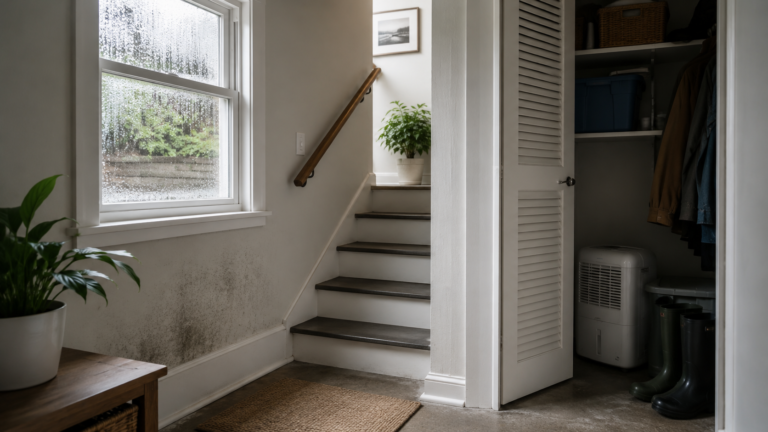
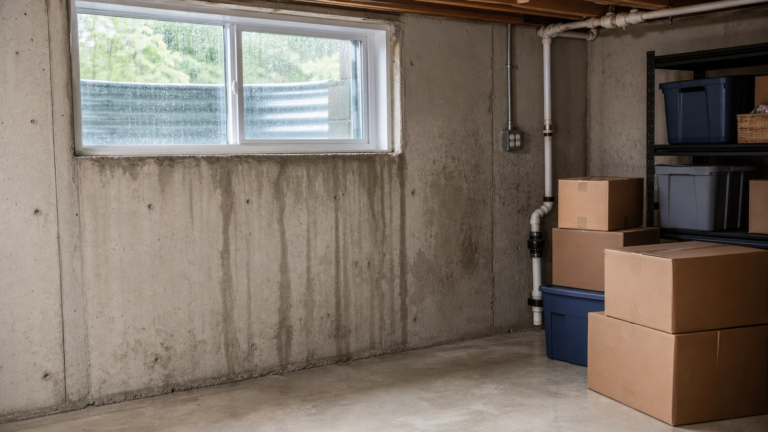
This is especially common in basements, rooms with condensation-prone windows, closets, cool wall corners, and rooms with older moisture history. If the problem seems stronger downstairs, it is worth revisiting a basement smell diagnosis first.
The most common reasons a house smells musty after rain
Damp basement air
Basements are one of the strongest candidates because they often react first to humid weather. A basement that smells only a little stale in dry conditions may smell much more obvious after a rainy day.
Window and wall condensation
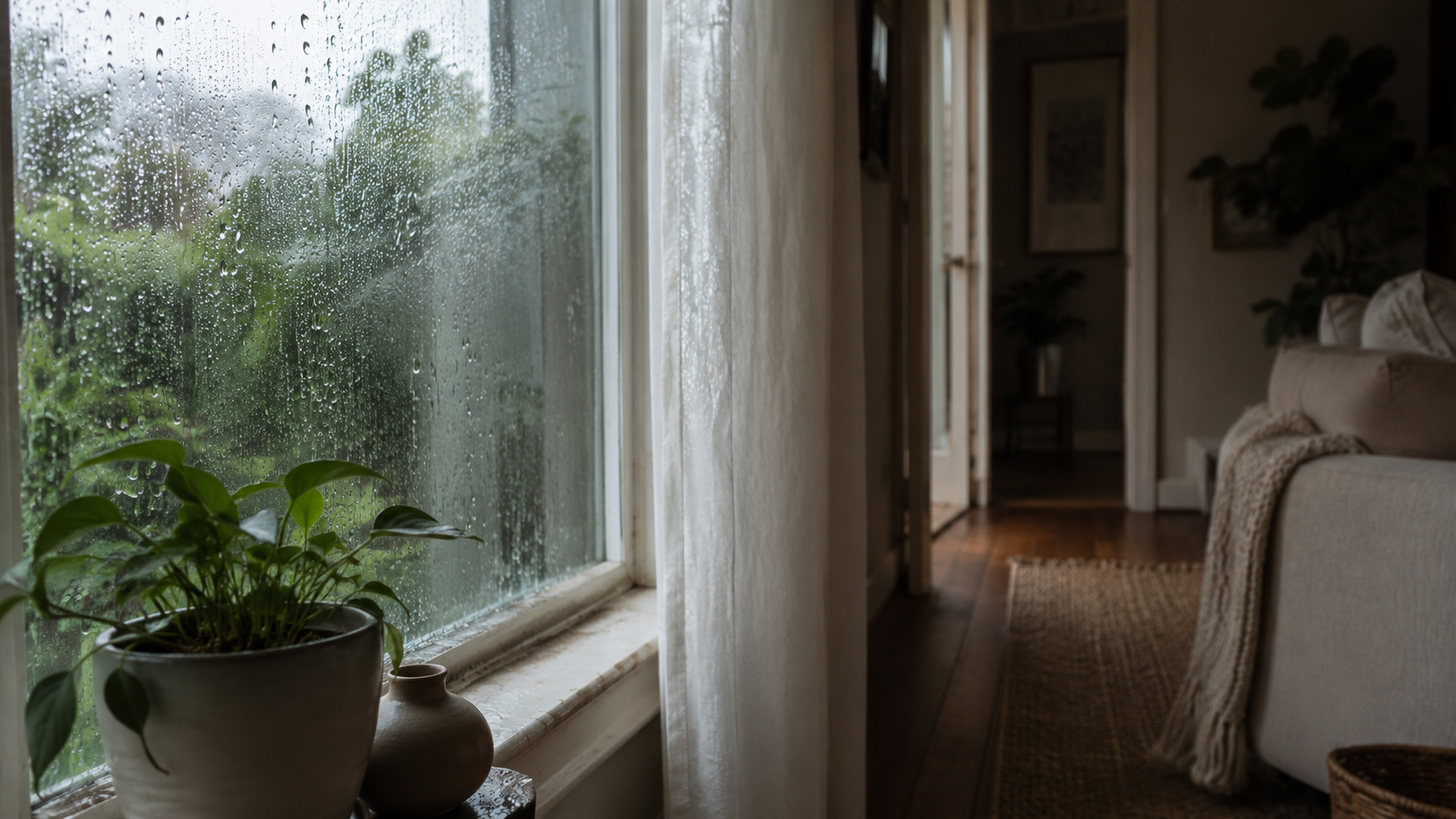
Rainy weather often increases humidity enough to make condensation more likely on cold windows and nearby wall areas. That repeated moisture can affect trim, sills, curtains, and corners.
Closets and low-airflow zones
Closets, especially on exterior walls, are good at trapping damp air. A bedroom may smell mostly fine, but the closet can become much more noticeable after rain.
Older hidden dampness
A room may not have an active leak, but past water damage or slow-drying materials can still react to humid weather by releasing a stronger damp smell.
How to trace the smell room by room
Do not begin by treating the whole house equally. Start by tracking concentration.
- where the smell is strongest
- whether it is strongest downstairs or upstairs
- whether it is near a window, closet, or exterior wall
- whether one room feels heavier than the rest
- whether the basement seems to feed the smell upward
You are looking for a source zone, not just a general impression. If only one room seems affected, compare that with a room-specific musty smell guide.
What to check first after rainy weather
The best time to inspect is while the smell is noticeable.
- basement air and storage
- windows and sills
- exterior wall corners
- closets
- rooms with past stains or dampness
- fabrics near walls or windows
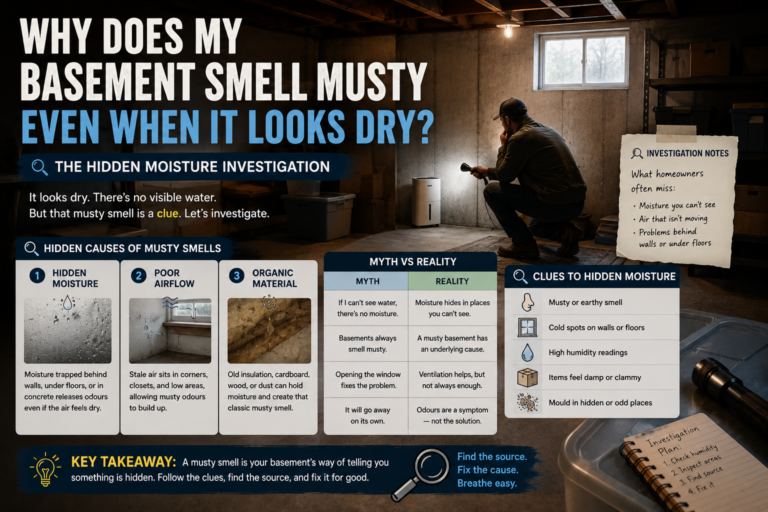
If one area clearly smells stronger after rain, that is usually where the useful answer starts. A hygrometer can also help in these cases because rainy weather often raises indoor humidity enough to make a pattern easier to measure. If you are checking basement moisture problems first, the next step is often looking at the wider lower-level moisture pattern.
Common mistakes people make
- Assuming rain means roof leak immediately
- Using air freshener instead of tracing the pattern
- Ignoring lower levels
- Checking only when the weather is dry
If the smell keeps returning after wet weather, it is also worth asking whether humidity is building up indoors more than you expect.
What can happen if you ignore it
The smell may remain a mild annoyance for a while, but repeated damp conditions often become more visible later. The next signs may be stale storage, recurring condensation, damp corners, wall marks, or mold-prone spots.
The rain pattern is actually useful because it gives you a better chance to catch the problem before it becomes more obvious.
Rain-related musty smell checklist
| Area | What to notice | Why it matters |
|---|---|---|
| Basement | Stronger smell after rain | Common moisture source |
| Windows | Extra condensation | Rain raises humidity |
| Closets | Stale air or stronger odor | Trapped dampness clue |
| Exterior walls | Cool, musty spots | Slow drying or condensation |
| Fabrics and storage | Smell worsens in wet weather | Material moisture clue |
If your house smells musty mainly after rain, do not ignore that timing. Weather-linked odor is often one of the clearest ways a home reveals where moisture is lingering.
Frequently asked questions
Why does my house only smell musty after rain?
Because rainy weather often raises humidity and exposes hidden dampness that is less noticeable in drier conditions.
Does that always mean a leak?
No. It can also mean condensation, poor airflow, or a damp basement.
Should I check the basement first?
In many homes, yes. Basements often react strongly to wet weather and can influence the smell of the rest of the house.
Can window condensation cause a musty smell after rain?
Yes. Repeated moisture around windows and nearby materials can feed odor over time.