Musty Smell Near a Window: What It Can Mean
A musty smell near a window is one of the easiest home clues to underestimate.
Quick Answer
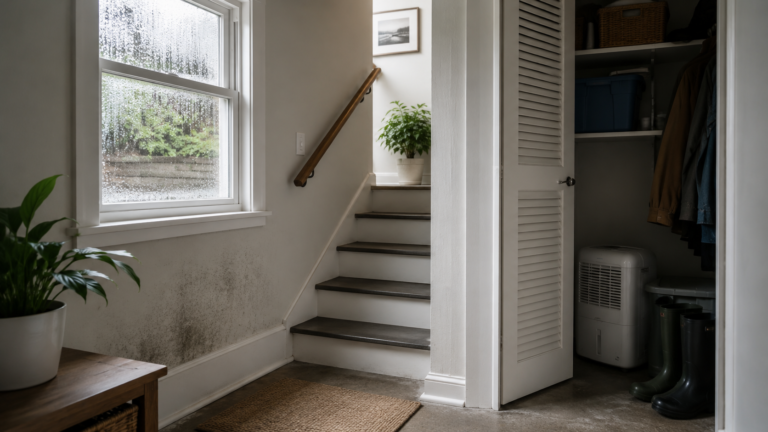
If you notice a musty smell near a window, the area is probably staying damp more often than you realize. The smell is often tied to condensation, poor airflow, a cold wall, or moisture collecting around the sill, frame, or nearby trim.
Quick Tip
Check the window first thing in the morning. Overnight moisture patterns often explain window-area smells better than midday inspection does.
Important
A musty smell near a window is often one of the clearest signs of repeated condensation. Even if the frame looks mostly fine, the smell may be telling you the area is not drying properly.
People often assume it is just old air, damp curtains, or weather coming in from outside. Sometimes those factors play a part, but a musty smell around a window usually points to one thing above all: repeated moisture.
Windows are natural moisture hotspots. They are cooler than most other surfaces in the room, which makes them more likely to collect condensation. If airflow is poor or the room is already carrying too much humidity, the sill, trim, wall edge, and surrounding materials can begin to hold that dampness. Over time, the result is not always obvious mold at first. Often it is simply a stale, damp smell that keeps returning.
Why window areas develop musty smells
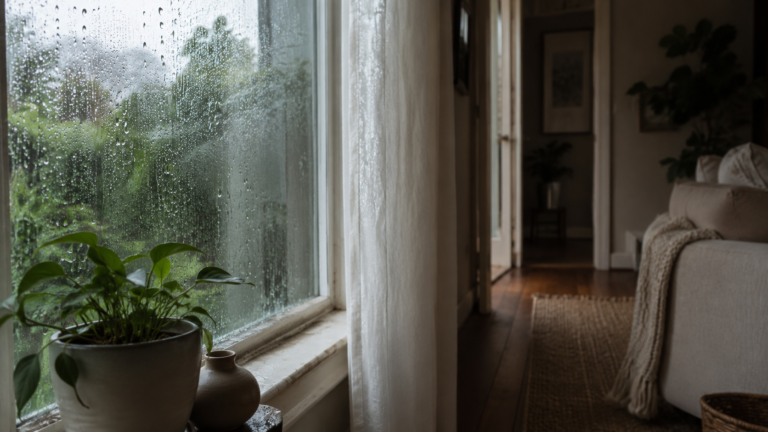
Windows are where indoor air and outdoor conditions meet most directly. Warm indoor air carries moisture. When that air meets cold glass or cooler frame materials, condensation can form. If the water dries quickly, the issue may stay small. If it returns often or lingers, nearby surfaces can start to smell musty.
Curtains, blinds, and furniture make this worse when they trap air around the window and slow drying. That is why some windows smell fine and others do not, even in the same home.
The most common causes
Window condensation
This is the most common cause by far. Repeated moisture on glass and sills can affect nearby trim and walls even without visible damage at first.
Poor airflow around the window
Heavy curtains, tightly closed blinds, and furniture placement can all trap moisture in one small zone.
Damp trim or sill materials
Wood and painted trim can hold onto repeated moisture and begin to smell stale.
Nearby wall moisture
The smell may not come from the glass at all. Sometimes the wall beside or below the window is quietly staying too damp.
Weather-linked humidity changes
Rain and colder nights often make the smell more noticeable by increasing condensation risk.
Signs the smell is linked to condensation
- The smell is stronger in the morning
- You notice wet glass or a damp sill
- The problem gets worse in winter or rainy weather
- Curtains or blinds smell stale too
What to check first
Look at the sill, lower frame corners, nearby trim, and the wall beside the window. Notice whether the smell is strongest after the room has been closed overnight or after bad weather.
If the window collects condensation regularly, that is already a strong clue. Also check whether curtains are staying close to the glass and whether the area behind furniture gets enough airflow.
Common mistakes
- Cleaning the frame without changing the moisture pattern
- Assuming the smell must mean a major leak
- Ignoring nearby fabrics
- Looking only during the day
What can happen if you ignore it
The smell may gradually get stronger, nearby trim may stay damp longer, and the wall around the window can become more vulnerable to repeated staining or mold-prone spots.
The good news is that window moisture patterns are often quite traceable once you start paying attention to timing, airflow, and repeated condensation.
Window smell checklist
| Check | What to notice | Why it matters |
|---|---|---|
| Morning glass | Fog or droplets | Overnight condensation clue |
| Sill | Dampness or odor | Repeated water contact |
| Curtain area | Stale smell | Trapped airflow |
| Nearby wall | Cool or musty edge | Moisture may extend past window |
| Weather timing | Worse after rain or cold nights | Pattern clue |
Useful internal links: Mold Around Windows, Why Do My Windows Sweat?, How to Stop Condensation on Windows Overnight, and the Musty Smells section.
Frequently asked questions
Why does the area near my window smell musty?
Most often because moisture is collecting there repeatedly and not drying well enough.
Is it always mold?
Not always. It can be stale dampness before visible mold ever appears.
Why is the smell worse in the morning?
Because overnight humidity and cooler glass often create stronger condensation.
Should I check the wall beside the window too?
Yes. The smell may be coming from nearby trim or wall surfaces, not just the frame itself.
Follow the moisture pattern, not just the smell
If a musty smell keeps appearing near the same window, it is usually worth following the moisture pattern rather than just treating the odor.