How to Prevent Mold in the Bathroom
Bathroom mold is usually a moisture routine problem before it becomes a cleaning problem.
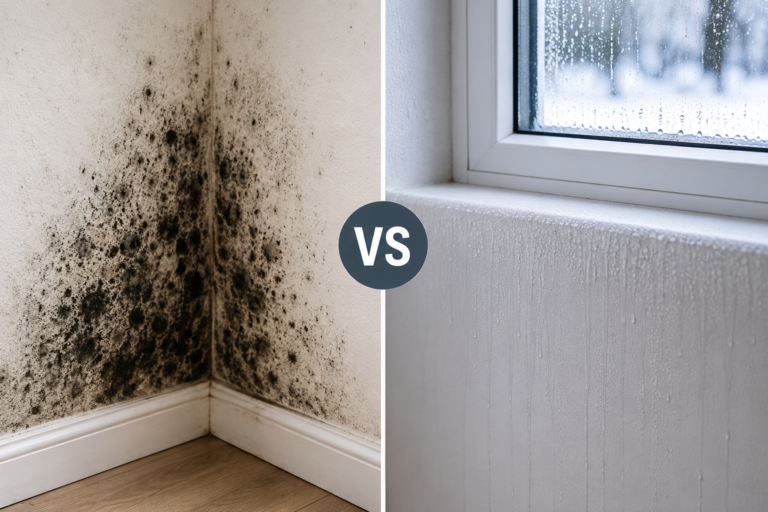
Warm steam, wet surfaces, weak airflow, and rushed drying habits create exactly the environment mold prefers. That is why many bathrooms look clean at first and still develop black spotting around grout, silicone, corners, or ceiling edges.
The goal is not to scrub harder every week. The goal is to make the room dry out faster after each moisture-heavy use.
Quick Answer
To prevent bathroom mold, improve extraction, keep wet surfaces from staying damp too long, and reduce the trapped steam that keeps feeding growth after every shower.
Why bathrooms are so vulnerable to mold
Bathrooms create repeated bursts of heat and moisture in a small enclosed space. If the steam does not leave and the surfaces do not dry, mold gets regular opportunities to return.
- Frequent steam from showers and baths
- Weak or underused extraction
- Silicone, grout, and corners that stay wet longer
- Closed doors and no post-shower airflow
- High whole-home humidity adding to the problem
The habits that usually make the biggest difference
| Habit | Why it helps |
|---|---|
| Run extraction during and after showers | Removes humid air before it settles |
| Dry key surfaces quickly | Cuts down how long mold-friendly moisture stays put |
| Leave airflow after showers | Helps the room recover faster |
| Keep grout and seals from staying wet | Reduces repeat mold spots |
Quick Tip
A bathroom does not need to be spotless to resist mold. It needs to dry out reliably after daily use.
A simple bathroom mold-prevention checklist
- Run the fan or extraction every time steam builds up
- Do not leave towels or wet items blocking airflow in the room
- Keep shower corners, seals, and window edges from staying wet
- Watch for repeated condensation on nearby windows or walls
- Check whether the room stays damp long after use
If your bathroom also struggles with stale windows and condensation, link the pattern back to window condensation and whole-home humidity signs.
Quick cleaning vs long-term mold prevention
| Quick response | Long-term prevention |
|---|---|
| Wipe visible mold marks | Improve extraction and drying after every shower |
| Use a cleaning product once | Reduce repeated steam build-up |
| Spot-clean silicone or grout | Stop the room from staying damp in the first place |
Important
If mold returns quickly after cleaning, treat that as a moisture clue rather than just a housekeeping issue.
When bathroom mold may point to a bigger moisture issue
If the bathroom keeps getting mold despite better routines, the room may be part of a wider indoor humidity problem. That is especially likely when bedrooms, windows, or other rooms also feel damp.
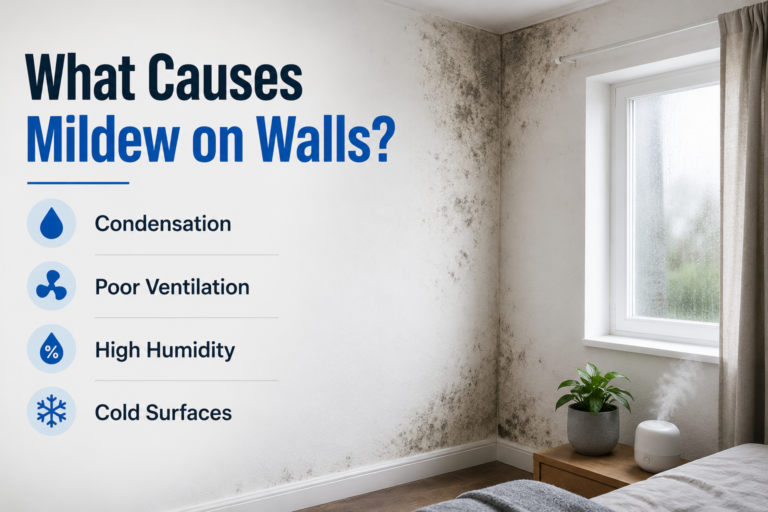
The next useful steps are checking a healthy humidity range, reducing moisture naturally, and reviewing what causes mold on walls.
Frequently asked questions
How long should I run the bathroom fan after a shower?
Long enough for the room to start drying properly. The exact time varies, but turning it off immediately usually leaves too much moisture behind.
Is bleach enough to prevent bathroom mold?
Bleach or other cleaners can remove visible staining, but prevention depends on how quickly the room dries after each use.
Can bathroom window condensation make mold worse?
Yes. Repeated condensation adds more moisture to the room and nearby surfaces, which supports repeat mold growth.
Why does mold come back even when I clean weekly?
Usually because the moisture conditions in the room are still the same, so the bathroom keeps recreating the problem.
Want to reduce bathroom moisture before it feeds mold again?
Use the wider home moisture guide if the bathroom is only one part of a bigger dampness pattern in the house.