What Causes Mold on Walls and How to Prevent It
If you are asking what causes mold on walls, the short answer is usually moisture that lingers long enough for spores to settle and grow.
Sometimes the moisture is obvious, like steam from a bathroom or a leak that never dried properly. Other times the wall looks harmless while cool surfaces, weak airflow, and seasonal humidity slowly create the conditions mold needs.
The useful question is not just how to wipe mold away. The useful question is what keeps that wall damp enough for mold to come back.
In UK searches, this same problem is often described as mould on walls. Whether you call it mold or mould, the underlying causes are usually similar: excess indoor moisture, condensation on cold surfaces, poor airflow, or damp materials that do not dry properly.
When people ask about the cause of mold on walls or the main causes of mold on walls, they are usually trying to separate ordinary condensation from a larger dampness problem. In UK usage, mould on walls usually points to the same issue: surfaces staying wet often enough that spores keep finding a way back.
Quick Answer
Mold on walls is usually caused by excess moisture from condensation, poor ventilation, or hidden leaks. When indoor humidity stays high or a wall surface remains damp, mold spores already present in the air can begin to grow. Identifying and fixing the moisture source is the first step to preventing the problem from returning.
What causes mold on walls most often?
Most wall mold problems can be traced back to recurring moisture and limited drying. Mold may appear as black dots, grey patches, fuzzy growth, or repeated staining around painted areas.
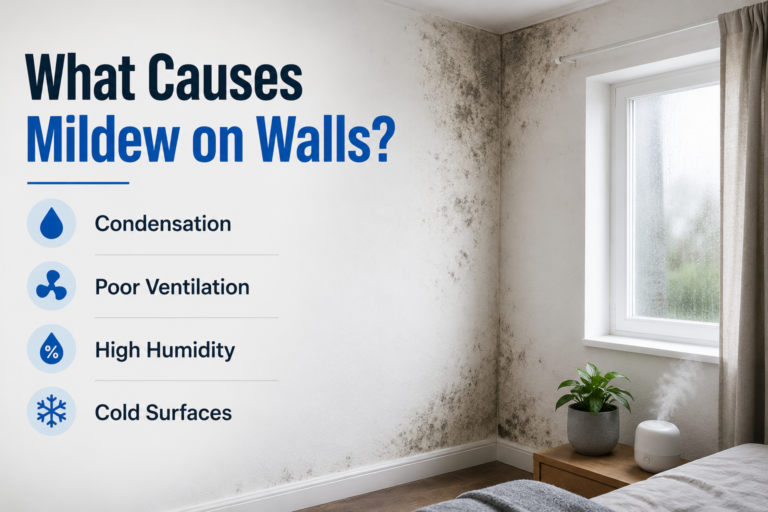
- Condensation building up on cold wall surfaces
- Poor ventilation in bathrooms, bedrooms, and laundry areas
- Hidden plumbing leaks or old water damage behind the wall
- Furniture pressed tightly against an exterior wall
- Indoor humidity staying high for long periods
| Cause | What it usually looks like |
|---|---|
| Condensation | Spots in corners, behind furniture, near windows |
| Leak or water entry | Localized staining, bubbling paint, recurring damp patch |
| Poor airflow | Musty smell and mold in still, poorly ventilated rooms |
| High whole-home humidity | Mold appearing in more than one room |
Quick Tip
If mold shows up on the same wall after cleaning, assume the moisture source is still active until proven otherwise.
Which rooms are most likely to get mold on walls?
For lower-level rooms, it is worth checking the basement humidity level that can cause mold because wall symptoms downstairs often come from a wider moisture pattern.
Mold tends to grow where warm indoor moisture meets cooler surfaces or where air stays trapped for too long.
Bathrooms and shower rooms
Bathrooms create frequent bursts of steam, which makes them one of the most common places for wall mold.
Bedrooms with cold exterior walls
If it’s happening in a bedroom specifically, overnight humidity, cold surfaces, and limited airflow may play a larger role than they do in the general wall-mold picture.
Basements and lower levels
Basement wall symptoms do not always start with a leak; humidity can cause mold risk even without visible leaks when cool surfaces and slow drying keep materials damp.
Below-grade spaces often hold damp smells and persistent moisture longer than upper floors. If the issue clearly keeps pointing downstairs, it helps to see when basement moisture is part of the pattern.
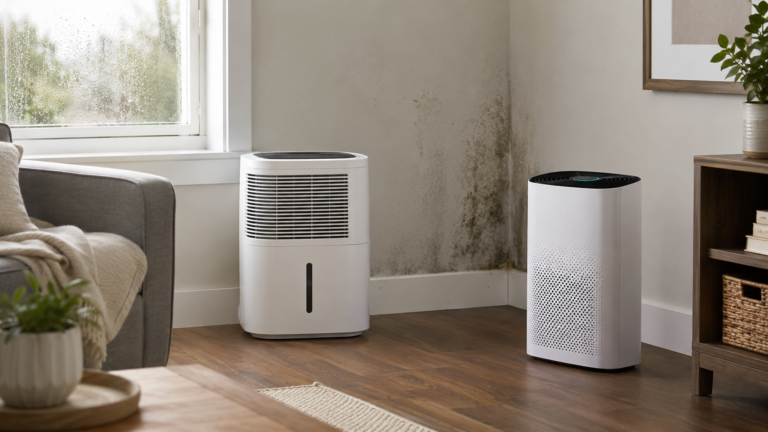
If your symptoms go beyond one wall, it helps to compare them with the wider patterns in signs your home has too much humidity, what causes mildew on walls, and how to tell if you have mold behind walls. If you are already weighing tools, it also helps to see when a dehumidifier can help with wall mold and when an air purifier is not enough for mold.
Is There Mold Inside the Wall, Not Just on the Surface?
Sometimes the visible patch is only part of the moisture pattern. Drywall, plaster, insulation, and wall cavities can stay damp longer than the painted surface, especially after a hidden leak, repeated condensation, or slow-drying materials inside the wall assembly.
That does not mean hidden mold should be assumed automatically. A musty smell, recurring stains, bubbling paint, damp patches, or wall material that feels soft or damaged can all suggest that moisture is sitting deeper than the surface. They are clues to investigate, not proof by themselves.
One practical next step is using a moisture meter to check the wall and compare suspicious areas with drier materials nearby. A moisture reading can help you detect damp wall material, but it does not confirm whether mold is present behind the wall.
Common Signs You May Be Dealing With Mold, Not Just Dirt
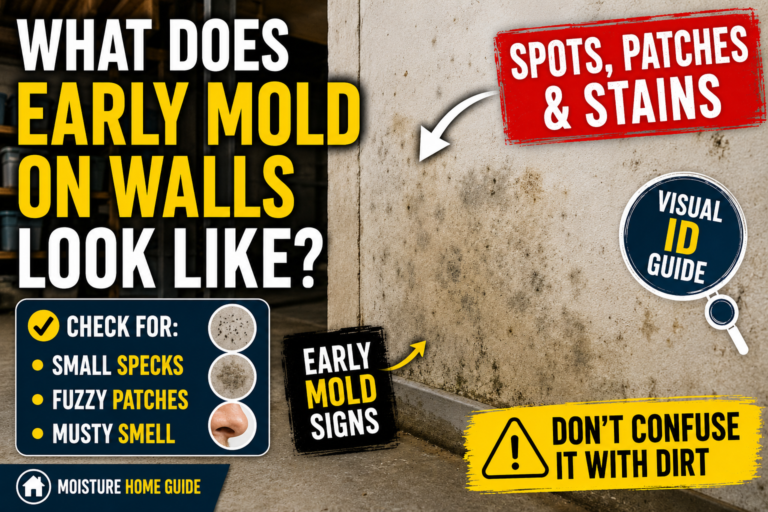
If you are unsure whether a small patch is dirt, staining, or what early mold on walls can look like, compare the color, texture, and moisture pattern before deciding what to do next.
Dirt often wipes away and does not keep returning in the same damp-prone spot. Mold is more likely to show up in irregular patches, come back after cleaning, or be accompanied by a musty smell. Color alone does not confirm mold, but recurring marks usually point back to moisture.
White marks on masonry may be mold, but they can also be efflorescence, a mineral deposit caused by moisture moving through the surface. Efflorescence is not mold, although both indicate that moisture should be investigated.
What to Check First When Mold Keeps Coming Back on the Same Wall
If mold keeps returning in the same place, start by looking for a pattern before assuming the wall itself is the only problem. Repeated return usually means the surface is staying damp often enough to support growth, even if the cause is still subtle.
- Check whether the wall is colder than nearby surfaces, especially near windows, corners, or exterior-facing sections.
- Notice whether fabrics, furniture, or stored items are keeping that part of the wall slower to dry.
- Compare whether the mark returns after humid weather, after the room stays closed, or during colder months.
- If one patch behaves differently from the rest of the room, hidden moisture or repeated condensation is usually more important than surface cleaning alone.
This first check does not replace repair decisions, but it helps separate repeated condensation, damp materials, and hidden moisture patterns before the problem is treated as random.
Quick fixes vs long-term prevention
| Quick fix | Long-term prevention |
|---|---|
| Wiping the visible mold | Reducing the moisture source |
| Opening a window once | Improving consistent room airflow |
| Repainting a stained patch | Checking whether the wall still gets damp |
| Using bleach immediately | Understanding whether the issue is condensation or a leak |
Surface cleaning may improve how the wall looks, but prevention depends on whether the wall can stay dry afterwards.
Important
If paint bubbles, plaster softens, or the patch spreads beyond one area, cleaning alone is unlikely to be enough.
What to Do Once You Have Found the Moisture Source
- Stop or reduce the moisture source as much as possible.
- Improve airflow where appropriate so the wall can dry more consistently.
- Dry the affected surface instead of assuming it will improve on its own.
- Check whether the wall material still feels or reads damp after the surface looks better.
- Clean only small, manageable surface growth safely instead of treating every wall issue the same way.
- Seek professional assessment if there is extensive damage, recurring moisture, or suspected hidden contamination.
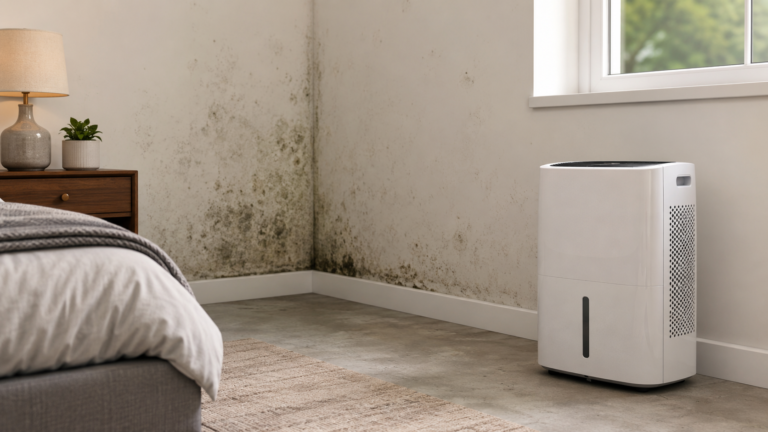
A dehumidifier may help when high indoor humidity is contributing to the problem, but it will not repair a leak or remove hidden moisture inside damaged wall materials.
The most practical next step for many households is improving moisture control first. The EPA also notes that mold problems come back when moisture is allowed to stay active. If window condensation is part of the pattern, read why windows sweat. If the whole house feels damp, move to how to reduce moisture naturally.
When wall mold suggests a bigger issue
Some wall mold is really a room-behavior issue. Some of it is a building or moisture problem that needs a closer look.
- The patch keeps returning in exactly the same place
- There is staining, bubbling paint, or dampness behind the surface
- The room smells musty even when the wall looks mostly normal
- More than one room is showing similar signs
When those signs show up together, a broader moisture diagnosis usually matters more than stronger cleaning products. If you are also weighing whether a dehumidifier can help stop mold from coming back, it helps to separate prevention from source repair.
Frequently asked questions
What causes mould on walls?
Mould on walls is caused by the same conditions as mold: excess moisture from condensation, poor ventilation, leaks, or consistently damp wall surfaces.
Why does mold keep growing on my walls?
Recurring mold usually means the moisture source has not been fully resolved. Cleaning the surface alone will not stop it if condensation, humidity, or a leak continues.
Can mold grow inside walls?
Yes. Moisture from hidden leaks or damp wall materials can support mold behind drywall or plaster, although visible stains or odor alone do not confirm hidden growth.
What do white marks on walls mean?
White marks may be mold, but on masonry they can also be efflorescence, a mineral deposit caused by moisture moving through the wall.
Can a dehumidifier help with mold on walls?
A dehumidifier can help when high indoor humidity is contributing to damp walls, but it will not fix leaks, damaged materials, or hidden moisture on its own.
Want to stop the moisture pattern, not just the spot?
Start with the home moisture habits and room conditions that usually sit behind recurring wall mold.
Why does wall mold often get worse in winter?
Winter makes cold walls more likely to collect moisture from indoor air, especially in closed rooms or near windows. That repeated surface dampness can make the same patch return more easily.