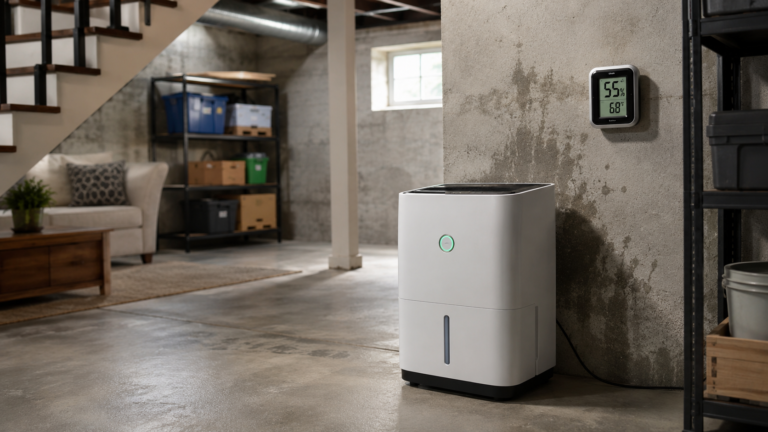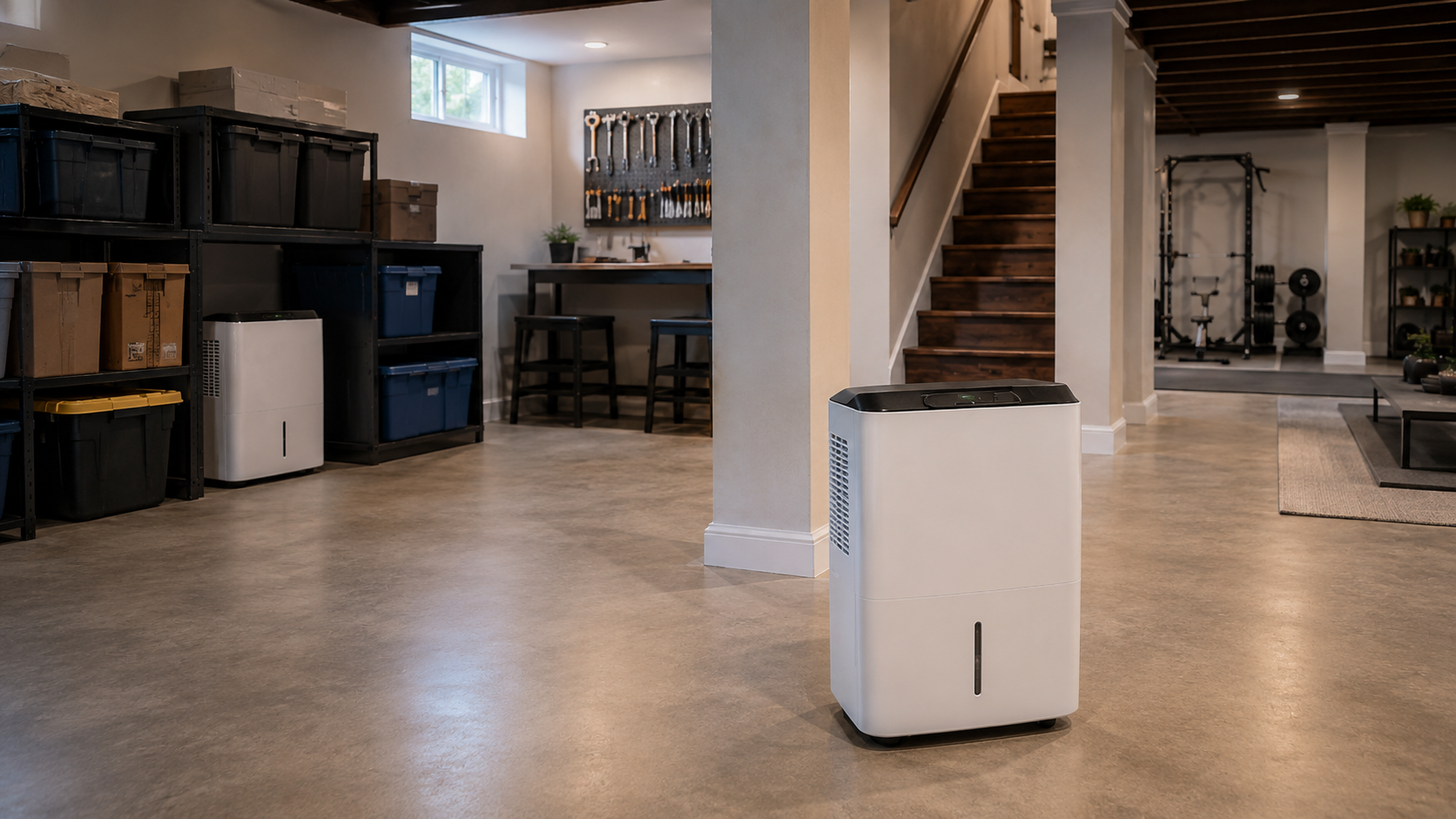
Where Should You Place a Dehumidifier in a Basement?
If you are wondering where should you place a dehumidifier in a basement, you are already past the first buying question. You either own one, are about to buy one, or are trying to make sure it actually works as well as it should. Placement matters more than many people expect. Even a good basement dehumidifier can feel underwhelming if it is tucked into the wrong corner, blocked by storage, or fighting a poor airflow pattern.
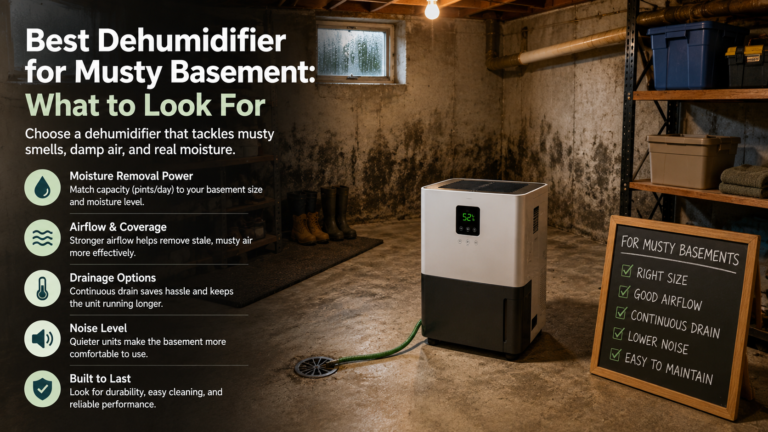
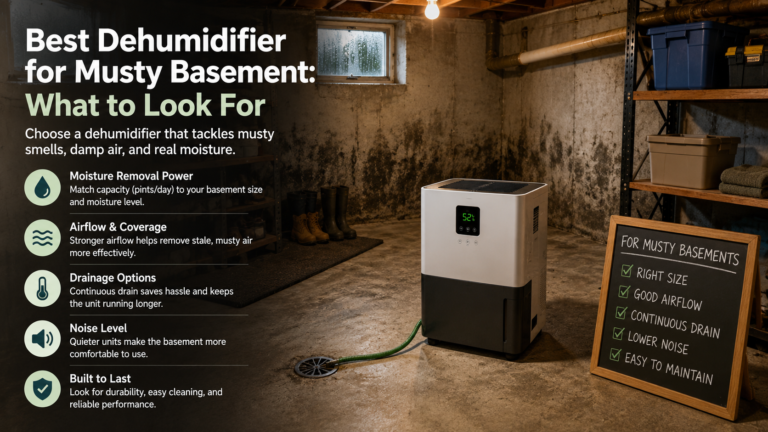
The best placement is usually an open area with good airflow, close enough to the dampest zone to matter, but far enough from walls, storage, and blocked corners to let the unit breathe properly.
The goal is not to hide the unit wherever it is least visible. The goal is to place it where it can pull damp air effectively and support the way moisture actually moves through the basement.
Why placement matters so much in basements
If you want the broader buying context first, best dehumidifier for basement helps frame placement as part of the bigger setup, not as a separate decision.
Basements rarely dry evenly. One side may feel fairly normal while another corner smells stale. One room may stay cool and damp while the open center seems better. That is why basement placement is different from simply dropping a dehumidifier anywhere with an outlet nearby.
Where the unit sits affects:
- how much air it can pull in
- whether moisture-heavy areas feed toward it
- how evenly the room dries
- whether it runs efficiently or just constantly
If the basement still smells stale or feels heavy even with a unit running, bad placement is one of the first things to question. If you are not sure the room needs one yet, compare those symptoms with the signs your basement needs a dehumidifier and keep in mind the humidity range you are trying to reach.
The best places to put a dehumidifier in a basement
Near the dampest part of the basement, but not jammed into it
If one area consistently smells musty or feels more humid, placing the dehumidifier closer to that moisture-heavy zone often makes sense. But do not push it tight against a wall or trap it in a corner. It still needs space to pull and release air properly.
In an open central area
For many basements, the best practical placement is an open area where the unit can influence the largest amount of air possible. This often works well in:
- finished open-plan basements
- large storage basements
- lower levels with mixed-use space
A central setup usually supports better overall circulation than hiding the machine at the edge of the room.
Close enough to drainage to make consistent use easy
A good placement is one you can actually keep using. If the basement needs frequent dehumidifier use, drainage convenience matters. A technically perfect spot that makes emptying the tank annoying may not be the smartest real-world choice.
In the area where stale air tends to linger
If the basement has a known dead-air zone, that often deserves attention. Musty air does not always spread evenly, so placement should reflect how the room actually behaves.
Best and Worst Places for a Basement Dehumidifier
| Location | Good or Risky | Why |
|---|---|---|
| Open central area | Good | Usually gives the unit better airflow and broader coverage. |
| Near the dampest zone | Good | Can help the machine influence the problem area sooner when airflow stays open. |
| Tight corner | Risky | Often restricts airflow and isolates the unit from the room. |
| Against a wall | Risky | Reduces intake and output clearance. |
| Behind storage | Risky | Boxes and shelving can trap damp air away from the machine. |
| Near a drain | Good | Makes long-term use more practical if airflow is still strong. |
| Separate room with the door closed | Risky | One unit may not treat the rest of the basement evenly. |
Corner vs Center: Which Is Better?
In most basements, a more open central area gives the dehumidifier better airflow and a better chance to influence the room evenly. A position closer to the dampest zone can also work well, but a corner only makes sense if the intake and output stay unobstructed and the unit is not boxed in by walls or storage.
Placement is only one part of the setup. It also helps to confirm what size dehumidifier you need for a basement before assuming location alone is limiting performance.
Quick Tip
If your basement has one clearly musty section, start by placing the unit closer to that zone, but leave enough open space around it so airflow is not restricted.
Common placement mistakes
Pushing it against a wall
This is one of the biggest mistakes. Dehumidifiers need room around them to move air. Crowding the unit usually makes it less effective.
Hiding it behind storage
Boxes, shelves, and furniture can block airflow and isolate the unit from the rest of the basement.
Putting it in the driest area
If the room has uneven moisture patterns, placing the machine in the least affected area may reduce its usefulness.
Treating any outlet as a good location
Power access matters, but airflow and moisture pattern matter more.
Forgetting the basement layout
A single placement strategy does not work the same way in every lower level. One open basement behaves very differently from a basement with separate rooms and hallways.
How airflow changes placement decisions
Airflow is what makes placement work. The machine is not only collecting moisture from the tiny area right around it. It is depending on the room to circulate damp air toward the unit.
Good airflow usually means:
- open space around the machine
- no tight enclosure
- no thick wall of boxes blocking intake or output
- enough room for basement air to move through the area
If the basement already struggles with stale air, poor placement makes that worse.
This is especially relevant if basement smells musty even when the unit is running. In many cases, the smell problem is not just moisture. It is moisture plus dead air.
What about large basements or several rooms?
Large open basement
Start with a central location that supports broad circulation, then adjust if one zone remains noticeably worse.
Basement with multiple rooms
A divided basement is harder. One unit in one room may not effectively treat another room if doors stay shut or airflow is weak.
Basement with one damp room and one drier room
Bias placement toward the problem room, but keep enough open airflow to avoid trapping the unit.
Basement with finished and unfinished zones
If the finished area is the space people use most, placement may need to balance comfort with moisture control rather than targeting only the roughest storage corner.
Where not to place it
Avoid placing the unit:
- tight into a corner
- directly behind furniture
- fully boxed in by storage
- in a spot where airflow is clearly blocked
- far from the area that actually feels damp
- somewhere so inconvenient that regular emptying becomes a hassle
When bad placement may be the reason your basement still feels damp
If the machine is in a sensible spot but still underperforms, checking the right basement dehumidifier setting can help separate placement issues from humidity-control settings.
If dampness keeps returning after placement changes, compare the room against humidity levels that support basement mold before assuming the unit itself is the only problem.
If placement looks reasonable but the room still feels damp, why is my basement still damp after using a dehumidifier helps separate positioning issues from sizing, settings, runtime, or maintenance problems.
If the unit runs for hours and the room still feels stale, compare your setup with should I run a dehumidifier all day in the basement to judge whether runtime is part of the issue.
If one corner stays damper than the rest even after moving the machine, basement moisture problems can help explain whether the room layout is masking a broader pattern.
If your dehumidifier runs but the basement still feels wet, stale, or slow to dry, placement is worth reviewing before assuming the unit itself is wrong.
Ask:
- Is the machine too isolated?
- Is one damp room cut off from it?
- Is airflow blocked?
- Is it sitting in a “convenient” spot rather than a useful one?
If the basement also feels damp without clear leaking, why is my basement damp but not leaking can help make sense of the broader pattern.
Basement or Upstairs: Which Floor Needs the Dehumidifier More?
If you are deciding between putting a dehumidifier in the basement or upstairs, start by measuring humidity in both areas instead of guessing. The better location is usually the floor with the highest repeated humidity reading, the strongest musty smell, or the slowest drying pattern. For a fuller explanation of the pattern behind those readings, see why basements are often more humid than upstairs.
In many homes, the basement needs the dehumidifier more because it is cooler, more enclosed, and more likely to hold stale air. A hygrometer can help you compare the readings against the basement humidity level you are trying to maintain.
Upstairs may need attention first if the higher readings are coming from bedrooms, bathrooms, laundry areas, or rooms with poor ventilation. If the basement is humid even without wet weather, this guide on why a basement stays humid without rain can help separate normal below-grade moisture from a wider house humidity problem.
One portable unit may help a nearby open area, but it usually cannot treat the entire house evenly. Avoid moving the dehumidifier constantly without checking readings first. If you see visible water, active seepage, or a leak, fix that moisture source directly; a dehumidifier can support drying, but it is not a substitute for repair.
Once the location is clear, the next step is choosing a practical target. The guide on what setting a basement dehumidifier should be on explains how to choose a humidity setting without making the room uncomfortably dry.
FAQ
Where should you place a dehumidifier in a basement?
Usually in an open area with good airflow, close to the dampest zone but not boxed into it.
Should a basement dehumidifier go in the center of the room?
Often yes, especially in open basements, because it helps the unit influence more of the air.
Can I put it in a corner to keep it out of the way?
Usually not ideal. Corners often restrict airflow and make the machine less effective.
What if my basement has several rooms?
Placement becomes more strategic. A single central spot may not fully treat separated rooms if airflow between them is weak.
Does it matter if the basement smells musty in only one area?
Yes. That usually means moisture is uneven, so placement should respond to the problem zone.
Closing
A basement dehumidifier works best when its placement matches the room’s real moisture pattern. Good airflow, practical drainage, and proximity to the dampest area usually matter more than simply choosing the least visible spot. If the unit is positioned well, you give it a much better chance to improve how the basement actually feels, not just how long it runs.
Should I put my dehumidifier in the basement or upstairs?
Put it where humidity readings are consistently highest or where moisture symptoms are strongest. In many homes that is the basement, but upstairs rooms can need attention if bathrooms, bedrooms, or poor ventilation are driving the humidity.
Can one dehumidifier help both the basement and upstairs?
One unit may help a connected open area, but it usually will not dry a basement and upstairs rooms evenly. Separate readings are the safest way to decide whether one location is enough.
Where should a dehumidifier go if the whole house feels humid?
Start with the dampest enclosed area, then compare humidity readings after the unit has run. If the whole house stays humid, the issue may involve ventilation, air conditioning, moisture sources, or more than one problem area.
Should the dehumidifier be near the source of moisture?
It should be close enough to influence the damp area, but not blocked by walls, boxes, furniture, or corners with poor airflow. Good airflow around the unit matters as much as being near the moisture source.