Why Is My Basement Humid Even Without Rain?
Why Is My Basement Humid Even Without Rain? Quick Answer
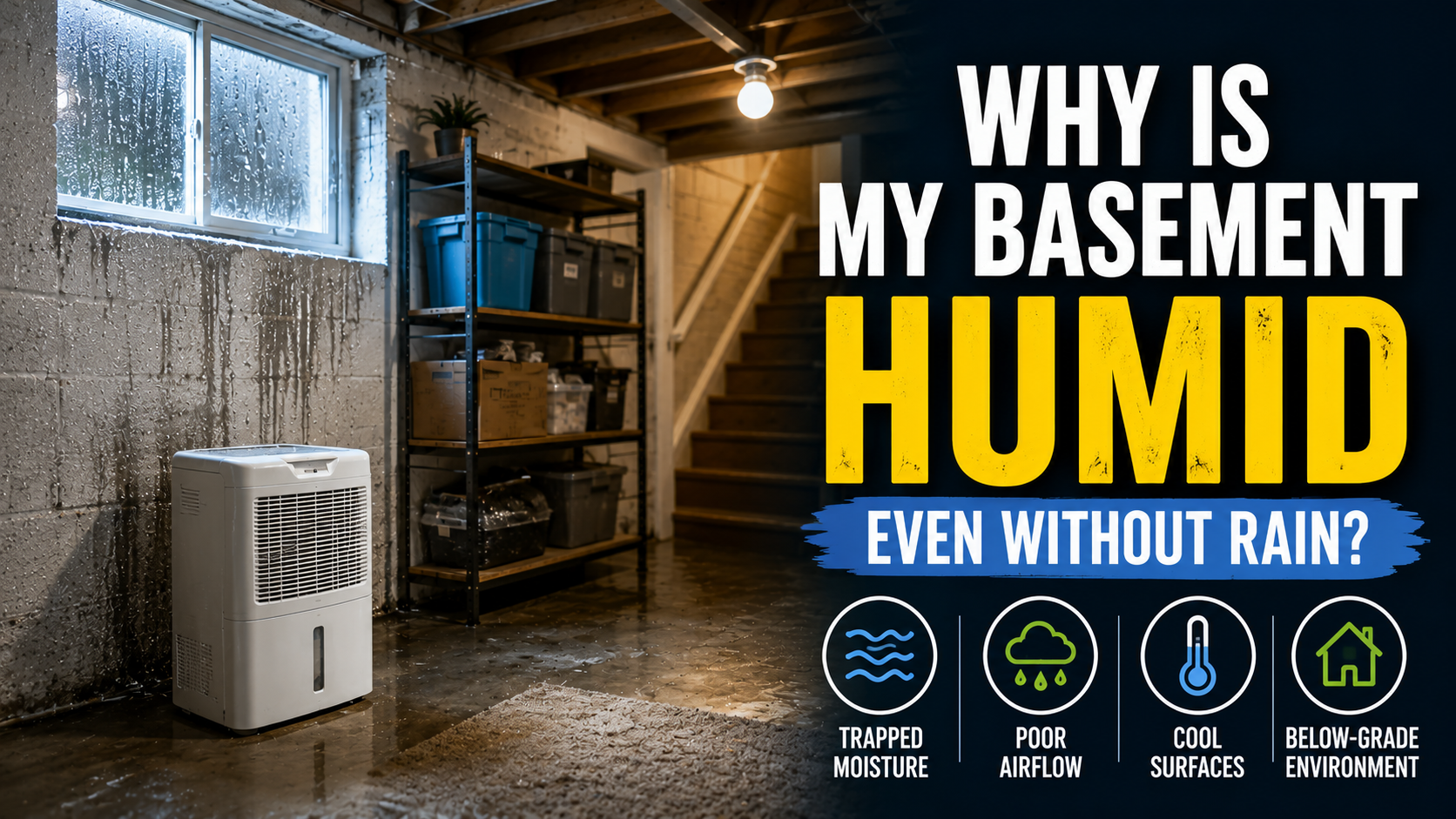
If you keep asking why is my basement humid even without rain, the answer is usually that moisture does not only come from storms or visible water entry. In many homes, basement humidity builds from trapped indoor air, cool surfaces, condensation, poor airflow, ground moisture behavior, stored items, laundry, and the way below-grade spaces naturally hold moisture longer than upstairs rooms.
That is why a basement can feel damp in dry weather even when nothing looks visibly wet. The issue is often humid air that is lingering too long, not one single event that is easy to spot. In practice, why is my basement humid even without rain is usually a question about trapped indoor moisture rather than a fresh leak.
Why your basement can stay humid even when it has not rained
A basement does not need fresh rain to feel humid. Many lower-level spaces stay moisture-heavy because of how they behave day to day. They are cooler, slower to dry, and more likely to hold air that feels damp even when the weather has been dry. This broader guide explains why basements can be more humid than upstairs and which differences are worth checking first.
Humid air is different from visible dampness
That same distinction matters because humidity can still create mold risk even when there is no visible water, especially when cool surfaces and weak airflow keep materials from drying.
One of the biggest sources of confusion is that humidity does not always look dramatic. The room may feel clammy, stale, or heavy without showing puddles, wet walls, or obvious water marks.
That is why this topic is different from a general damp-basement diagnosis. Humid air can make the room uncomfortable long before visible moisture appears.
Basements dry more slowly than upstairs rooms
Basements usually get less air movement and less natural drying. If moisture builds in the space, it often lingers longer downstairs than it would in a bedroom or living room.
This is one reason a basement may stay humid for days after the rest of the house feels normal again.
Below-grade spaces hold cooler air and moisture longer
Because basements sit below grade, they often stay cooler than upper floors. Cooler air and cooler surfaces make it easier for moisture to linger and harder for the room to release it quickly.
That below-grade behavior is part of why some basements feel humid even in dry weather and without any obvious rain trigger.
Common causes of basement humidity without rain
Poor airflow keeps moisture trapped
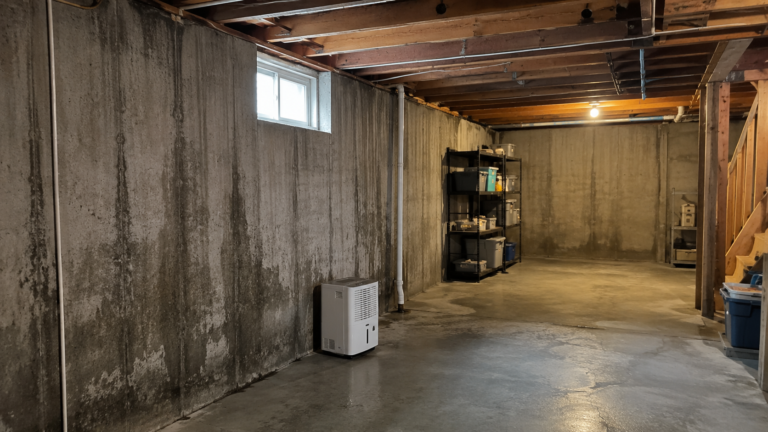
Air that cannot move well tends to hold dampness longer. Storage-heavy basements, finished lower levels with closed doors, and rooms packed tightly against walls often trap stale air instead of clearing it.
This is especially common in spaces where:
- shelving blocks circulation
- boxes are stacked along exterior walls
- the room stays shut for long periods
- only one part of the basement gets any airflow
Cool walls and floors create condensation
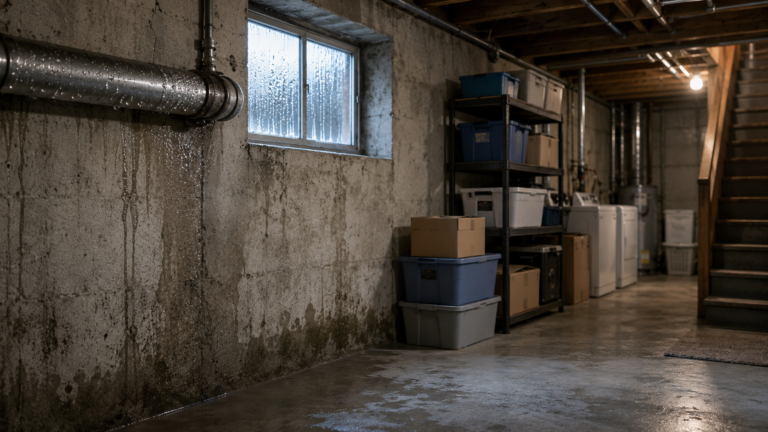
Condensation is one of the most common hidden drivers of basement humidity. When indoor air meets a cool basement wall, floor, window, or pipe, moisture can settle there even without rainfall.
That process may not always produce obvious dripping. Sometimes it simply keeps the room feeling humid and slow to dry.
Indoor moisture sources raise humidity
Basement humidity may also be coming from inside the home. Everyday moisture from laundry, showers, cooking, utility areas, or general indoor humidity can move into the basement and settle there.
Because basements release moisture more slowly, they often feel the effects longer than upstairs rooms.
Stored items hold stale moisture
Cardboard, books, luggage, blankets, fabric bins, and soft materials can hold moisture and slowly release it back into the room. A basement may not be actively taking on water, but the space can still feel humid because those materials are holding onto dampness.
This is one reason basements sometimes feel stale even when the weather is dry.
Ground moisture can affect the basement even without recent rain
Ground moisture does not always depend on a recent storm. Below-grade walls and floors are always closer to the ground environment than upper floors are. That can influence how the room holds moisture over time, even when no new rain event seems connected to it.
This is not the same thing as making the article about leaks or structural repair. It simply means the basement’s location affects how slowly it releases moisture.
Closed rooms stay humid longer
A basement that stays closed for long stretches often holds more stale, damp air. That is why some basements feel more humid after being shut up for a while, even when outdoor weather has been dry.
Signs the issue is humid air rather than a leak
Some signs point more clearly to a humidity pattern than to direct water entry.
The room feels clammy but nothing looks wet
This is one of the strongest clues. The air feels heavy, but the walls and floor do not show obvious water.
Humidity readings stay high
If a hygrometer shows that the room keeps running humid, the problem is likely air moisture, not just a visual impression. For a practical target range, best basement humidity level is the most useful reference.
Condensation appears on windows, pipes, or cool corners
Cool surfaces often reveal high humidity before the rest of the room does. If those spots keep collecting moisture, the room is likely holding too much water in the air.
Musty smell gets worse when the basement stays closed
A smell that strengthens when the room has less airflow usually points to trapped humid air. If that pattern sounds familiar, why does my basement smell musty even when it looks dry expands on that specific symptom.
Stored items smell stale
If boxes, fabrics, or paper goods smell mustier in the basement than elsewhere in the house, the room is probably staying too humid for too long.
Why humidity can remain high in dry weather
Dry weather outside does not guarantee a dry basement inside. Some basements continue holding humidity because the room never fully resets.
The basement may not be getting enough air exchange
A basement with weak airflow may simply be recycling the same damp air rather than replacing it with drier air.
Moisture can linger after previous humid periods
Once materials, surfaces, and room air have absorbed moisture, the basement may stay humid well after the weather improves.
Cooler surfaces slow evaporation
A room can remain humid because moisture leaves surfaces more slowly in a cooler basement than it would upstairs.
The room may be holding more moisture than it releases
That is often the real answer. The basement keeps taking in or retaining small amounts of moisture and does not release them quickly enough to rebalance.
What to check first
Measure humidity with a hygrometer
This is the most practical first step. A reading gives you a clearer answer than room feel alone and helps separate a temporary impression from a repeated pattern.
Compare readings in open areas and corners
Basement humidity is often uneven. One open section may feel better while a corner near storage or an exterior wall stays much more humid.
Check airflow around storage and walls
Look for places where air gets trapped behind shelves, furniture, or stacked boxes.
Look for condensation clues
Windows, exposed pipes, cool corners, and lower wall edges often reveal where the humidity is most active.
Compare basement humidity with upstairs humidity
If the basement consistently runs more humid than the rest of the house, that difference is meaningful. It usually confirms that the lower level is holding moisture rather than releasing it well.
For the broader context, signs your home has too much humidity helps connect basement behavior with the rest of the house.
What usually helps
Improve airflow
Better circulation often helps the basement release moisture more evenly and prevents damp air from sitting in corners.
Reduce blocked storage areas
Storage packed tightly against walls or into dead-air zones makes it harder for the room to dry.
Keep humidity in a safer range
Once you know the reading, the goal is to keep the room in a range that is less likely to support stale air, condensation, and mold-prone conditions. Basement moisture problems and best basement humidity level work well together here.
Use a dehumidifier if humidity stays elevated
If the basement regularly stays too humid, a dehumidifier often becomes the practical next step. If you are at that stage, best dehumidifier for basement covers what to look for next.
When to investigate further
If the pattern changes from humid air to something more localized, the issue may go beyond humidity alone. Visible water, one persistently wet wall, bubbling paint, active dripping, or a strong odor limited to one spot should be inspected separately.
That does not change the main point of this article. In most cases, a basement that feels humid without rain is dealing with trapped moisture, poor airflow, condensation, and below-grade room behavior, not necessarily a dramatic leak. But once symptoms become very localized or visibly active, that is a different diagnosis. If you need that broader angle, why is my basement damp but not leaking is the closer match.
FAQ
Can a basement be humid without rain?
Yes. A basement can stay humid because of trapped indoor moisture, condensation, poor airflow, cool surfaces, and the way below-grade spaces hold moisture longer than upper floors.
Why is my basement humid when it is dry outside?
Because outdoor weather is only one factor. Indoor humidity, stored moisture, condensation, and weak air exchange can keep the basement humid even when it has not rained.
Can poor airflow make a basement humid?
Yes. Poor airflow lets damp air sit in the room longer and slows drying, especially in storage-heavy or closed-off basements.
Is basement humidity always caused by a leak?
No. Many humid basements are dealing with air moisture, condensation, and slow drying rather than a visible leak.
Should I use a dehumidifier if my basement is humid without rain?
If humidity stays elevated and the basement feels clammy, stale, or slow to dry, a dehumidifier is often a practical next step.
What humidity level is too high for a basement?
Once basement humidity stays above a comfortable working range for long periods, the risk of stale air, condensation, and mold-friendly conditions increases. The clearest baseline is explained in best basement humidity level.
Can a basement be humid in summer even if it has not rained?
Yes. Summer air can hold more moisture, and a cooler basement often traps that humidity even without recent rain. Condensation on cool walls or slow drying around storage can keep the space feeling damp.
Should I check one humidity reading or compare several basement spots?
Compare several spots if you can. Open areas, corners, and spaces near storage or exterior walls do not always behave the same way, so one reading can miss where moisture is lingering.
When does basement humidity mean I need a dehumidifier instead of just ventilation?
If better airflow still leaves the basement heavy, clammy, or repeatedly above a useful range, that is usually when when a basement dehumidifier makes sense becomes a more practical next step than ventilation alone.
Can stored boxes and fabrics make basement humidity feel worse?
Yes. Cardboard, fabric bins, and stored textiles can hold stale moisture and make the room feel mustier, especially in low-airflow corners where drying is already slow.
Conclusion
If your basement stays humid without rain, the issue is often trapped moisture, airflow, condensation, and below-grade behavior rather than a single rain event. In many homes, the problem is not obvious water entry but a room that holds humid air longer than it should.
The most useful next step is to measure the humidity, compare the basement with the rest of the house, and look for repeated patterns instead of one-off symptoms. Once that pattern is clear, it becomes much easier to decide whether the room mainly needs better airflow, less blocked storage, or more active moisture control.
The EPA’s mold guidance is also a useful external reference if you want a plain-language explanation of how indoor dampness supports mold over time.
Recommended Schema
Primary schema: Article
Recommended additions: FAQPage
FAQ entities to mark up
- Can a basement be humid without rain?
- Why is my basement humid when it is dry outside?
- Can poor airflow make a basement humid?
- Is basement humidity always caused by a leak?
- Should I use a dehumidifier if my basement is humid without rain?
- What humidity level is too high for a basement?
Suggested ALT Text for Images
Humid basement with no rain showing condensation on cool surfacesBasement hygrometer measuring high indoor humidity in dry weatherStorage area in a basement with trapped moisture and poor airflowCool basement corner holding humidity without visible leaks