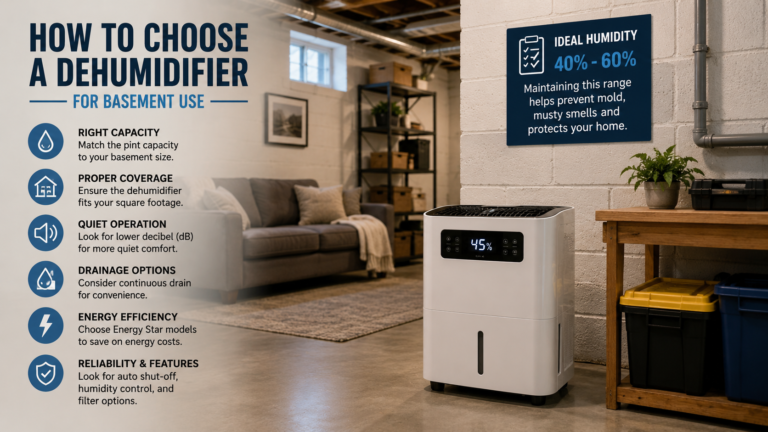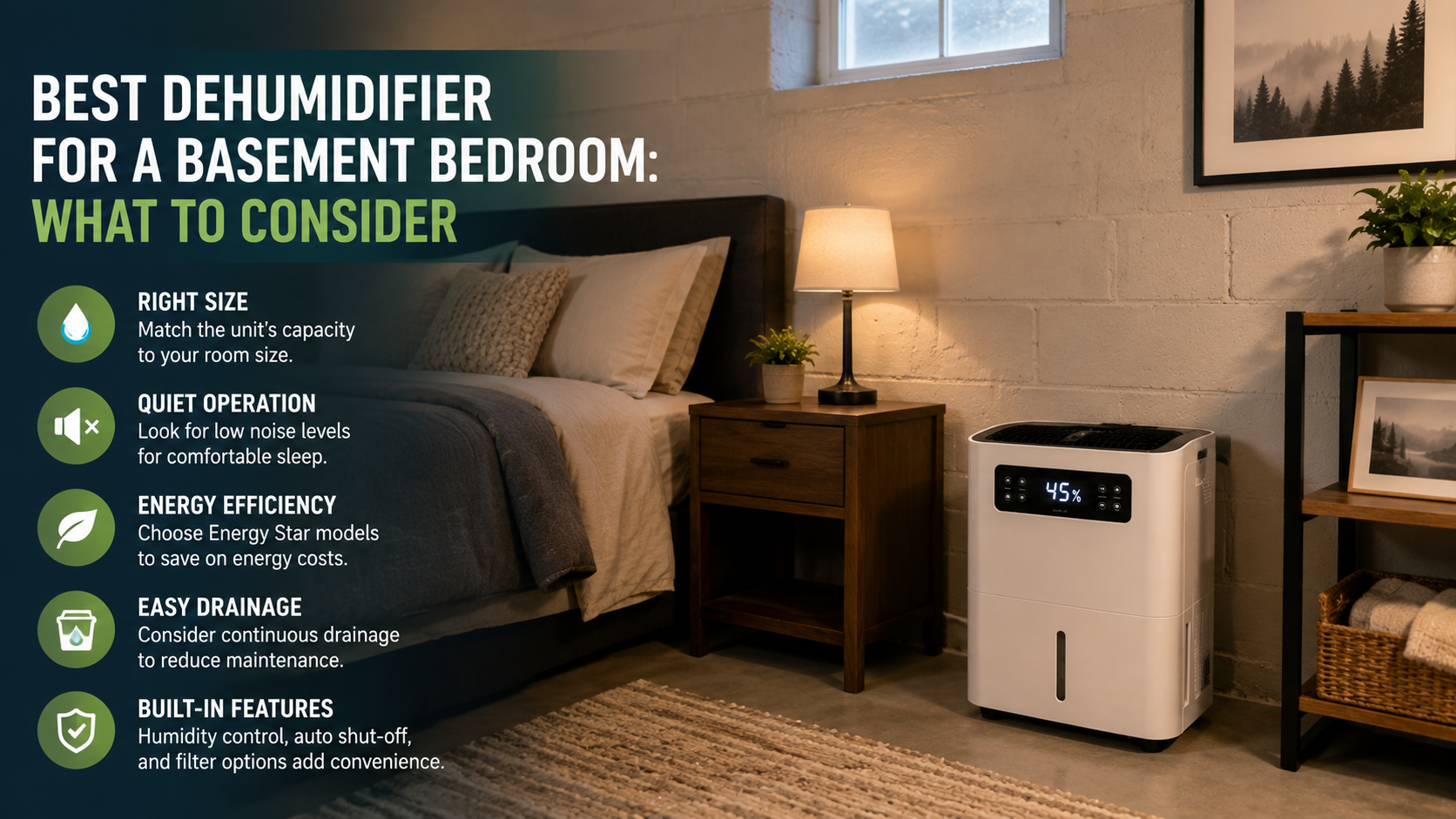
Why Is My Basement Still Damp After Using a Dehumidifier?
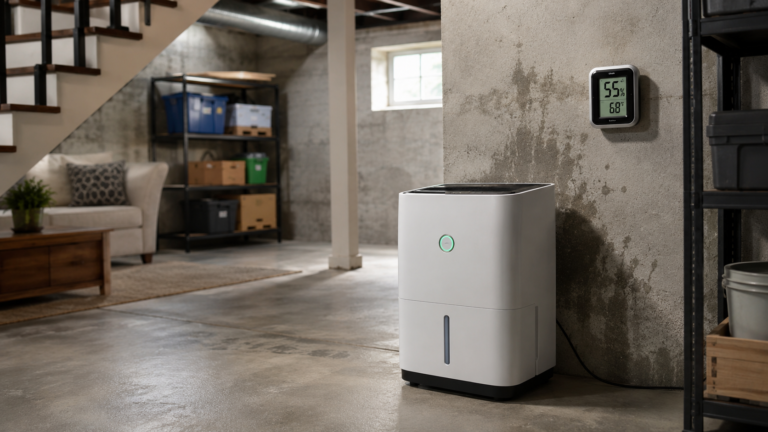
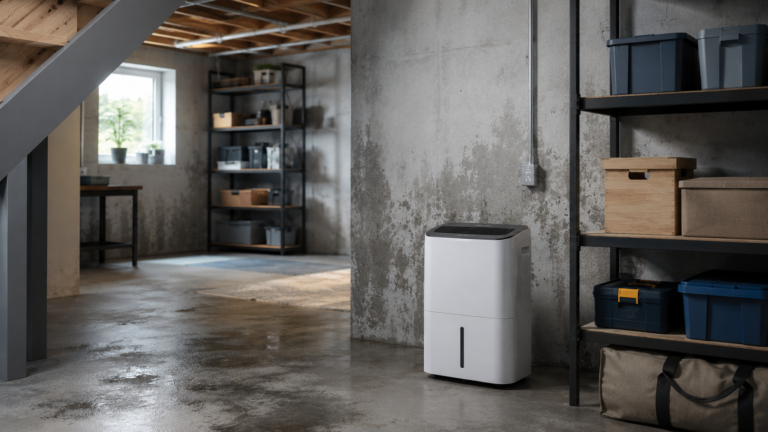
If you are asking why is my basement still damp after using a dehumidifier, you are usually in the most frustrating stage of the process. You bought the machine, you are running it, and the basement still feels damp, heavy, or musty. That does not always mean the unit is useless. More often, it means one part of the setup is off: the unit may be too small, badly placed, running with the wrong settings, not running long enough, poorly maintained, or trying to control a basement that has a heavier moisture load than expected.
This article stays focused on the dehumidifier side of the problem. The question is not how to waterproof a foundation or redesign drainage. The question is why the current moisture-control setup is not giving the result you expected.
Quick Answer
A basement can still feel damp after using a dehumidifier if the unit is too small, poorly placed, set incorrectly, not running long enough, or working against cooler surfaces and trapped moisture. In many cases, the machine is helping, but the room is still holding more humidity than it can remove efficiently.
Why can a basement still feel damp even with a dehumidifier running?
A dehumidifier does not fix every moisture issue automatically. It changes the room environment, but only if the machine, placement, settings, runtime, and maintenance all make sense for that basement.
If one of those is off, the machine may run without changing the room much.
The unit may be reducing humidity, but not fast enough
A basement can still feel damp even when the dehumidifier is working properly. Lower-level spaces often dry more slowly than upstairs rooms, especially if the air is cool, the layout is broken up, or the room started out very humid.
That means the machine may be helping, but not yet enough to change how the room feels. If the room is slow to improve overall, it is worth revisiting what size dehumidifier you need for a basement before assuming the machine is failing.
Damp air can linger in corners and low-airflow zones
A basement does not dry evenly. One part of the room may improve while a corner near storage, an exterior wall, or a closed-off section still feels clammy.
This often makes people think the machine is failing, when the bigger issue is uneven airflow.
Cooler surfaces can keep the room feeling damp
Even if overall humidity is improving, cool floors, walls, and corners can keep the basement feeling damp longer. The air may be getting drier while the room still “feels” wet because those surfaces are slower to warm and dry.
Common reasons include:
- the unit is too small
- the machine is in the wrong place
- the humidity target is not set well
- the unit is not running long enough
- filters or water handling are affecting performance
- the basement is cooler, more divided, or more damp than expected
Signs Your Dehumidifier Is Too Small
An undersized unit is one of the most common reasons a basement stays damp.
It runs constantly with little real improvement
If the machine is always on but the room still feels clammy, stale, or slow to dry, it may not have enough capacity for the actual moisture load.
The basement smells musty even after days of use
Musty smell often improves gradually when humidity is coming down properly. If the odor barely changes, the unit may be overwhelmed.
One part of the basement improves, but not the rest
This can mean layout is part of the issue, but it can also mean the unit is not strong enough to influence the whole space.
Condensation keeps returning
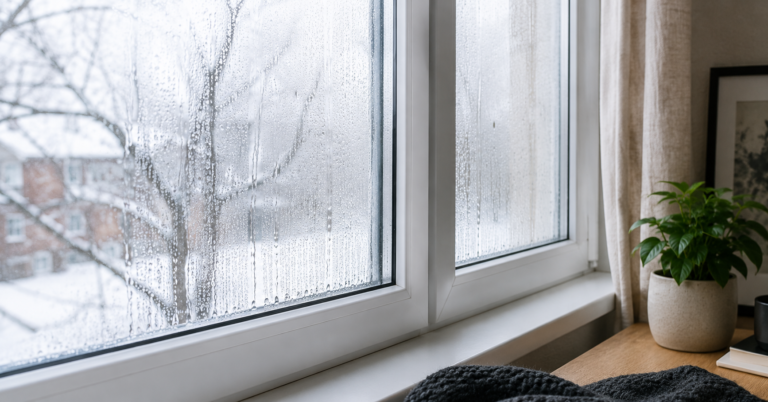
If windows or pipes still collect moisture regularly, the basement may still be running too humid.
If sizing is the question, best dehumidifier for basement and best basement humidity level work well together to evaluate whether the machine fits the room.
Wrong placement can make a good unit feel weak
If placement is the first thing you want to rule out, where should you place a dehumidifier in a basement gives you the practical setup checks before you assume the unit itself is wrong.
Even the right machine can underperform if it is in the wrong spot. A dehumidifier that is boxed into a corner, blocked by shelves, or isolated in the driest part of the basement may not pull damp air effectively.
Placement problems are especially likely when:
- the basement has multiple rooms
- storage blocks airflow
- one corner is much damper than the rest
- the unit was placed mainly for convenience
If the room also has uneven dampness patterns, basement moisture problems can help explain why one location may struggle more than another.
Incorrect humidity settings
If the unit is running but the room still feels heavy, compare the target with the recommended humidity setting for a basement before assuming the machine itself is failing.
If the room never seems to settle into a comfortable target, best basement humidity level gives you a clearer range to measure against.
Some users run a dehumidifier without paying much attention to the humidity target. Others set it in a way that does not match the basement’s real conditions.
If the target is not practical for the room, you may end up with:
- the unit cycling too little
- the basement staying slightly too humid
- a room that still feels stale even though the machine is technically operating
This is where knowing the target range matters. A basement that still feels heavy may simply not be reaching a useful moisture level.
How Long Should a Basement Dehumidifier Run Each Day?
If you are still deciding whether the setup problem is sizing, placement, or daily usability, how to choose a dehumidifier for basement is the best next comparison.
There is no one perfect number of hours for every basement. A damp lower level may need long runtime, especially at first or during humid weather.
In general:
- a mildly humid basement may need more moderate cycling
- a damp or musty basement may need extended runtime
- a basement that is recovering from a wetter spell may need longer operation until conditions stabilize
What matters most is not the raw number of hours. It is whether the room is actually improving.
If the basement still smells stale, windows still sweat, and surfaces still feel damp, the unit may not be running enough yet, or the setup may need adjusting. For the practical runtime question, should I run a dehumidifier all day in the basement fits naturally here.
Poor maintenance can quietly reduce performance
A dehumidifier does not have to be broken to become less effective. Basement conditions are hard on machines, especially in dusty storage areas or mixed-use lower levels.
Check for:
- dirty filter
- full or awkward water tank management
- blocked airflow around the unit
- neglected cleaning
- poor positioning that causes constant strain
A unit that is not maintained well can keep running while doing less real work than expected.
Basement conditions may be heavier than you thought
If the room still feels damp overall, best dehumidifier for basement helps you compare whether the machine itself fits the real moisture load.
Sometimes the machine is not the main problem. The basement may simply be more moisture-loaded than expected.
This is common when:
- the room already smells strongly musty
- storage absorbs odor quickly
- there is laundry downstairs
- the basement has several cool, low-airflow corners
- humid weather changes the room fast
In those situations, the dehumidifier may still be helping, but the room may need a stronger or better-matched setup to feel meaningfully different.
What to check if one part of the basement still feels damp
Compare the center of the room with corners and walls
If only one zone still feels damp, compare open areas with storage edges, cool corners, and exterior-facing walls.
If the damp feeling is room-wide rather than local, go back through signs your basement needs a dehumidifier so you can separate persistent moisture from a short-term setup issue.
Look for blocked airflow
Shelving, boxes, and furniture can trap humid air and stop the dehumidifier from influencing the whole space evenly.
That is also why where to place a dehumidifier in a basement matters more than many homeowners expect.
Check whether the room is actually reaching a useful humidity range
If the basement still feels damp, confirm the reading with a hygrometer instead of relying only on feel. It helps to compare the result with the best basement humidity level rather than guessing from room feel alone.
Practical troubleshooting checklist
Check the size
Was the machine chosen for actual dampness, or only for square footage?
Check the placement
Is it in an open useful location, or just wherever there was an outlet?
Check the humidity goal
Is the basement actually reaching a drier, more stable range?
Check runtime
Has it run long enough under the current weather conditions?
Check maintenance
Is the filter clean and airflow unrestricted?
Check the room pattern
Is the basement divided, storage-heavy, or unusually slow to dry?
FAQ
Why is my basement still damp after using a dehumidifier?
Usually because the unit is too small, poorly placed, not running long enough, set incorrectly, or working against a heavier moisture load than expected.
Can a dehumidifier be too small for a basement?
Yes. This is one of the most common reasons the basement still feels damp even when the machine runs a lot.
How long should a basement dehumidifier run each day?
It depends on how damp the basement is, but the real measure is whether the room is actually improving, not just how many hours the machine is on.
Does placement really matter that much?
Yes. Poor airflow or a bad location can make an otherwise good dehumidifier feel ineffective.
What if the basement still smells musty?
That usually means moisture is still lingering somewhere in the room environment, even if the unit is doing part of the job.
Can a dehumidifier be working even if the basement still feels damp?
Yes. A unit can be doing useful work while the room still feels damp because the basement started very humid, dries slowly, or has corners and surfaces that lag behind the air.
Why is only one corner of my basement still damp?
That usually points to airflow, layout, or a colder surface rather than a whole-room failure. Storage edges, exterior walls, and closed-off corners often improve last.
Should a basement feel dry right away after using a dehumidifier?
Not always. A damp basement often needs time before the room feels noticeably different, especially if the unit is correcting a long-running moisture pattern rather than a short spike.
Closing
A basement that still feels damp after using a dehumidifier usually points to a setup problem, not necessarily a hopeless room. In many cases the answer is practical: the unit is too small, the placement is wrong, the settings are off, the runtime is too short, or the basement conditions are simply heavier than expected. Once you identify which of those is holding the room back, the next decision becomes much clearer.