Bedroom Wall Mold: Common Causes and What to Check First
Mold on bedroom walls is usually caused by overnight moisture collecting on cold surfaces with limited airflow. Sleeping adds moisture to the room, and when windows and doors stay closed, condensation can form behind furniture, in corners, or on exterior walls. Hidden leaks should also be considered when dampness appears in one localized area.
If you are searching for what causes mold on walls in bedroom spaces, the bigger clue is usually that this room is staying damp enough overnight for the same wall spot to keep returning.
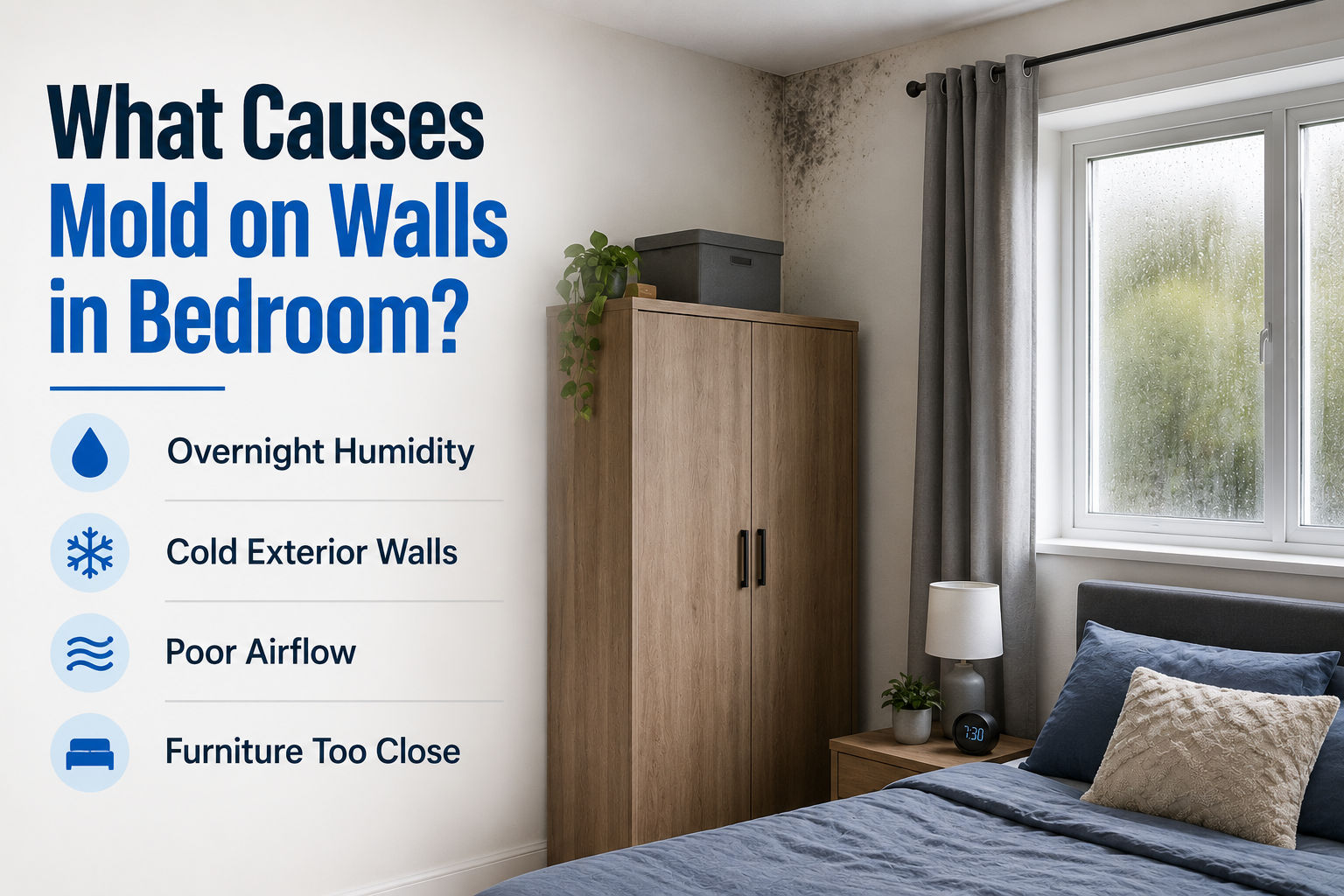
When people ask what causes mold on walls in bedroom spaces, the answer usually comes back to repeated moisture in a room that dries too slowly. Bedrooms are a common place for this problem because they behave differently from other rooms. They stay closed for long periods, collect moisture overnight, and often have colder corners, window areas, or exterior walls that dry slowly. That combination makes bedrooms especially vulnerable to mold-prone wall spots, even when the rest of the house seems fairly normal.
The useful question is not only “why is there mold?” It is “why is this wall in this room staying damp enough for mold to keep returning?”
Key Takeaways
- Bedroom wall mold is often caused by condensation, trapped humidity, and poor airflow rather than obvious leaks.
- Exterior walls, corners, window-adjacent areas, and spaces behind furniture are the most common problem spots.
- Bedrooms collect moisture overnight, which makes them more vulnerable than many people expect.
- The same patch returning usually means the room conditions have not changed enough.
- Surface cleaning may help temporarily, but the room moisture pattern still needs attention.
Why Mold Forms on Bedroom Walls
Mold still needs moisture to grow, but bedrooms can create that moisture pattern more easily overnight. People release moisture while sleeping, and the room often stays closed for long stretches with less airflow than more active areas of the house.
When doors and windows stay shut, humid air lingers longer around colder surfaces. Exterior walls, corners, and wall sections behind furniture often dry more slowly than the visible center of the room, so moisture can settle there overnight without being obvious at first.
That is why bedroom mold often appears in winter, beside windows, in upper corners, or behind wardrobes and beds. The room may look calm and mostly dry during the day while still building the kind of overnight moisture pattern that keeps the same wall spot damp enough for mold to return.
What causes mold on walls in bedroom spaces most often
Condensation on cold walls
This is one of the most common reasons. Warm indoor air carries moisture, and when that air meets a colder bedroom wall, condensation can form. Even if you do not see water running down the wall, repeated surface dampness can still create the conditions mold likes.
This is especially common on:
- exterior-facing walls
- upper corners
- walls beside windows
- walls behind large furniture
- colder parts of the room with little airflow
If you are unsure whether it is mold or condensation, mould on walls vs condensation gives a useful side-by-side explanation. If the patch still looks more like an early surface issue, what causes mildew on walls helps explain that earlier warning stage.
Poor airflow
Bedroom airflow is often weaker than people realize. Doors stay shut, windows stay closed, and furniture can block circulation. That means damp air lingers longer near cool surfaces.
When airflow is poor, even a small condensation pattern can become a repeated moisture problem over time.
Overnight humidity
Bedrooms collect moisture while people sleep. That is normal, but in a room that is already cool or poorly ventilated, the overnight build-up can become the main reason mold starts on the wall.
This often shows up as:
- damp-feeling air in the morning
- windows that fog overnight
- a stale smell after the room has been closed
- corners that feel colder than the center of the room
The room may feel fine during the day and still be too damp overnight. This is also the point where telling the difference between mold and condensation becomes important, because many bedroom wall issues start with repeated overnight moisture rather than a deeper wall defect.
Furniture placed too close to the wall
Wardrobes, beds, dressers, and shelving units pushed tightly against a colder wall create a classic mold pattern. Air cannot move properly behind them, so the wall stays cooler and dries more slowly.
This is one of the easiest causes to miss because the problem area is partly hidden until the mold becomes more obvious.
High room humidity
If the whole home is running humid, the bedroom walls become more vulnerable. A slightly cold wall plus elevated indoor humidity is often enough to create recurring mold spots.
This is where using a humidity meter overnight can be more useful than guessing. The same principle still applies: room air moisture matters, even when the room only feels damp at certain times.
Window-related moisture
Bedroom windows often collect condensation in colder weather. The nearby wall may be affected by the same moisture pattern, especially around frames, curtains, and adjacent corners.
If the window area is wet most mornings, the wall beside it deserves attention too. In some rooms, the wall issue may actually be condensation before it becomes an obvious mold problem.
Why Condensation Forms on Bedroom Walls at Night
Condensation forms when moist bedroom air meets a wall surface that is colder than the surrounding air. This often happens overnight on exterior walls, in corners, or behind furniture where air movement is limited.
Bedrooms make this more likely because people release moisture while sleeping and the room often stays shut for hours. If windows stay closed, curtains cover colder surfaces, or air feels stale by morning, that overnight moisture can settle quietly and remain easy to miss.
The result is not always visible dripping. Sometimes the clue is simply that one wall corner, one exterior-facing patch, or the space behind a bed keeps feeling cooler and slower to dry than the rest of the room.
Quick Tip
If the mold patch is on an outside wall or behind furniture, do not only clean it and move on. Check whether that part of the room feels colder, more enclosed, or more humid than the rest.
Where bedroom wall mold usually appears first
Families should also watch for early mold signs on bedroom walls, especially around cold corners, furniture shadows, and window-side patches that return after cleaning.
| Bedroom area | Why it is vulnerable |
|---|---|
| Exterior wall corners | Cooler surface, slower drying |
| Behind wardrobes or beds | Poor airflow and trapped air |
| Near windows | Condensation and colder surfaces |
| Ceiling line on outside wall | Warm moist air rises and meets cooler surfaces |
| Around curtains and fabric-heavy corners | Moisture lingers longer |
Cold Spots and Hidden Airflow Problems
Bedroom wall mold often starts in places that are not easy to monitor day to day. Exterior walls can stay colder than interior ones, corners get less air movement, and the space behind wardrobes, beds, or heavy curtains may dry much more slowly than the wall you can see clearly.
That is why one visible wall area may look fine while a hidden strip behind furniture stays damp enough to support mold. Closed-room airflow also matters here. When the room stays shut overnight, air can become stale in those colder pockets long before the center of the room feels obviously damp.
Furniture placement is part of the pattern, but it is not the whole answer by itself. The more useful question is whether that hidden wall zone stays cooler, more enclosed, and slower to dry than the rest of the bedroom.
Signs the room itself is feeding the problem
Some clues suggest the issue is mainly bedroom moisture behavior rather than a one-off stain:
- the patch returns in the same place
- windows sweat at night
- the room smells stale in the morning
- the mold is near a cold exterior wall
- furniture sits very close to the affected area
- the problem is worse in winter or wet weather
If several of those are true, the bedroom conditions are probably a major part of the cause.
When it may be more than a bedroom humidity issue
Not every wall problem is just condensation and poor airflow. Take a closer look if:
- the wall feels soft
- paint is bubbling
- one area is much wetter than the rest
- there is known plumbing nearby
- the patch is spreading unusually fast
- the room smells damp even in dry weather
In those cases, the problem may involve hidden water entry or deeper moisture in the wall. If you need a wider hidden-moisture comparison, the same pattern often shows up in basement smells musty and broader basement moisture problems.
Could It Be a Hidden Leak Instead of Condensation?
Condensation is often the leading explanation in bedrooms, but it is not the only one. Condensation is more likely when marks show up on cold exterior walls, get worse after sleeping or in winter, affect more than one corner, or happen in a room with weak airflow.
A hidden leak may be more likely when the damp patch is very localized, staining seems to follow a pipe line, paint bubbles in one area, or the wall stays wet at different times of day regardless of ventilation. That does not confirm a leak on sight, but it changes what you should investigate first.
If the damage keeps returning in one stubborn area, it helps to compare the bedroom pattern with the general causes of wall mold and look more closely at nearby plumbing or exterior entry points. If damage is persistent or extensive, a professional assessment is usually the safer next step.
What to do first
Improve airflow around the wall
If furniture is pressed tightly against the affected wall, create some space if possible. Even a modest gap can help the surface dry better.
Pay attention to overnight humidity
If the room smells stale or windows fog by morning, the wall is probably reacting to the room’s overnight moisture pattern.
Watch the coldest parts of the room
The mold is often not appearing at random. It usually grows where the wall stays coolest the longest.
Clean the visible patch carefully
Cleaning may help reset the surface, but it will not stop return if the moisture pattern stays the same.
Compare the room with the rest of the house
If this bedroom feels more closed, colder, or more humid than nearby rooms, that difference usually matters.
Warning / Don’t Ignore This
If bedroom wall mold keeps returning after cleaning, the surface is still getting enough moisture to support it. Do not assume it is only cosmetic. Repeated return means the room conditions, the wall conditions, or both still need attention.
For general official guidance on indoor moisture and mold, the EPA’s overview is useful: EPA mold guidance. If bedroom moisture keeps pointing back to overnight humidity, it also helps to compare whether a dehumidifier is the right fix before assuming it will solve every wall problem.
Bedroom Wall Mold Checklist
- Check whether the wall is exterior-facing.
- Look for overnight window condensation.
- Notice whether the room feels stale in the morning.
- Move furniture slightly away from cold walls if possible.
- Compare the affected wall with other walls in the room.
- Pay attention to whether the patch worsens in winter or wet weather.
FAQ
What causes mould on bedroom walls?
Bedroom mould usually develops when overnight moisture collects on cold walls with limited airflow, especially in corners, behind furniture, or on exterior walls.
Why does condensation form on bedroom walls at night?
Moist air from sleeping can collect on colder wall surfaces when the room is closed and airflow is limited. Exterior walls and hidden areas behind furniture are common spots.
Why does mold appear behind bedroom furniture?
Furniture placed close to a cold wall can block airflow and slow drying, allowing condensation and dampness to remain longer.
Is bedroom wall mold always caused by condensation?
No. Condensation is common, but a localized damp patch, recurring staining, or damage in one area may point to a hidden leak or another moisture source.
Can a dehumidifier help with bedroom wall mold?
A dehumidifier may help when high indoor humidity is contributing to condensation, but it will not repair leaks or remove moisture trapped inside damaged wall materials.
Closing
Bedroom wall mold is often less about one dramatic cause and more about a repeated moisture pattern that the room quietly supports. Cold walls, closed doors, poor airflow, overnight humidity, and furniture placement all combine more easily in bedrooms than people expect. Once you identify which of those factors is keeping the wall damp, the problem usually becomes much easier to manage.