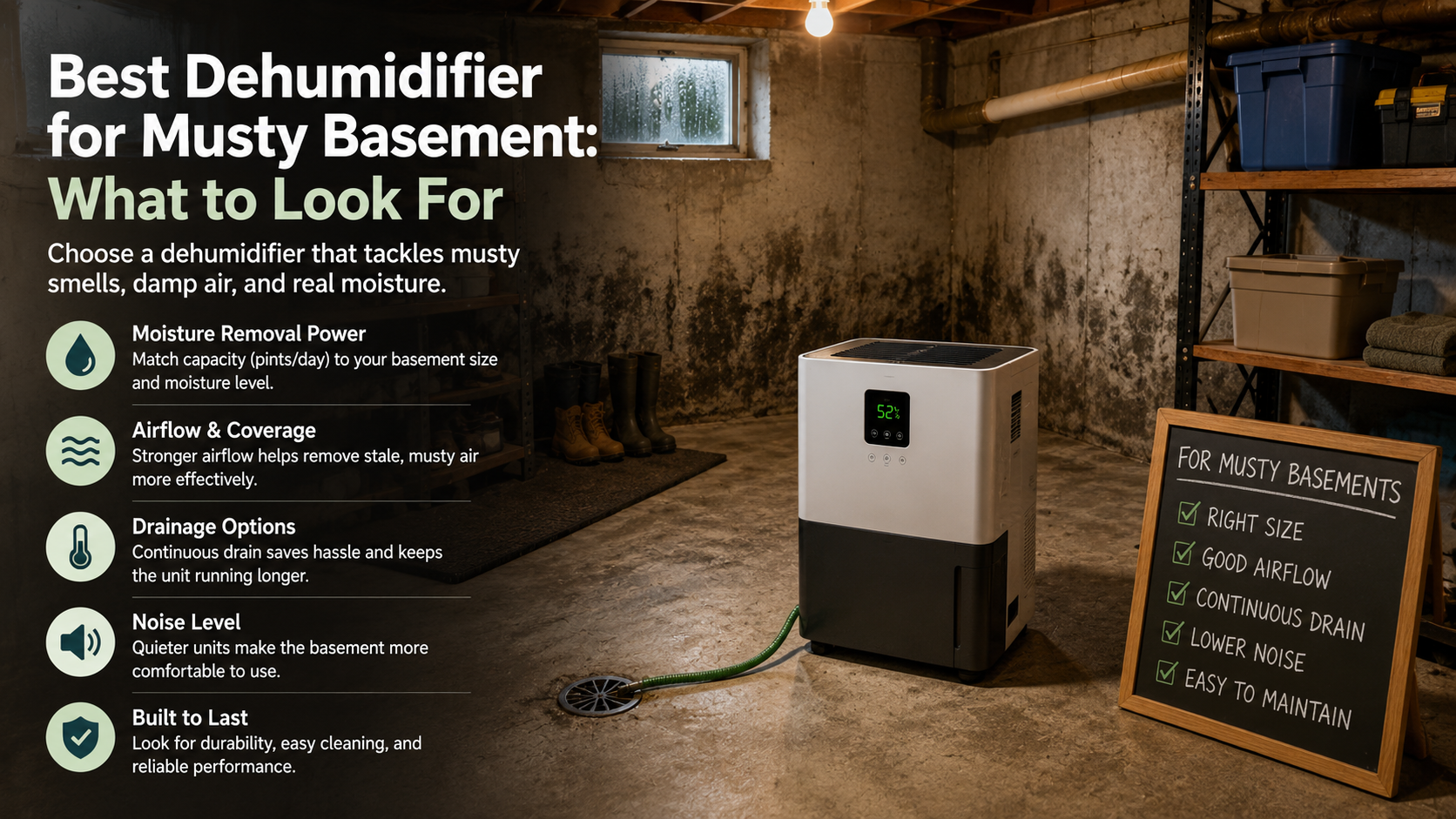
Best Dehumidifier for Musty Basement: What to Look For
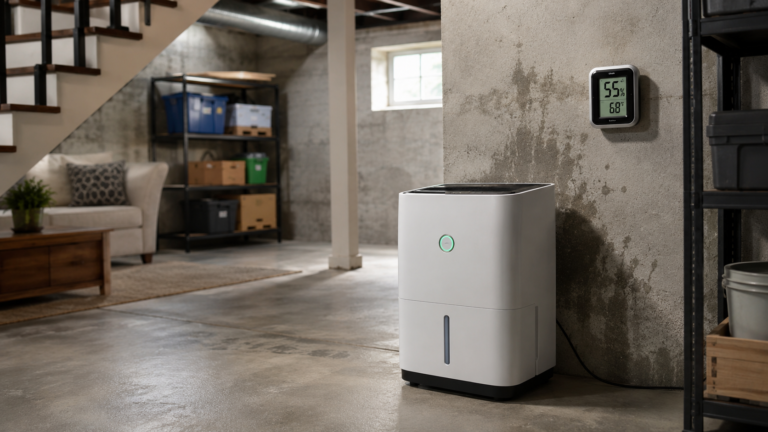
If you are searching for the best dehumidifier for musty basement, you are probably not shopping because the room feels mildly humid in theory. You are shopping because the space already smells wrong. The air may feel stale, heavy, or slightly earthy. Stored fabrics may pick up odor. Cardboard may smell off faster than expected. The room might look dry enough, but it does not feel dry in the way a healthy basement should.
That matters because a musty basement creates a different buying mindset than a general my basement is humid search. Odor changes urgency. It changes what buyers care about. You are not only trying to bring a number down. You are trying to make the room feel more stable, fresher, and more usable.
This article is not a ranking list. It is a practical guide to what actually matters when the main symptom is musty basement air.
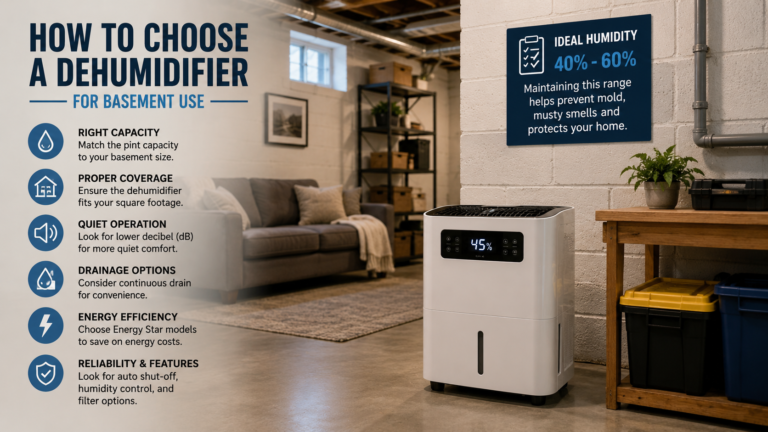
If your main question is which is the best dehumidifier for musty basement conditions, focus first on the actual symptom pattern: stale air, slow drying, drainage reality, noise, and whether the unit fits daily basement use.
Key Takeaways
- A musty basement buying decision starts with symptom pattern, not generic product hype.
- Drainage, noise, and real-world runtime matter as much as raw moisture removal.
- The right unit should help stale air, slow drying, and damp smell feel more manageable.
- This page stays specific to musty-basement conditions, not broad basement shopping.
Why a musty basement needs a more symptom-led buying approach
A musty smell is often one of the earliest signals that a basement is holding moisture longer than it should. The room may not have visible water damage. The walls may not look dramatically wet. But the smell suggests the environment is already affecting air quality, surfaces, and stored materials.
That means the right dehumidifier choice should be based on the room actual moisture behavior, not just a generic product label. If you want the broader basement buying guide, use the main basement dehumidifier page alongside this one.
- Can the unit meaningfully reduce damp air?
- Is it practical enough to run consistently?
- Will it help the room feel less stale over time?
- Does it fit the size and severity of the problem?
- Is it quiet enough if the basement is partly lived-in?
What a musty basement usually tells you
- high humidity in the air
- poor airflow
- cool surfaces that dry slowly
- damp storage materials
- old low-level moisture that never fully resolves
- condensation on windows or pipes
- corners or wall zones that hold stale air
This is important because the smell itself is not the root cause. It is the symptom. If you want a diagnosis first, start with what that musty smell usually points to and if the moisture pattern is broader than smell alone.
What to Look for in the Best Dehumidifier for a Musty Basement
Moisture-control capacity
If the basement already smells musty, the room likely needs meaningful moisture reduction, not just a token change. That does not always mean maximum power, but it does mean the unit should be matched to the room dampness level, not only its size.
Practical drainage
This is a major factor in musty basements because the issue often requires consistent use over time. If emptying the tank feels inconvenient, people are more likely to use the unit less often than they should.
Noise level
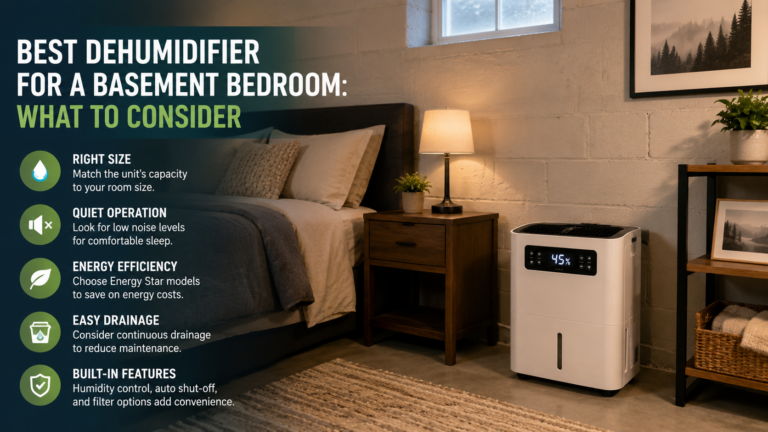
Noise matters more if the basement is finished, used as a family room, office, guest space, or lower-level bedroom. In a storage basement, it may matter less, but the room use still changes the right balance.
Humidity controls
If the room tends to drift up and down with weather changes, adjustable humidity settings help a lot. They allow the machine to work toward the humidity range you are trying to reach instead of running blindly.
Fit for stale-air zones
Some basements do not smell equally musty everywhere. One storage wall, one fabric zone, or one corner may be worse. The machine should fit the layout well enough to support the actual room rather than only the center of the floor.
What features matter most for a musty basement?
If the main problem is musty smell rather than visible standing water, the best dehumidifier is usually the one that can control moisture consistently without becoming difficult to live with day after day.
Capacity and pint rating
Capacity matters because a musty smell often means the basement has been holding damp air longer than it should. A unit that is too small may run frequently without changing how the room actually feels.
Continuous drain option
Continuous drainage can make a big difference in real life. If emptying the tank feels inconvenient, many basements never get the steady runtime needed to improve odor and air quality.
Built-in humidistat
A built-in humidistat helps the machine work toward a usable target instead of running blindly. That matters when the room gets muggy again after weather changes.
Auto restart
Auto restart is useful in basements where storms or short power interruptions happen during humid periods. It helps the unit resume moisture control without manual reset.
Low-temperature performance
Some basements stay cooler than the rest of the house. In those spaces, low-temperature performance matters more than many buyers expect.
Washable filter
A washable filter is practical in storage-heavy or dusty basements, where buildup can affect airflow and long-term performance.
Pump option
A pump can be worth considering if gravity drainage is awkward or the nearest drain is not conveniently below the machine.
Energy efficiency
If the unit may need to run often during humid seasons, energy efficiency matters for the long-term cost of keeping the basement under control.
If you also want to compare the ideal target range after buying, see the humidity range that helps a basement feel drier and the best humidity setting for a basement dehumidifier.
Basement examples where this matters
Storage-heavy basement
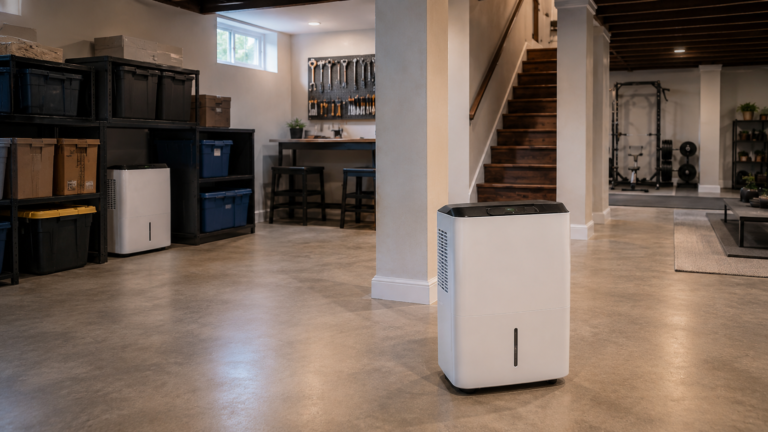
If the smell settles into boxes, luggage, books, and stored linens, the room needs consistency and likely benefits from a setup that is easy to maintain.
Finished basement
A finished room needs a balance between freshness, comfort, and acceptable noise. Odor control still matters, but so does livability.
Laundry basement
Laundry can add just enough moisture to keep a stale basement from ever really resetting. In these spaces, moisture removal often matters more than people think.
Shared lower-level room
If the basement smell drifts upward or affects nearby rooms, it stops being just a basement issue and becomes a house comfort issue too.
Quick Tip
If the smell gets noticeably worse after rain or on humid days, choose a setup you can run consistently, not just occasionally.
Musty basement situation vs what to look for in a dehumidifier
| Musty basement situation | What to look for in a dehumidifier |
|---|---|
| Light musty smell but no obvious damp spots | Moderate capacity, humidistat, and easy day-to-day use |
| Finished basement with stale or musty air | Quieter operation, stable humidity control, and practical drainage |
| Large unfinished basement | Higher capacity, strong moisture removal, and realistic drainage setup |
| Basement that smells worse after rain | Enough capacity for weather swings, auto restart, and steady runtime |
| Basement with visible damp spots | Stronger moisture control and more cautious expectations before buying |
| Basement that stays above 60% RH | Enough pint rating for the real moisture load plus reliable humidity control |
This kind of comparison helps narrow down what matters before buying. It does not replace diagnosis, but it does make product selection more realistic when the main issue is basement odor linked to damp air.
If you want a clearer benchmark for the moisture side of the decision, see the humidity range that helps a basement feel drier and what humidity level can start creating mold risk in a basement.
What a dehumidifier can and cannot do for basement smell
A dehumidifier often helps with the conditions that feed a musty smell. If the room is humid, slow to dry, and stale because of damp air, lowering that moisture usually improves how the room feels over time.
But a dehumidifier does not automatically fix every smell problem. If the basement has hidden water entry, very damp materials, or a wall problem that goes beyond air moisture, the machine may help only partially. That is why it is useful to think of a dehumidifier as a moisture environment tool, not a smell eraser.
Will a dehumidifier get rid of a musty basement smell?
A dehumidifier can often help reduce a musty basement smell when the odor is mainly being fed by high humidity, stale air, and slow-drying surfaces. In that kind of basement, bringing moisture levels down usually helps the space feel fresher and more stable over time.
That said, a dehumidifier is not a guaranteed fix for every basement odor. If the smell is being supported by hidden water entry, active mold, damp carpet, soaked stored items, drainage issues, or contaminated materials, the machine may improve the air only part of the way.
Before buying, it helps to ask a simple question: does the basement feel clammy, slow to dry, or noticeably worse after humid weather or rain? If the answer is yes, a dehumidifier is often a sensible part of the solution. If the smell seems disconnected from humidity, expectations should be more cautious.
If you want to understand what that odor may be pointing to in the first place, see what that musty basement smell can point to. If you already have a unit running and the basement still feels damp, see why a basement can still feel damp after using a dehumidifier.
When a dehumidifier is likely to help most
- the basement feels clammy
- the smell gets worse in humid weather
- windows or pipes condense
- storage smells stale
- the room dries slowly
- the air feels heavier than upstairs
Those clues suggest the smell is tied closely to room humidity rather than to one isolated hidden issue.
In practice, the best dehumidifier for musty basement problems is the one you can size correctly, drain realistically, and run consistently enough to change the room conditions rather than just mask the smell.
Don’t Ignore This
- musty odor keeps returning even when the room looks dry
- storage materials hold smell faster than expected
- the basement feels heavy or stale for days after humid weather
Common mistakes before buying
- Buying only by broad best basement advice
- Treating smell like a cosmetic issue
- Ignoring drainage
- Assuming bigger always means better
- Forgetting how the room is used
Musty basement dehumidifier checklist
| Buying factor | Why it matters |
|---|---|
| Smell severity | Helps judge how strong the moisture issue may be |
| Dampness pattern | Guides whether light or stronger control is needed |
| Drainage setup | Important for consistent long-term use |
| Room use | Noise and comfort vary by basement type |
| Humidity control | Helps stabilize the room over time |
If the basement smell is strong enough that you are already considering a purchase, it helps to compare checking the right size first, how long a basement unit may need to run, and how to compare basement units more confidently.
If you want a sober outside reference on moisture and mold conditions, the EPA moisture and mold guidance is a useful baseline for understanding why stale, damp air can keep basement smells active.
Musty Basement Reality Check
- Decide whether the smell is weather-linked, constant, or storage-specific.
- Check whether the unit can be drained realistically in your basement.
- Think about noise if the space is finished or lived in.
- Compare size and runtime needs before assuming one machine solves everything.
When a dehumidifier may not be enough
A dehumidifier can be a smart purchase when the basement problem is mainly humid air, slow drying, and stale odor. But it may not fully solve the smell if the space also has hidden leaks, active mold, soaked materials, drainage failure, or moisture trapped inside finishes.
That does not mean a dehumidifier is the wrong choice. It means buyers should see it as a moisture-control tool, not a guaranteed cure for every basement odor source.
If you already have a dehumidifier running and the basement still does not feel right, see why a basement can still feel damp after using a dehumidifier.
Frequently asked questions
Can a dehumidifier remove musty smell from a basement?
It often helps when the smell is tied to high humidity, stale air, and slow drying conditions. It may help less when the odor is being sustained by hidden moisture or contaminated materials.
What size dehumidifier do I need for a musty basement?
The right size depends on both basement size and symptom severity. A larger or more persistently musty basement usually needs more capacity than a room that only feels slightly stale.
Is a pump necessary for a basement dehumidifier?
Not always. It becomes more useful when gravity drainage is difficult or when you want a setup that is easier to run consistently.
Should I run a dehumidifier continuously in a musty basement?
Sometimes yes, especially during humid periods or while the basement is still stabilizing. The goal is not constant runtime for its own sake, but reaching a healthier and more stable moisture level.
What humidity level helps prevent musty basement odors?
Musty odors usually become easier to manage when basement humidity stays in a healthier range instead of remaining elevated for long periods.
Will a dehumidifier help if the basement smells worse after rain?
Often yes. That pattern usually suggests the room is reacting to changing moisture conditions, which is exactly where steady dehumidification may help most.
What matters more for a musty basement: size or features?
Both matter, but the best results usually come from matching capacity to the real moisture load and choosing features that make consistent use easier.
Similar Posts
Best Dehumidifier for Home: What to Look For Before Buying
A practical buying guide to room size, tank capacity, drainage, noise, and humidity control before choosing a dehumidifier for home use.
Should I Run a Dehumidifier All Day in the Basement?
Should you run a basement dehumidifier all day? Learn when long runtime is normal, when it is not, and how to judge results by humidity and room feel.
Why Is My Basement Still Damp After Using a Dehumidifier?
Learn why your basement may still feel damp after using a dehumidifier, from sizing and settings to placement, runtime, and maintenance.
What Setting Should a Basement Dehumidifier Be On?
What setting should a basement dehumidifier be on? Most basements are managed around 45-50% humidity. Learn when to adjust the setting and when the problem is bigger than the number.
How to Choose a Dehumidifier for Basement Use
A practical guide to choosing a basement dehumidifier based on room size, humidity, noise, drainage, and how the space is actually used.
Where Should You Place a Dehumidifier in a Basement?
Learn where to place a dehumidifier in a basement for better airflow, fewer damp spots, and more effective moisture control.