How to Choose a Dehumidifier for Basement Use
Learning how to choose a dehumidifier for basement use is not really about finding one universal best unit. In practice, how to choose a dehumidifier for basement conditions starts with the room itself, not with a generic best overall label. It is about matching the room actual moisture problem to the kind of machine that makes practical sense. The goal here is not to rank products. It is to help you make a better decision before you buy anything.
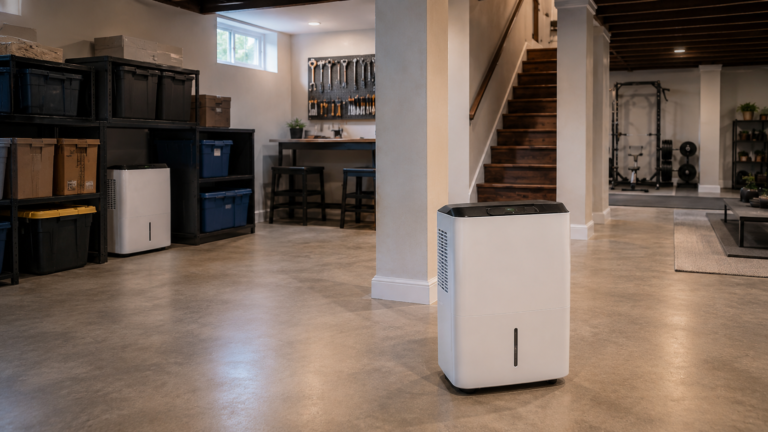
Basements are different from upstairs rooms. They are usually cooler, slower to dry, and more likely to feel damp even when there is no visible water. Some are storage-heavy. Some are finished family rooms. Some are laundry areas. Some are half-bedroom, half-office spaces where noise matters just as much as moisture control. All of that changes what a good dehumidifier choice actually looks like. If you want the broader buying page after this, compare it with best dehumidifier for basement.
Key Takeaways
- Start with the basement problem, not a generic best-product claim.
- Size, dampness, drainage, noise, and room use matter more than hype.
- A storage basement and a finished basement do not need the same buying priorities.
- A practical setup is usually more important than chasing the biggest unit.
Why choosing a basement dehumidifier is different from buying one for upstairs
A dehumidifier for an upstairs bedroom may only need to help during humid summer nights or occasional window condensation. A basement dehumidifier often has to work against a more stubborn environment.
- cooler conditions
- less ventilation
- mustier smells
- slower drying
- more stored materials that hold odor
- longer or more regular runtime
Start with the basement problem, not the product
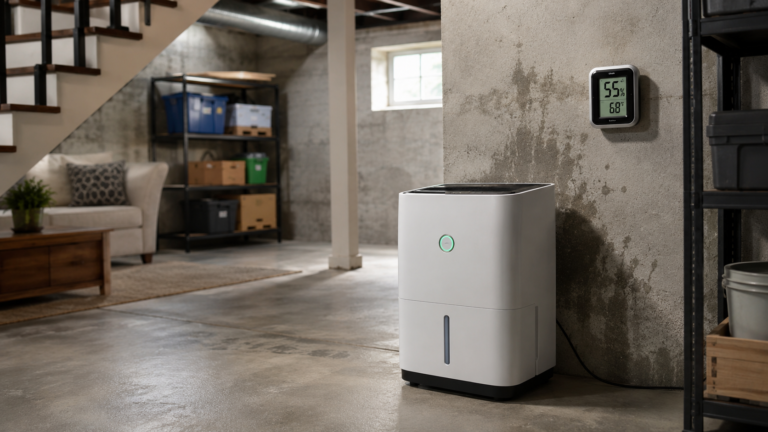
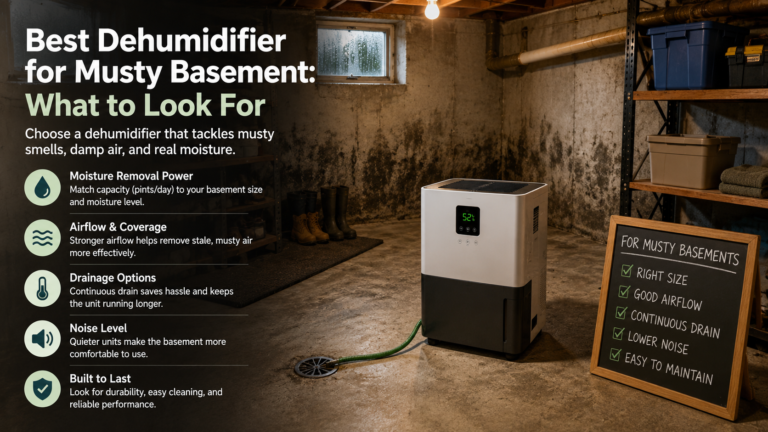
Before comparing features, define the problem. Is the basement mildly humid, or clearly musty? If the smell is the main driver, it helps to compare this with choosing a dehumidifier for a musty basement rather than staying too general. Does it collect condensation? Is it only bad in summer? Does it affect stored items, bedding, or air comfort?
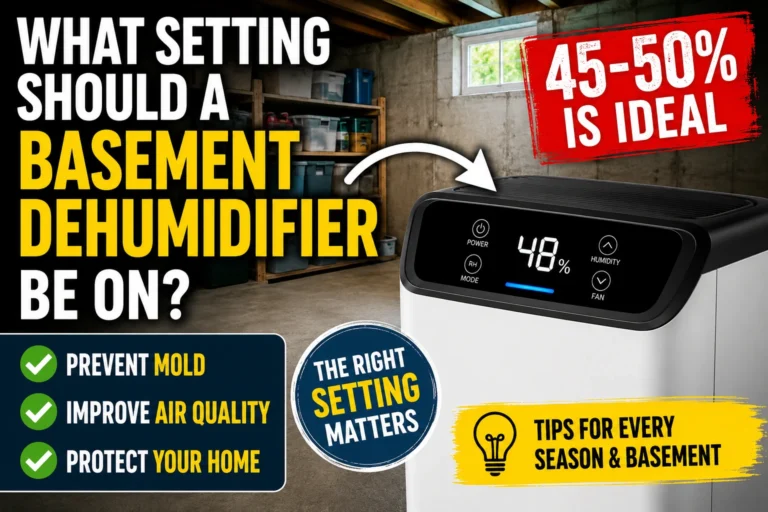
If you are not sure where the room sits, it helps to understand best basement humidity level first, because that gives you a more practical baseline than smell alone.
How to choose a dehumidifier for basement use: the main criteria
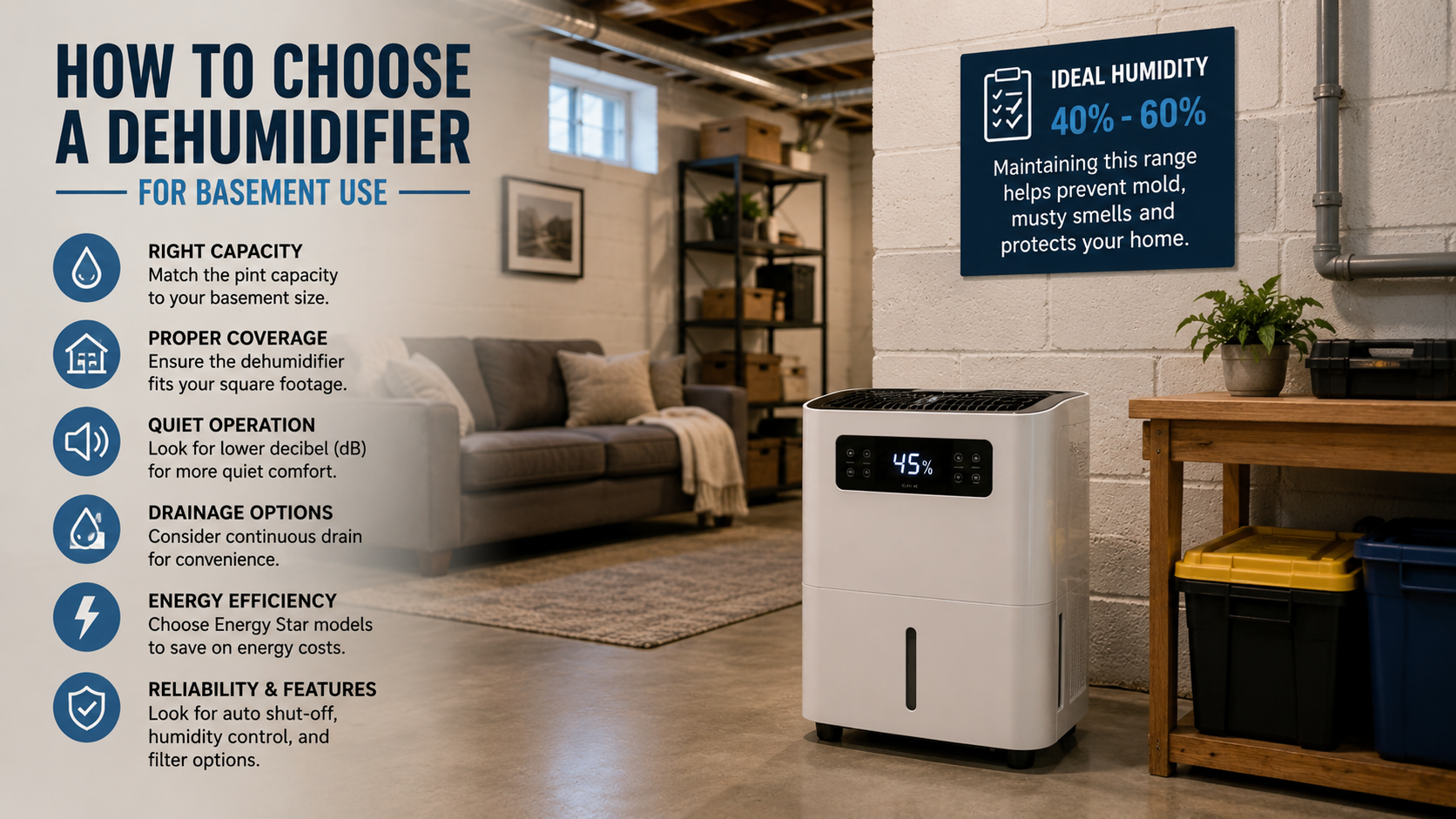
If you are deciding how to choose a dehumidifier for basement rooms, these are the criteria that usually matter most before any product comparison begins.
Basement size
Size still matters. A larger open basement usually needs more moisture-handling ability than a small closed room. But size should never be used alone.
Dampness level
A mildly stale basement and a heavily musty basement are not the same buying situation. The room actual moisture behavior helps determine how much performance you need.
Water removal capacity
Some basements need gentle maintenance. Others need stronger moisture removal because the room is already clearly damp.
Drainage setup
Drainage is one of the most practical basement decisions. A machine can be technically good and still feel annoying in real life if the drainage setup does not suit the room.
Noise level
Noise matters less in a storage room and much more in a finished basement, office, or lower-level guest space.
Temperature and room conditions
A basement is not just a humid room. It is often a cooler room too. That affects how moisture behaves and what kind of machine setup feels practical.
Daily use and maintenance
How often will you empty the tank? How much space do you have? Will the machine sit in the main walking area? All of these practical details matter.
Quick Tip
If the basement is partly lived-in, treat noise and drainage as buying factors, not afterthoughts.
Practical examples by basement type
Finished family basement
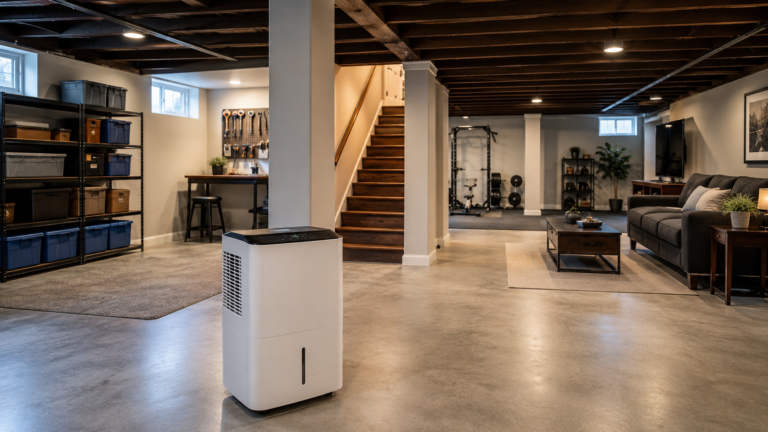
Comfort matters here. The machine should improve the room without making it unpleasant to use. Noise, footprint, and easy daily operation are often higher priorities.
Storage basement
In a storage basement, moisture control and convenience usually matter more than appearance or sound.
Laundry basement
Laundry adds moisture to the space, so drainage and capacity become more important.
Office or guest-room basement
A lived-in lower-level room needs a balance of dryness, quiet, and usability. This is where poor product fit gets frustrating fast.
Warning
- Do not size the unit only by square footage if the basement already smells musty.
- Do not ignore awkward tank emptying if you know the room will need steady runtime.
- Do not assume a cheap upstairs-room model will behave the same in a cool basement.
Mistakes people make before buying
- Buying only by best overall claims
- Ignoring drainage practicality
- Treating every basement the same
- Choosing based only on price
- Skipping the humidity baseline
If the basement is already showing wider moisture problems, start with if the basement is already showing wider moisture problems before you treat the decision like a simple product filter.
Basement dehumidifier decision checklist
| Question | Why it matters |
|---|---|
| How big is the basement? | Helps define baseline size needs |
| How damp or musty is it? | Determines seriousness of the moisture load |
| Is it a lived-in room or storage space? | Changes comfort priorities |
| Is drainage easy or awkward? | Affects real-world usability |
| Does noise matter? | Important for offices, bedrooms, and finished spaces |
If you need help with capacity questions, review checking the right size first. If you already have a machine, compare that with how long a basement dehumidifier may need to run. And if a basement apartment needs a different setup, use if a basement apartment needs a different setup. Once it’s running, what setting to run it at matters just as much.
This guide is intentionally about criteria, not a roundup. If you want the broader purchase page later, use how to choose a basement dehumidifier more confidently as the next step, not as a rewhere should you place a dehumidifier in a basement for this article.
For a neutral external reference on dehumidifier efficiency and setup basics, the ENERGY STAR dehumidifier guide is one useful benchmark.
Short Basement Buying Checklist
- Define whether the issue is smell, condensation, or overall dampness.
- Measure whether drainage setup is easy or awkward in the real room.
- Decide whether the basement is storage-only or regularly lived in.
- Check whether quiet operation matters before comparing specs.
Frequently asked questions
How do I choose a dehumidifier for basement use?
Start with the room itself: size, dampness, drainage setup, noise tolerance, and how the space is used.
Is basement smell enough reason to buy one?
Often yes, especially if the smell is persistent and the room also feels heavy or slow to dry.
Should I focus on size or dampness first?
Both matter, but dampness level usually changes the decision more than people expect.
Do finished basements need different dehumidifiers?
Not always different machines, but they often need different priorities, especially for noise and comfort.