Basement Moisture Problems: Causes, Warning Signs and Fixes
Basement moisture problems rarely begin with a dramatic puddle in the middle of the floor. More often, they start with a feeling.
Quick Answer
Basement moisture problems often begin as subtle clues rather than obvious flooding. Musty smell, heavy air, condensation, and stale storage are some of the earliest signs that the space is holding too much moisture.
Quick Tip
A basement does not need visible water to have a moisture problem. Smell, drying speed, and room feel often tell the story earlier. There can be mold risk even without visible water, so it is worth checking early.
Important
This article is broader than a musty basement article. The focus here is the full moisture picture: odor, air, surfaces, storage impact, warning signs, and which fixes make sense first.
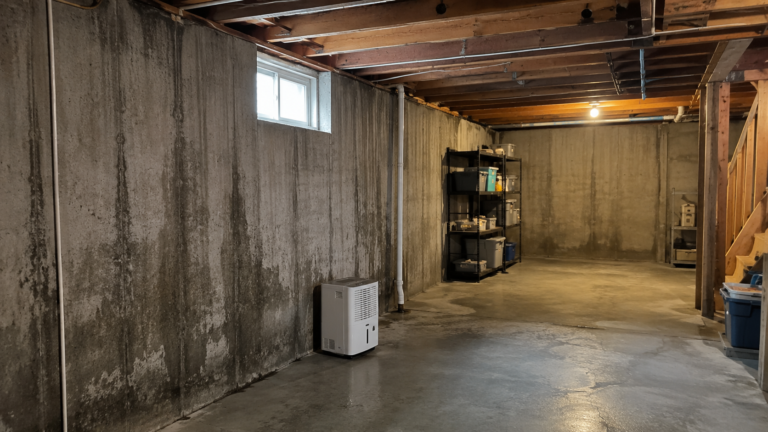
The air feels heavier downstairs. The room smells stale after a few closed days. Boxes soften. Blankets stored for months smell off. Window edges collect moisture. A wall corner feels cooler and damper than the rest of the room.
These are the kinds of signs people often live with for a long time because they do not look severe enough to count as real water problems. But that is exactly why basement moisture can be so persistent. The room may not be visibly wet, but it may still be staying too damp too often.
This article is broader than a musty-basement piece because smell is only one part of the pattern. If the room smells wrong even though the floor and walls look mostly fine, compare that with when the basement smells musty without visible water. Basement moisture affects room comfort, storage quality, walls, drying speed, and how the whole lower level feels over time. If you want to understand what the room is telling you, you need to look at the full picture.
Why basement moisture problems are so common
Basements are naturally more vulnerable because of where they sit in the house. They are lower, cooler, and often less ventilated. Surfaces dry more slowly. Outdoor humidity and foundation-adjacent coolness affect them differently than upstairs rooms.
That does not guarantee a moisture problem, but it does mean basements reveal moisture issues more easily than many other spaces. Even small humidity imbalances can become noticeable downstairs first.
Early warning signs
Musty smell
A stale or earthy smell is one of the classic signs. It often appears before any major visual clue.
Clammy air
If the air feels heavy or slightly sticky, the room may be holding too much moisture.
Damp walls or cool corners
Some basements show the problem through wall feel rather than obvious water. A cool musty corner is still a useful warning sign.
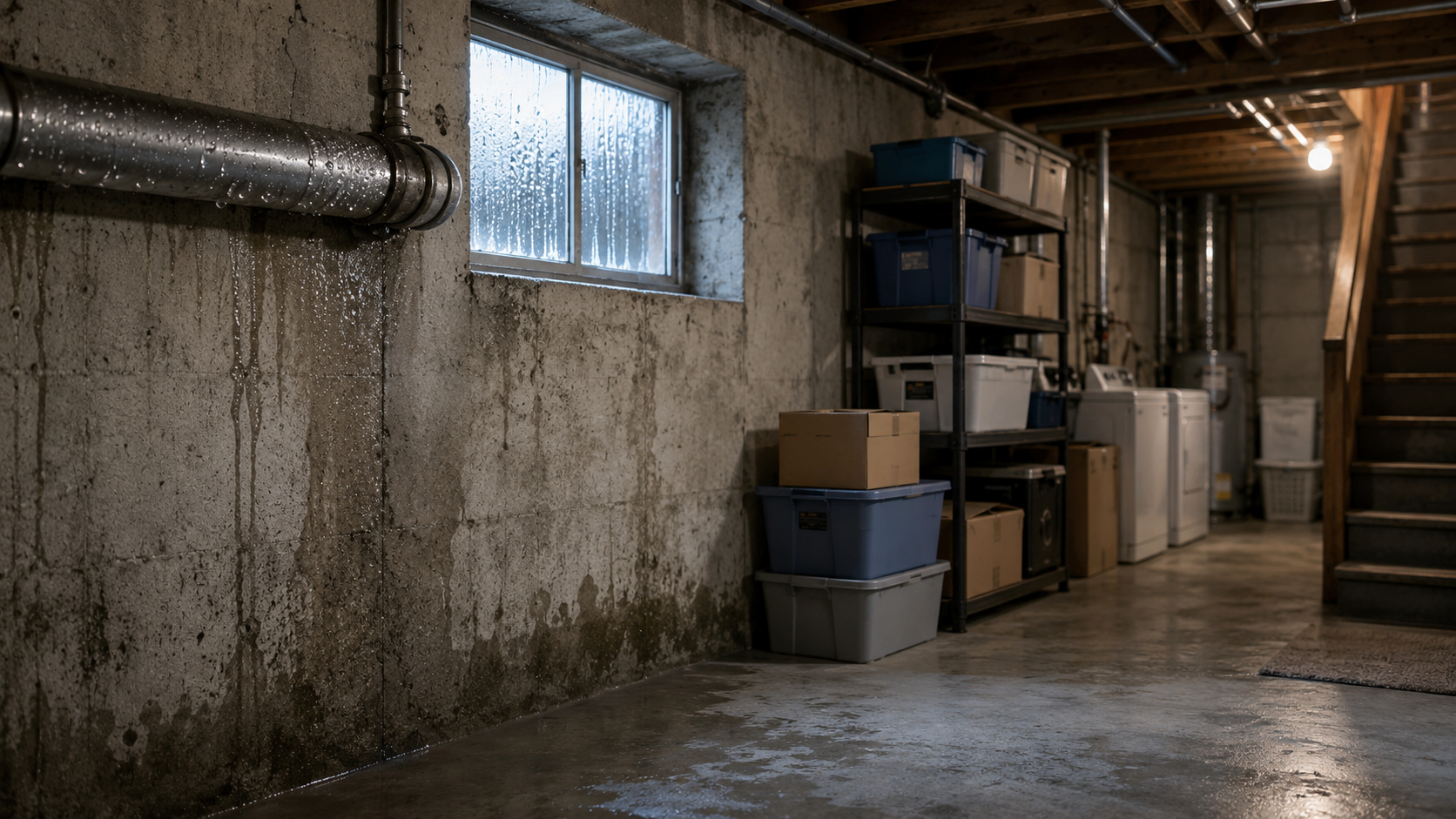
Condensation on windows or pipes
Cool surfaces often reveal humidity more clearly than the room itself.
Stale boxes, fabrics, and storage
Stored materials are often the first things to absorb a moisture problem.
The most common causes
- high air humidity
- low ventilation
- cooler surfaces that collect condensation
- older water damage
- minor seepage or repeated dampness
- laundry or utility moisture
- packed storage that traps air
The important thing is that the room may not need a major leak to behave like a moisture-prone space.
When a why is my basement still damp after using a dehumidifier may help
A dehumidifier can be useful when the main issue is damp indoor air, persistent condensation, or a basement that never seems to fully dry out. It may also help if musty smells get worse after rain, during humid weather, or in rooms that already feel heavy and stale. If you are trying to decide between general moisture control and wall-specific action, it can also help to see whether a dehumidifier can help with mold on walls.
That said, a dehumidifier works best as part of a bigger moisture-control approach. If persistent dampness keeps returning, it also helps to understand why your basement may still feel damp after using a dehumidifier before assuming the whole problem is only about humidity levels. If water is getting in through leaks, cracks, or drainage problems, lowering humidity alone may not solve the root cause.
What to do first
Start by identifying whether the issue is room-wide or more isolated.
- Is the smell strongest in one section?
- Does the room feel heavier after rain?
- Do windows or pipes sweat?
- Are walls or stored items showing the same pattern?
- Does the basement stay damp even when upstairs feels fine?
You do not need perfect answers right away. You just need enough context to stop treating the basement like a mystery. And if the basement feels damp without an obvious leak, that narrower diagnosis can help separate humidity from direct water entry.
Tools worth checking
If you are trying to understand a moisture issue, a few simple tools can make the situation easier to read. A basic hygrometer can show whether indoor humidity is consistently high. A moisture meter may help you compare surfaces and spot areas that stay damp longer than they should. In basements, even a simple habit of checking corners, windows, and stored items can reveal patterns you would otherwise miss. If one patch seems more suspicious than the rest, compare it with a wall moisture meter guide.
Signs you may need moisture control tools
There are times when observation alone is not enough. That is when moisture-control tools become more useful.
A humidity meter makes sense when the whole room feels damp or heavy and you want to confirm whether the basement air is running too humid.
A moisture meter makes more sense when one wall, one patch, or one trim area seems suspicious.
A dehumidifier starts making sense when the room regularly feels clammy, smells musty, or dries too slowly despite ordinary ventilation habits.
Common mistakes
- Treating odor as the only symptom
- Storing items tightly against walls
- Assuming no visible water means no real moisture problem
- Waiting too long to compare rooms
What can happen if you ignore it
Basement moisture often gets more obvious over time. Smell strengthens. Condensation becomes more common. Stored items deteriorate faster. Walls may begin showing more visible change. And the room becomes less comfortable and less trustworthy for storage or daily use.
The earlier you recognize the pattern, the more flexible your options usually are.
Basement moisture checklist
| Check | What to notice | Why it matters |
|---|---|---|
| Smell | Musty or stale air | Early moisture clue |
| Air feel | Clammy vs upstairs | Room-wide humidity pattern |
| Pipes/windows | Condensation | Clear humidity indicator |
| Storage | Stale fabric or softened boxes | Material moisture clue |
| Walls | Cool, damp, or musty areas | Surface-level warning sign |
Moisture control checklist
- Is humidity actually coming down over time?
- Are damp smells getting weaker, not just less noticeable?
- Are walls, corners, and stored items staying drier than before?
- Is airflow improving in the room?
- Have you ruled out leaks, drainage issues, or hidden water entry?
If the answer is no to several of these, the next step may not be a stronger machine. It may be a better diagnosis. If several warning signs stay in place, it is worth revisiting before choosing a bigger unit.
Basement moisture next steps
If your basement feels damp most of the time, the next step is usually to separate the symptoms from the source. Check whether the problem is mainly high humidity, poor airflow, water entry after rain, or persistent dampness in specific areas. Once you know the pattern better, you can move more confidently into choosing the right basement dehumidifier or deciding how big the unit should be for your basement.
Once that is clearer, it becomes much easier to judge whether a dehumidifier is enough, whether sizing matters, or whether the issue needs a broader moisture strategy.
If your basement feels different from the rest of the house in smell, air, or drying speed, that difference is worth paying attention to. The room is often showing a moisture pattern before it becomes a bigger problem. And if your basement also smells musty, it is worth comparing that with a basement-specific odor guide.
Frequently asked questions
What are the first signs of basement moisture problems?
Musty smell, clammy air, condensation, damp corners, and stale storage are some of the earliest signs.
Can a basement be too damp without visible leaks?
Yes. High humidity and slow drying can create a moisture problem long before obvious water appears.
Should I use a dehumidifier or a moisture meter first?
It depends. Use a dehumidifier for room-wide damp air and a moisture meter for suspicious walls or surfaces.