What Is a Moisture Meter for Walls?
If you are asking what is a moisture meter for walls, you are probably already dealing with a suspicious sign: a damp patch, a stain that keeps returning, bubbling paint, a musty smell, or a wall that feels colder or softer than it should.
Quick Answer
A moisture meter for walls helps you check whether a wall material is wetter than it should be. It is useful when you suspect a leak, damp wall, hidden moisture, or repeating stain and want more information before opening anything up.
Quick Tips
- A moisture meter checks material moisture, not air humidity.
- It is useful for walls, trim, floors, and suspicious damp spots.
- Compare one area to another for better context.
- It does not replace fixing the moisture source.
What a wall moisture meter does
A wall moisture meter measures the moisture level in a building material such as drywall or wood trim. In practical terms, it helps you compare suspicious areas with drier areas nearby.
When it is useful
- You have a stain that keeps coming back
- You suspect a slow leak
- Paint is bubbling or peeling
- A room smells musty near one wall
- You want to compare a suspicious area with a normal one
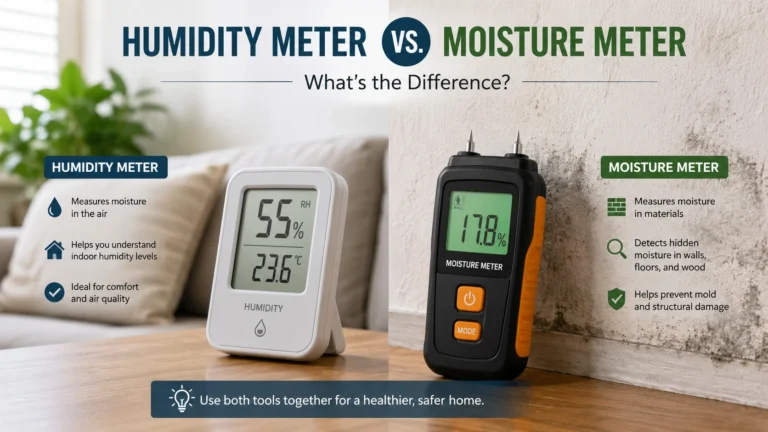
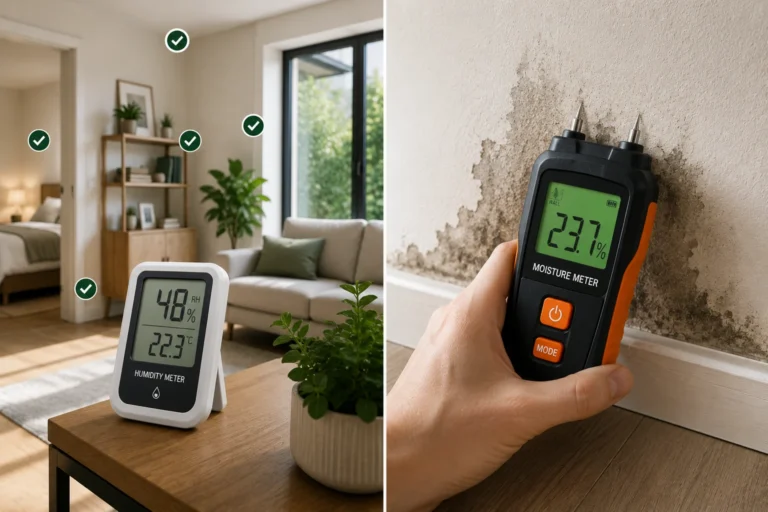
How it differs from a humidity meter
| Humidity meter | Moisture meter |
|---|---|
| Measures moisture in the air | Measures moisture in a material |
| Useful for rooms that feel damp | Useful for walls, trim, and suspicious surfaces |
| Helps explain room conditions | Helps check whether a building material is wet |
What kinds of wall problems it can help investigate
- Damp walls or repeated damp patches
- Hidden leaks behind painted surfaces
- Window-adjacent moisture or repeated condensation zones
- Exterior wall issues with poor airflow
How to use one at home
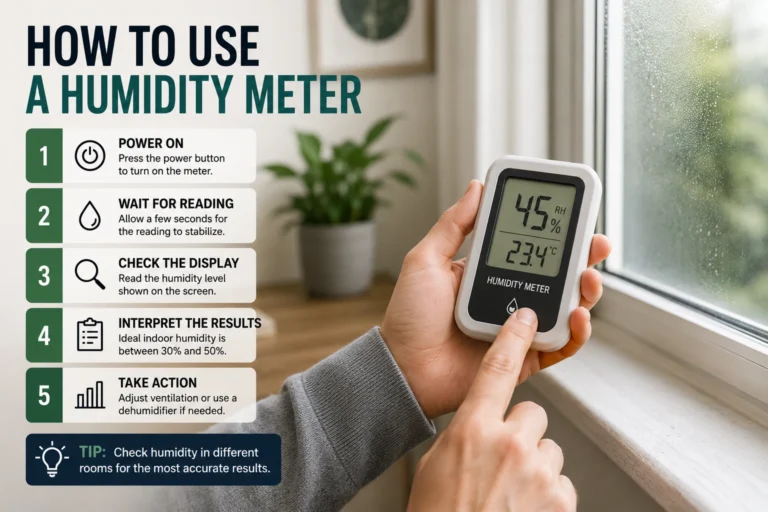
Read the instructions for your model and use the tool comparatively. Test a clearly dry area first, then the suspicious area, and check a few spots around the edge instead of just one point.
Mistakes people make with moisture meters
- Taking one reading in isolation
- Using it like a mold detector
- Assuming a dry-looking surface means the wall is dry inside
- Ignoring the reason the wall got wet
What a meter cannot tell you
A moisture meter cannot tell you exactly what caused the dampness, how long it has been there, or whether mold is definitely present. It gives better evidence, not a complete diagnosis.
| Use case | Why it helps |
|---|---|
| Repeating wall stain | Checks whether moisture is still active |
| Bubbling paint | Adds context on dampness behind the finish |
| Musty wall area | Supports odor clues with material evidence |
| Window-side wall | Good for condensation-related checks |
Useful next reads are What Is a Humidity Meter and Do You Need One?, Humidity Meter vs Moisture Meter: What’s the Difference?, Damp Walls: What They Usually Mean, and How to Tell If You Have Mold Behind Walls. If you are unsure how to interpret the readings on a damp wall, the next guide breaks down what higher and lower numbers usually mean in context.
Frequently asked questions
Is a moisture meter for walls worth buying?
It can be very useful if you are dealing with suspicious stains, damp walls, or repeating moisture clues.
Can a moisture meter detect mold?
No. It detects moisture in materials, not mold itself.
How is it different from a hygrometer?
A hygrometer measures air humidity. A moisture meter measures moisture in a material or surface.
Can I use it on drywall?
Yes, many homeowners use moisture meters to compare drywall areas when a leak or damp patch is suspected.
Need to compare the wall clue with the room air clue?
Use a humidity guide next if you want to understand whether the wall issue sits inside a wider room or whole-home moisture pattern.