Why Does My Room Smell Musty With No Mold Visible?
If you keep asking why does my room smell musty with no mold visible, you are already focusing on the right puzzle. A musty smell often feels like it should come with an obvious visual clue, but in real homes that is not always how it works.
Quick Answer
If a room smells musty with no visible mold, the most likely explanation is trapped moisture somewhere out of sight. The smell may be coming from damp walls, carpet, closets, condensation, poor airflow, or older hidden moisture damage.
Quick Tips
- Musty does not always mean visible mold.
- Follow the smell pattern before you assume the cause.
- Corners, closets, windows, and carpet edges matter.
- If one room smells different from the rest, that difference is useful.
Why a room can smell musty without visible mold
Visible mold is only one possible source of a musty smell. The odor can also come from trapped moisture in materials, stale air in enclosed areas, or mild but repeated dampness that never fully dries out.
This is common in bedrooms, closets, basement-adjacent rooms, carpeted spaces, and rooms with window condensation.
Common hidden sources of a musty smell
- Damp carpet or rug backing
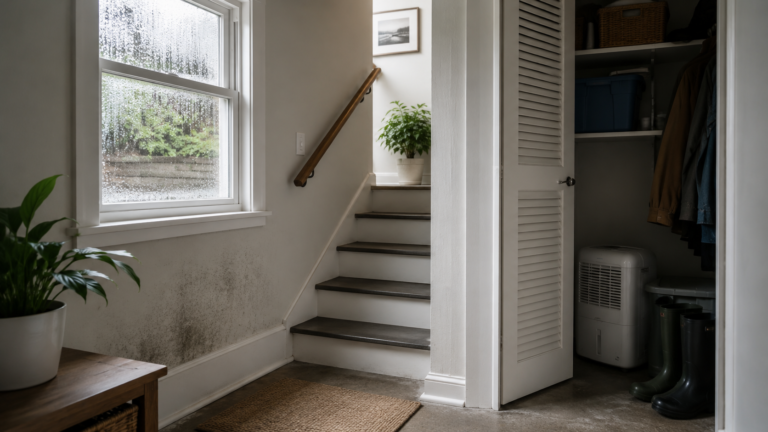
- Cold exterior walls collecting condensation quietly
- Closets and enclosed storage with very low airflow
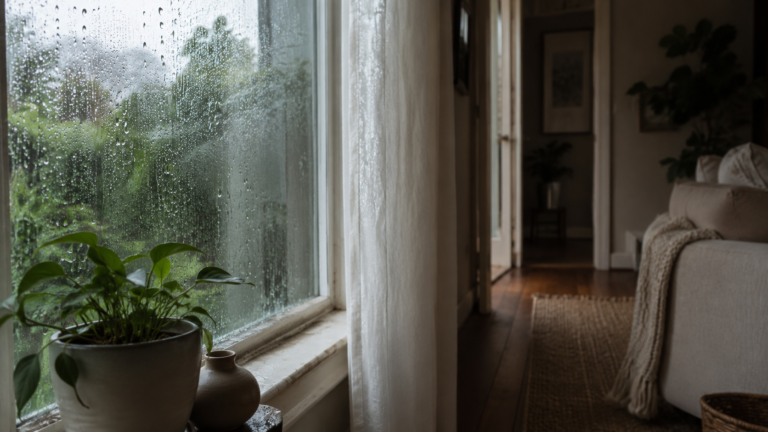
- Window areas with repeating condensation
- Old moisture events that never fully dried
Signs the smell is linked to moisture
- It gets stronger in one corner or near one wall
- It worsens after rain or humid weather
- The room feels heavier or staler than others
- Fabrics start picking up the smell
| Area | What to check | Why it matters |
|---|---|---|
| Window | Condensation or damp sill | Frequent moisture source |
| Closet | Stronger smell, stale air | Low-airflow trap |
| Carpet edge | Damp smell near floor | Hidden moisture |
| Exterior wall | Cool or slightly damp feel | Condensation risk |
| Furniture line | Stronger smell behind large items | Blocked airflow |
What to check first
Compare the room to nearby spaces. Move light furniture if needed. Open the closet, check lower wall areas and baseboards, and smell the room closer to the floor if carpet or rugs are involved.
Mistakes that waste time
- Using fragrance products first
- Searching only for visible mold
- Ignoring airflow and room recovery
- Treating the whole house when it is really one-room problem
Important
The smell itself is often one of the earliest warnings that something in the room is staying too damp, too stale, or too enclosed for too long.
What can happen if you ignore it
The smell may remain the main issue for a while, but the next step is often clearer moisture signs: condensation, damp corners, stale fabrics, or visible wall changes.
Useful next reads are How to Reduce Moisture in a Closet, why a closet smells musty, Signs Your Home Has Too Much Humidity, and What Is a Moisture Meter for Walls?. If the odor seems tied to one part of the room, compare it with what a musty smell near a window can mean or what usually causes a musty smell in a bedroom.
Frequently asked questions
Can a room smell musty without visible mold?
Yes. Hidden moisture is often enough to create a musty smell before visible growth appears.
Does a musty smell always mean mold?
Not always. It can also mean trapped dampness, stale airflow, or old moisture in materials.
Why does only one room smell musty?
Because the moisture source or airflow problem may be local to that room.
Should I use a moisture meter?
If the smell keeps returning and you suspect a wall or floor area, a moisture meter can add useful evidence.
Need to check the enclosed spaces first?
If the odor seems strongest near storage or a colder wall, the closet and wall clues are often the fastest next place to look.