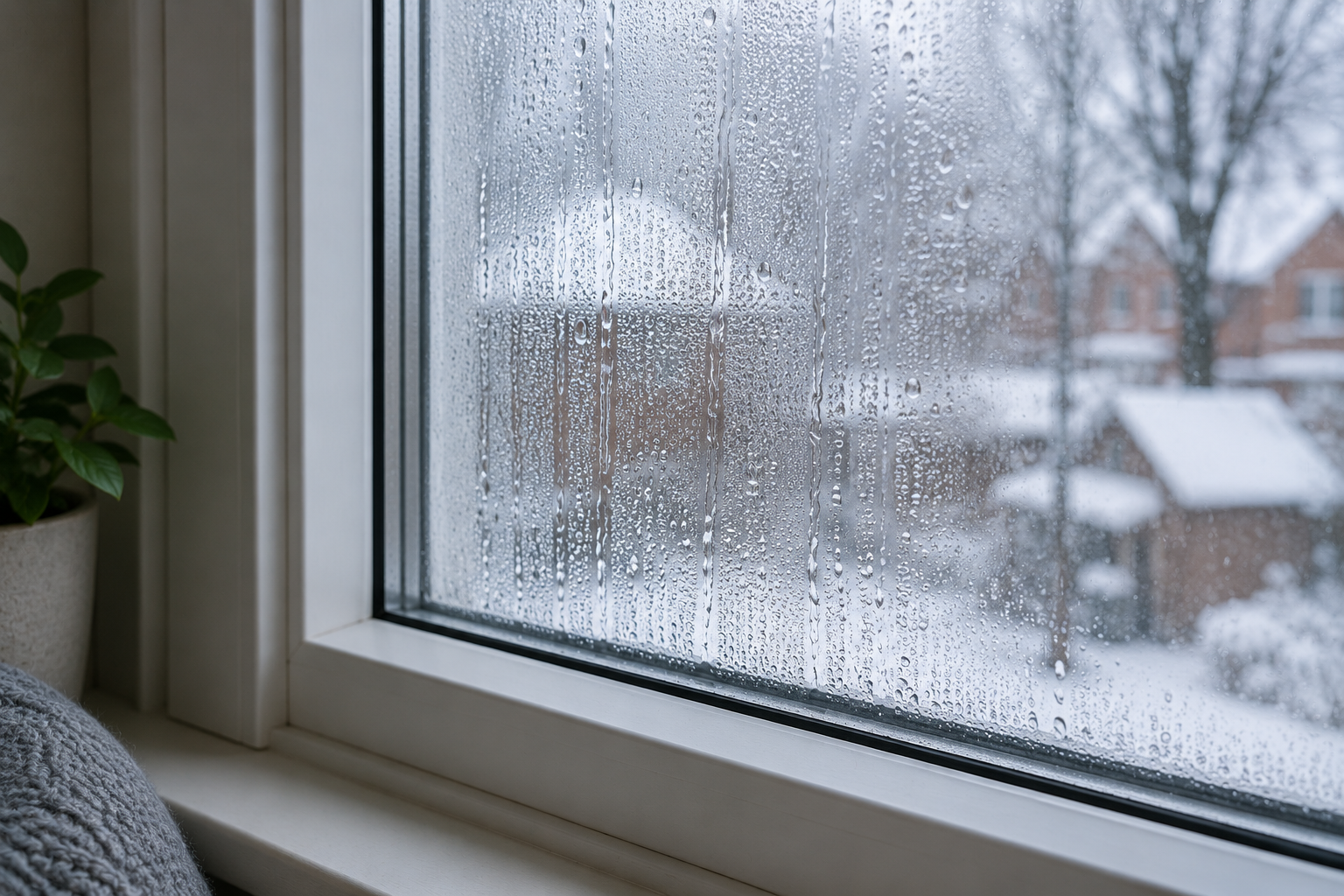
Why Do Windows Sweat in Winter?
If you keep asking why do windows sweat in winter, the simple answer is that winter makes the difference between indoor air and window glass much more obvious. Warm indoor air holds moisture. Cold glass gives that moisture somewhere to settle. The result is the fogging, droplets, or wet inner glass that so many people notice first thing in the morning.
Quick Answer
Windows sweat in winter because indoor moisture condenses on colder glass. A little morning fogging can be normal, but repeated heavy condensation often means the room is holding more humidity than it should.
Quick Tip
If one room fogs up much more than the others, treat that as a room-moisture clue rather than a window problem alone.
Important
Winter condensation is not only about the weather outside. It often reveals what is happening inside the home: airflow, humidity, overnight moisture, and whether a room is drying properly.
The more useful answer is that winter window sweating is not just about the weather outside. It also says something about what is happening inside the home. Indoor humidity, room ventilation, closed bedroom doors, laundry moisture, cooking, showers, and overall drying patterns all affect whether the windows stay mostly clear or wake up wet every day.
That is why this issue matters. A little winter condensation can be normal. Repeated heavy condensation can be a sign that the room or the house is holding more moisture than it should. If you are asking why do windows sweat in winter, the answer is usually as much about room humidity as the weather outdoors. If you are asking why do windows sweat in winter, the answer is usually as much about room humidity as the weather outdoors. If you are asking why do windows sweat in winter, the answer is usually as much about room humidity as the weather outdoors. If you want the year-round version first, start with why windows sweat in general.
Why Do Windows Sweat in Winter? The Main Reason
In winter, window glass gets much colder than the surrounding room air. That means even ordinary indoor moisture becomes easier to see. The same room that seems fine in milder weather may suddenly show obvious condensation because the glass surface has dropped far enough for water to collect.
This is one reason people feel surprised by winter moisture. They assume the cold weather created a new problem when it may only be revealing an existing indoor humidity imbalance more clearly.
What window sweating in winter actually means
When windows sweat in winter, it usually means indoor moisture is condensing on a cold surface. The key point is that the water you see is often coming from inside the room air, not from the outside weather pushing water through the glass.
- humid bedrooms overnight
- bathrooms with lingering steam
- kitchens with weak venting
- homes with heavy indoor moisture
- lower-airflow rooms
- cooler surfaces near exterior walls
The most common causes
High indoor humidity
The more moisture the air is carrying indoors, the more likely it is to condense on the coldest surfaces in the room. Windows often become the first place you notice that.
Cold glass surfaces
Winter lowers glass temperature enough to make even moderate indoor humidity more visible.
Weak ventilation
If moisture is not leaving the room effectively, it tends to settle where it can. Closed rooms are especially vulnerable.
Closed-room moisture at night
Bedrooms are a classic example. Doors stay shut, curtains stay drawn, the room gets cooler, and sleeping people add moisture. Morning condensation often reflects that exact pattern. If the wall nearby is changing too, compare it with when window condensation is affecting the bedroom wall.
When it is normal and when it is not
A light misting on very cold mornings may not mean the house has a serious problem. But heavier or more frequent sweating deserves more attention, especially if water runs down the glass, window sills stay wet, trim stays damp, the same room smells stale, the room feels humid or heavy, or mould-prone spots appear around the frame.
At that point, the window is no longer just reacting to cold weather. It is also reflecting the home moisture balance.
Practical ways to reduce winter window sweating
- clear shower steam properly
- vent cooking moisture
- avoid trapping air too tightly around the glass
- improve bedroom airflow where possible
- wipe heavy condensation to protect trim and sills
- check whether one room is much worse than the others
A hygrometer can also help if you are unsure whether room humidity is running higher than you expected. If the problem is mostly overnight, compare that with how to reduce condensation overnight.
When to worry a little more
- window areas smell musty
- walls beside the window feel damp
- condensation is heavy in multiple rooms
- the same room has stale air every morning
- mould or staining starts around the frame
Those clues suggest that the room may need more active moisture control, not just occasional wiping. It also helps to know what indoor humidity should look like and signs your home may be holding too much humidity.
Winter condensation checklist
| Check | What to notice | Why it matters |
|---|---|---|
| Morning glass | Fog or droplets | Overnight humidity clue |
| Window sill | Wet trim or pooling | Repeated moisture on materials |
| Nearby wall | Cool damp edge | Condensation spreading outward |
| Room feel | Heavy or stale air | Humidity pattern clue |
| Room comparison | One room worse than others | Helps isolate the source |
If your windows sweat in winter more than they should, treat it as a clue about room moisture, not just about cold weather. Once you understand the pattern, the fix usually becomes much clearer. That is why people asking why do windows sweat in winter are often really asking about indoor humidity too. That is why do windows sweat in winter is really a room-humidity question as much as a seasonal one.
The EPA moisture guidance is helpful here because repeated indoor condensation is often one of the earliest visible signs that a room is staying too damp.
Frequently asked questions
Is it normal for windows to sweat in winter?
A little can be normal, especially on cold mornings. Heavy or repeated condensation deserves more attention.
Why is it worse in the bedroom?
Bedrooms often trap more moisture overnight because of closed doors, lower airflow, and natural breathing.
Does sweating window glass mean I need new windows?
Not always. It often says more about indoor humidity than the window itself.
When does winter condensation become a problem?
When the moisture is frequent, heavy, affects frames or walls, or comes with stale smells and damp room conditions.