What Size Dehumidifier Do I Need for a Basement?
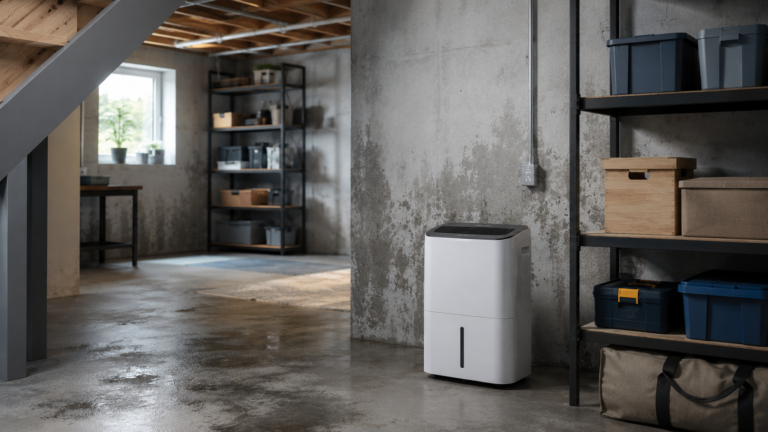
If you are trying to decide what size dehumidifier do I need for a basement, the most important thing to understand is that size is not only about area. It is about area plus dampness.
Quick Answer
Choose basement dehumidifier size based on room size plus moisture severity. A lightly humid basement and a clearly damp, musty basement of the same size may need very different capacity levels.
Quick Tip
If the basement already smells musty, feels clammy, or collects condensation, size for the moisture load, not just the room dimensions. If those symptoms are still uncertain, review the signs your basement needs a dehumidifier before sizing the machine.
Important
Sizing mistakes usually come from focusing only on square footage. In basements, dampness level often changes the decision just as much as the floor area.
That is what makes basement sizing a little different from general room advice.
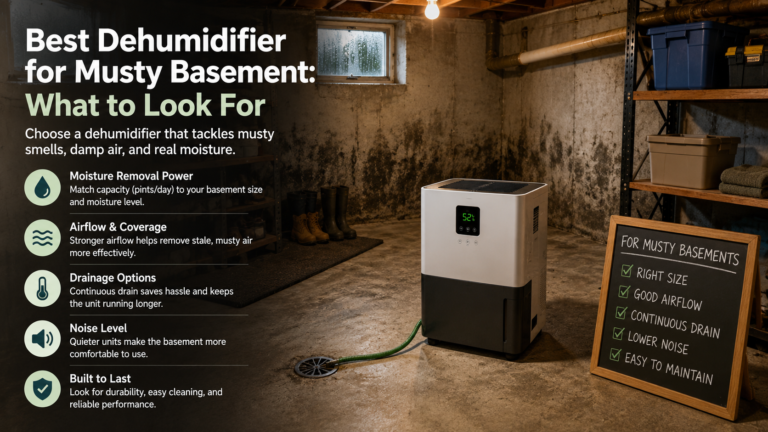
A small basement that smells musty, feels heavy, and rarely dries well may need more moisture control than a larger basement that is mostly dry and only gets slightly humid in summer. This is why homeowners often feel disappointed with an undersized unit. On paper it looked close enough. In real life, it never quite catches up.
The better way to approach sizing is to ask two questions at the same time: how much space am I treating, and how much moisture is this space actually holding?
Why basement dehumidifier size is not only about square footage
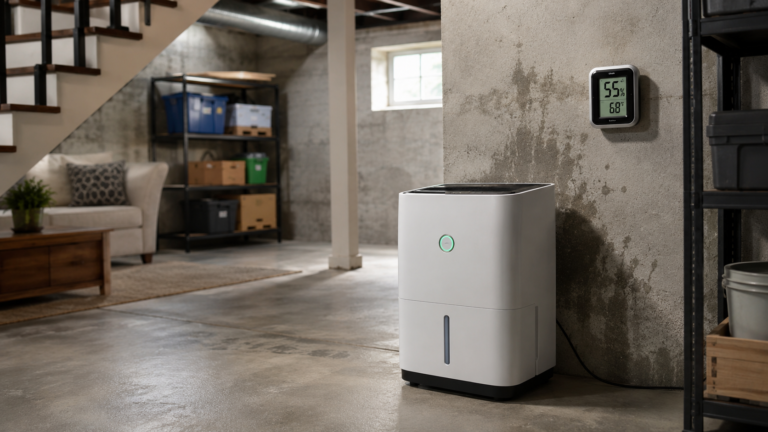
Square footage matters, but it only tells part of the story. A basement behaves differently from an upstairs room because it is usually cooler, more enclosed, and more likely to hold lingering moisture.
That means a basement can act larger from a moisture-control standpoint than it looks on a floor plan. The machine is not only moving air. It is trying to bring the room back toward a drier balance.
If you buy on area alone and ignore signs like stale odor, wet windows, clammy air, or slow drying, there is a good chance you will end up with a unit that works hard but not effectively enough.
Before choosing a dehumidifier
It helps to be clear about what you are trying to fix first. Is the space damp all the time, or only after rain? Do you have visible condensation, a musty smell, or moisture collecting on walls and windows? Is the room lightly humid, or does it feel wet and heavy every day? If you want the broader buying context first, compare it with how to choose the right basement setup.
Those details matter because the right size, run time, and overall setup depend more on the moisture pattern than on the room label alone.
The two main factors that decide size
When dampness is severe, the mold-risk humidity range matters because a basement that stays too humid may need more consistent control than square footage alone suggests.
Basement size
The larger the space, the more moisture the machine may need to process over time. Open-plan basements especially need realistic coverage expectations.
Moisture severity
This is the factor people underestimate most. A mildly humid basement and a seriously damp basement do not behave the same way, even if they share the same footprint.
- light seasonal humidity
- regular dampness and musty smell
- frequent condensation
- stale storage air
- a basement that always feels heavier than upstairs
The stronger the moisture pattern, the more likely it is that you should size more confidently rather than conservatively.
Small, medium, and large basement examples
A small basement with mild humidity may not need aggressive moisture control. But a small basement with laundry, musty smell, and poor airflow may need more help than expected.
A medium basement may sit in the gray area where both size and dampness matter equally. This is where people often buy too small because the room does not look severe enough at first.
A large basement needs honest assessment. If it is finished and used regularly, comfort matters. If it is mostly storage, consistent moisture control may matter more than quiet operation.
Finished space vs utility space sizing logic
A finished basement should feel comfortable to use, not just less damp. That means sizing needs to account for livability, not only moisture removal.
A utility basement or storage area usually allows more flexibility around noise and appearance, but it still needs enough capacity to change the air in a meaningful way.
This is why the same square footage may call for different buying priorities depending on how the room is used.
When to size up
- the basement smells musty most weeks
- fabrics or boxes hold odor quickly
- the room feels clammy
- windows or pipes condense often
- the unit may run during humid seasons for long periods
- the space includes laundry or other moisture-generating use
Sizing up does not mean buying blindly. It means recognizing when the room is asking for more consistent moisture control than a minimal unit is likely to deliver.
Signs your current unit may be too small
If the machine still runs and the basement feels damp, why is my basement still damp after using a dehumidifier helps you separate undersizing from placement, runtime, settings, or maintenance problems.
- the basement still smells stale after regular use
- the air still feels heavy
- the machine runs often but the room does not improve much
- the tank fills quickly but the basement remains damp
- problem areas such as windows or storage corners do not seem to change
These clues usually tell you more than the product label ever did.
Basement sizing checklist
| Check | Why it matters |
|---|---|
| Total basement area | Baseline size requirement |
| Dampness level | Changes capacity needs significantly |
| Room use | Finished vs storage affects priorities |
| Drainage plan | Important for regular operation |
| Musty smell or condensation | Strong sign to avoid undersizing |
Moisture control checklist
- Is humidity actually coming down over time?
- Are damp smells getting weaker, not just less noticeable?
- Are walls, corners, and stored items staying drier than before?
- Is airflow improving in the room?
- Have you ruled out leaks, drainage issues, or hidden water entry?
If the answer is no to several of these, the next step may not be a stronger machine. It may be a better diagnosis. If the room still behaves badly after a size change, it may be smarter to revisit the diagnosis itself.
Next step
If you are still narrowing it down, it may help to compare the moisture pattern in your room first, then match that to the kind of dehumidifier setup that makes sense. A slightly better diagnosis usually leads to a much better buying decision.
If you are unsure what size basement dehumidifier makes sense, start with how the room actually behaves. Dampness level often tells you more than the floor plan alone. If you are asking what to do after choosing the right size, the next question is usually runtime and humidity targets. A similar logic can also help if you are comparing with a more general home dehumidifier guide or asking what size dehumidifier makes sense in relation to a musty basement pattern.
If you still find yourself asking what size dehumidifier do I need for a basement, the ENERGY STAR dehumidifier guide is a useful reference point because it highlights how room conditions matter alongside square footage.
Quick Answer
The right basement dehumidifier size depends on both the size of the basement and how damp it is. A lightly humid finished basement may need less capacity than a smaller but much wetter lower level with musty air, condensation, or poor airflow. When in doubt, buy for the moisture load, not only the floor plan.
Basement Size vs Dehumidifier Capacity
Use this as a practical starting point rather than a rigid rule.
| Basement Size | Light Humidity | Moderate Dampness | Heavy Dampness / Musty Basement |
|---|---|---|---|
| Small basement | Small-to-medium capacity | Medium capacity | Medium-to-higher capacity |
| Medium basement | Medium capacity | Medium-to-higher capacity | Higher capacity |
| Large basement | Medium-to-higher capacity | Higher capacity | Higher capacity, especially if open and very damp |
| Large basement with multiple rooms | Medium-to-higher capacity in a central zone may work, but layout matters | Higher capacity plus smart where should you place a dehumidifier in a basement | Higher capacity and possibly zone-based strategy |
The key point is simple: a very damp basement often needs more than a dry-ish basement of the same size.
Practical buying examples
Small basement, light humidity
If the basement is mostly dry and you only want to keep the air fresher, a smaller-capacity option may be enough.
Medium basement with musty smell
If the room smells stale and the air feels heavy, capacity matters more. This is where buyers often go too small because they shop by floor area alone.
Large basement with storage and laundry
Laundry adds moisture and storage holds odor. That combination usually needs more real moisture-handling ability, not a minimal setup.
Finished basement with damp corners
A finished room that still feels humid often needs a balance of capacity, placement, and stable humidity settings. Too-small units often run constantly without changing how the room actually feels.
Common mistakes when choosing basement dehumidifier size
Buying only by square footage
This is the classic mistake. It ignores the real moisture load.
Assuming bigger is always unnecessary
In a basement, slightly undersizing is usually more frustrating than being a bit generous.
Ignoring room layout
A strong machine in the wrong layout can still leave parts of the basement feeling damp.
Forgetting humidity goals
If you do not know what humidity level you are trying to maintain, it is harder to judge whether the unit is really sized well.
Treating smell like a minor issue
Musty air is not just a cosmetic annoyance. It is often telling you the basement is holding more moisture than expected.
Frequently asked questions
What size dehumidifier do I need for a basement?
It depends on the basement’s square footage and how damp the space really is.
Should I size up for a musty basement?
Often yes, because persistent odor usually suggests a stronger moisture load.
Does a finished basement need the same size as a storage basement?
Not always. The moisture need may be similar, but comfort and noise matter more in finished spaces.
Can a unit be too small even if it matches the room size?
Yes. If the basement is noticeably damp, the room’s behavior may require more capacity than the area alone suggests.