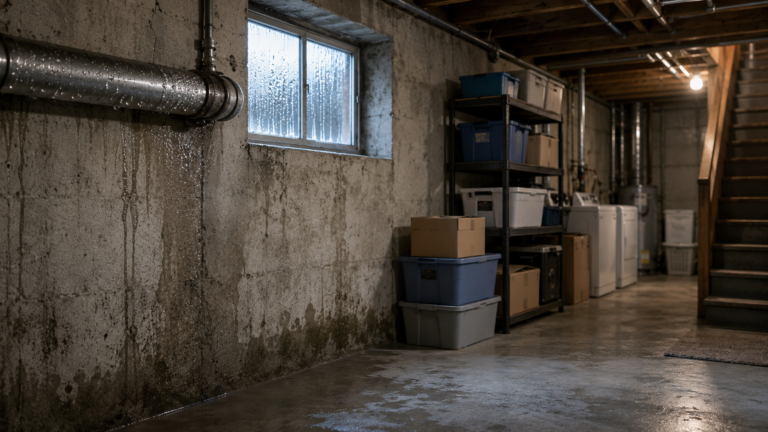
Basement Smells Musty: Common Causes and Fixes
A musty basement smell usually means moisture has been lingering there longer than it should.
The smell may come and go, especially after rain, humid weather, or long periods with little airflow. But once a basement starts feeling stale and earthy, it is worth asking what keeps that lower level from drying out properly.
Musty odor is often one of the earliest warnings that a basement needs better moisture management, even before you see obvious staining or mold growth.
Quick Answer
A musty basement smell usually means moisture is present even if you cannot see it. Common causes include high humidity, limited airflow, and damp materials such as carpet, cardboard, wood, or insulation. If the basement looks dry but still smells musty, the moisture may be coming from humid air or materials that do not appear visibly wet.
The most common reasons a basement smells musty
- Persistent damp air with little ventilation
- Moisture entering through walls or floor edges
- Stored fabrics, cardboard, or clutter trapping odor
- Old water damage that never fully dried
- Seasonal humidity that stays trapped below ground
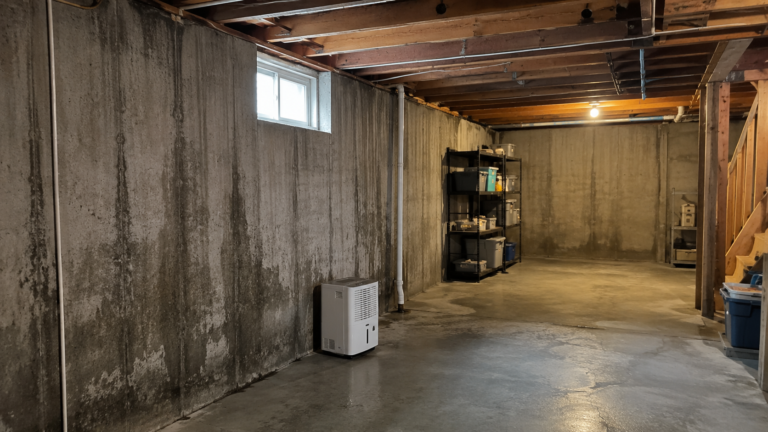
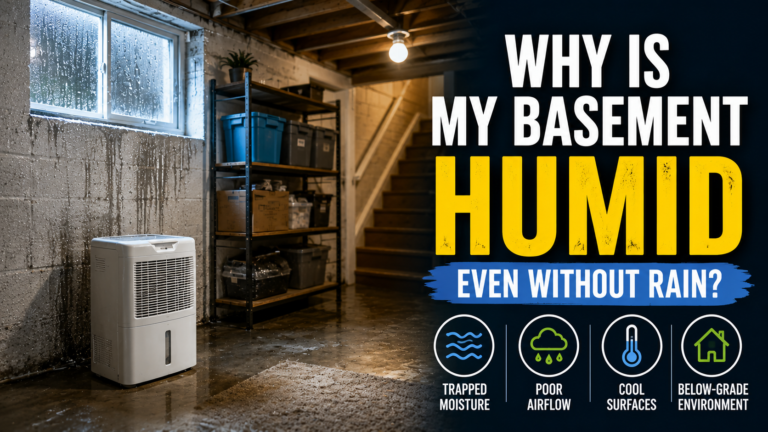
Basements behave differently from upper floors. They are often cooler, more enclosed, and slower to dry. That makes them one of the easiest places for stale moisture smells to build up.
Quick Tip
If the smell is strongest after wet weather or when the space has been closed up, humidity and trapped moisture are usually part of the story.
What a musty basement smell may be telling you
A musty smell can show up before stains because hidden humidity can support mold risk even if the basement looks dry.
| Clue | What it may suggest |
|---|---|
| Smell strongest after rain | Possible moisture entry or damp wall surfaces |
| Smell stronger in storage corners | Still air and trapped absorbent materials |
| Smell with no visible mold | Hidden dampness or old porous materials holding odor |
| Smell plus condensation | Air moisture staying too high |
Those clues help you decide whether the basement mostly needs better air and drying conditions or whether you may need to investigate a more stubborn damp source. If the basement still looks fairly normal, it also helps to read why a basement smells musty even when it looks dry.
Why Does a Basement Smell Musty Even When It Looks Dry?
A basement can smell musty even when it looks dry because moisture does not have to stay visible to affect the room. Humid air, porous materials, and hidden low-airflow zones can keep holding dampness long after a surface appears dry.
That is why a basement can smell wrong without puddles, dripping walls, or obvious mold. Cardboard, carpet, wood, insulation, and stored fabrics can absorb moisture from the air and keep releasing odor even after the room looks normal again. If you are tracing why a basement can stay humid without rain, this is often the next clue in the chain.
It also helps to check colder corners, wall edges, and spaces behind stored items or furniture. Those are the places where air movement is weaker, drying is slower, and odor tends to linger. Wet weather can make the pattern more obvious because outdoor humidity rises and materials start absorbing moisture again, even without a dramatic leak.
Quick fixes vs long-term basement fixes
| Quick fix | Long-term fix |
|---|---|
| Air out the space temporarily | Improve ongoing airflow and moisture control |
| Mask the smell with fragrance | Reduce the source of dampness and stale materials |
| Wipe visible surfaces | Check whether humidity stays high over time |
| Move a few boxes | Create a basement setup that can actually dry properly |
Temporary freshness is not the same as a dry basement. If the smell returns within days, that usually tells you the moisture balance has not really changed.
What to Check First
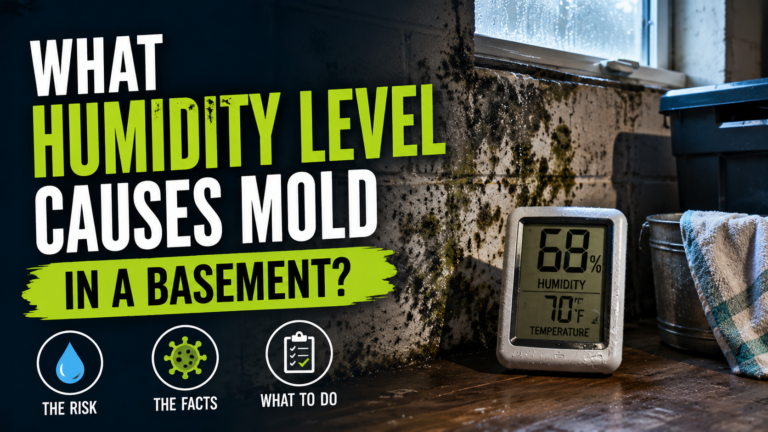
Start with diagnosis before trying to treat the smell as only an odor problem. A sustained reading above 60% is a stronger warning sign than a single temporary reading, while 30% to 50% relative humidity is commonly used as an indoor target depending on climate and conditions.
- Measure relative humidity first. This tells you whether the basement air is staying too damp over time instead of just feeling stale on one day.
- Inspect absorbent materials. Check cardboard, carpet, stored fabrics, wood, and insulation for damp smell or stale moisture.
- Look at cold corners and hidden zones. Check behind furniture, near wall edges, and in places with limited airflow.
- Notice whether the smell gets worse after rain. That usually points to humidity shifts or materials reabsorbing moisture.
- Look for visible leaks or water intrusion. Stains, damp patches, or localized wet spots still deserve a closer look.
- Evaluate ventilation and air circulation. Poor airflow makes moisture and odor linger longer than they should.
If those checks keep pointing back to humid air, the next useful comparison is whether the basement is showing clear signs it needs a dehumidifier. A dehumidifier may help lower humidity, but it will not fix an active leak, drainage problem, or serious mold contamination.
Why the Smell Can Return After Wet Weather
Wet weather often raises the humidity around a basement before you ever see visible water. Humid outdoor air can move into the space, colder walls and floors can stay damp longer, and porous materials can start absorbing moisture again even if they looked dry a day earlier.
That is why the smell can return after rain without automatically meaning there is a major leak. At the same time, localized wet patches, visible water, or staining in one area still deserve a leak or seepage check instead of being blamed on humidity alone.
When a basement dehumidifier actually helps
Basements are one of the most sensible places to use a dehumidifier because the space often stays cooler and damper for longer stretches.
- The air feels damp even without a visible leak
- Odor improves on dry days but returns quickly
- Stored items keep smelling stale
- Condensation or surface dampness appears on cooler materials
If you are at that stage, start by separating humidity diagnosis from shopping. Once the humidity pattern is clear and the room is showing consistent need-state, the next step is usually a musty-basement-specific dehumidifier guide.
Important
A dehumidifier may help lower humidity, but it will not fix an active leak, drainage problem, or serious mold contamination.
When the smell may point to a bigger moisture issue
If a basement smells musty and you also notice recurring damp patches, staining, crumbling finishes, or odor spreading into the rest of the home, it is worth looking beyond basic airing out.
The next useful reads are ideal indoor humidity level, signs your home has too much humidity, and how to reduce moisture naturally. If the odor spreads after storms or feels stronger in one part of the home, also compare why a house can smell musty after rain and why one room can smell musty with no visible mold.
Frequently asked questions
Why does my basement smell musty even though it looks dry?
The basement may still have high humidity or damp porous materials even when no water is visible. Check the humidity level and inspect carpet, cardboard, wood, corners, and areas with limited airflow.
Why does my basement smell musty after wet weather?
Wet weather can raise outdoor humidity and increase the amount of moisture entering a basement through air, walls, or stored materials. The smell can return even without a visible leak.
Is a musty basement smell always caused by mold?
No. A musty smell can come from excess humidity or damp materials before visible mold develops. However, persistent odor should be investigated because prolonged moisture can support mold growth.
What should I check first if my basement smells musty?
Start by measuring relative humidity. Then inspect absorbent materials, cold walls, corners, storage areas, ventilation, and any signs of leaks or water intrusion.
Will a dehumidifier remove a musty basement smell?
A dehumidifier may help when excess humidity is the main cause, but it will not repair leaks, drainage problems, or seriously contaminated materials. Identify the moisture source first.
Need a basement-specific moisture tool next?
If stale dampness keeps returning downstairs, compare the features that matter most before choosing a basement dehumidifier.