Where to Place a Humidity Meter for Accurate Readings
If you want to know where to place a humidity meter for useful readings, the main rule is simple: place it where the room behaves normally, not where one surface or airflow source distorts the result.
Quick Answer
The best place to put a humidity meter is in a stable part of the room, away from windows, HVAC vents, heaters, and moisture sources. You want a reading that reflects the room overall rather than a single corner.
Quick Tip
If your humidity reading seems odd, check placement before you assume the number is wrong. A badly placed meter often gives a misleading result.
Important
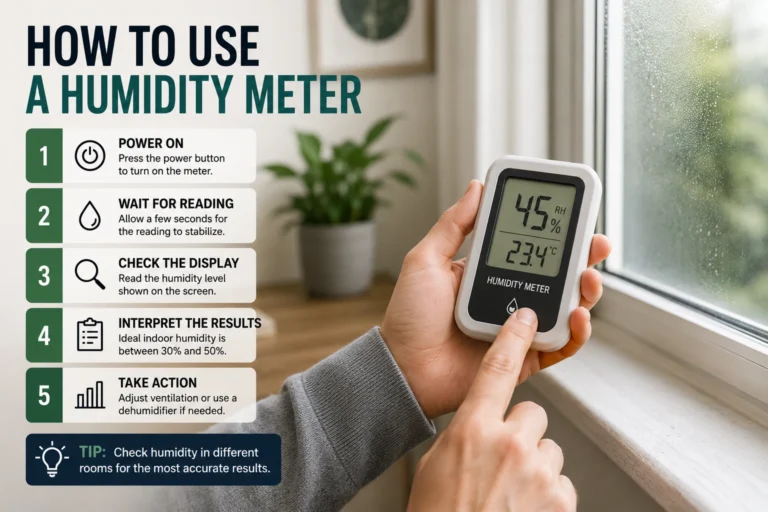
Humidity meter placement matters more than many homeowners expect. A meter placed beside a cold window or heating vent can tell you more about that spot than about the room.
This is a common reason people lose confidence in humidity readings. The meter is not always the problem. Often, the setup is. Once you place the meter more thoughtfully, the reading usually starts making more sense alongside what the room feels and looks like.
Why placement changes the reading
Humidity changes from spot to spot more than many people realize. Cooler areas can hold moisture differently. Airflow changes readings. Heating vents dry out local air. Windows create colder conditions. Steam-heavy zones spike quickly.
That is why one room can have several different microclimates inside it. If your meter sits in the wrong one, you may end up trying to solve a problem that belongs only to that corner.
The best general place to put a humidity meter
- At a normal indoor height
- In a part of the room with steady airflow
- Away from direct sunlight
- Away from heating or cooling vents
- Away from windows and wet surfaces
- Not pressed into a corner
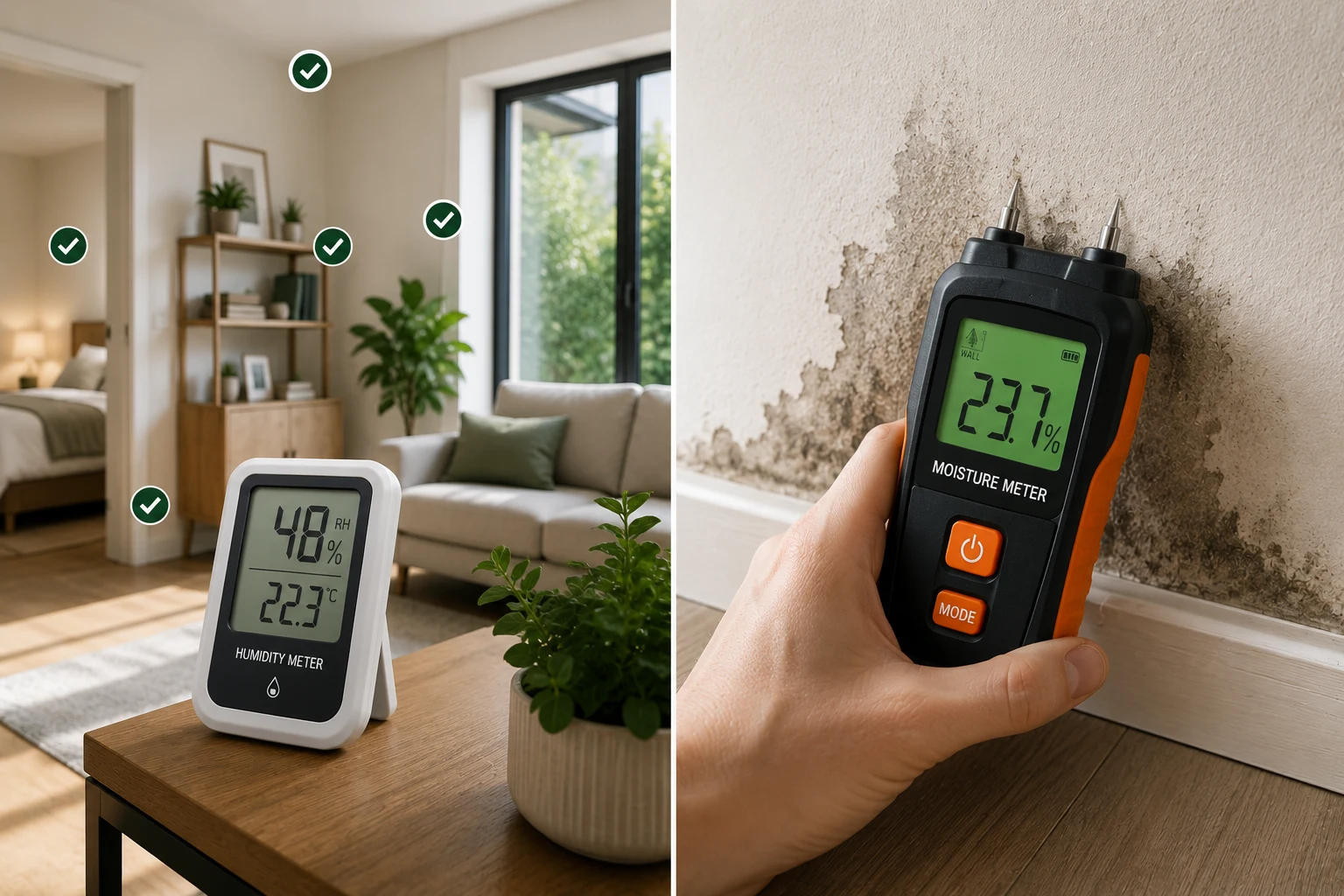
A shelf, dresser, side table, or interior wall area often works well if it reflects the room rather than a problem spot.
Places to avoid
Right next to a window
Windows are often colder than the rest of the room, especially in winter. That can distort the reading.
Near an HVAC vent
Supply or return airflow can make the reading fluctuate or feel less representative.
Beside a heater or radiator
Local warmth changes how the air behaves.
In a bathroom splash zone
Steam and water can spike readings fast, but that does not tell you what the room looks like once it should have settled.
Inside a packed closet
Unless you are specifically trying to study that closet, it is usually too enclosed to represent the room around it.
Good placement by room type
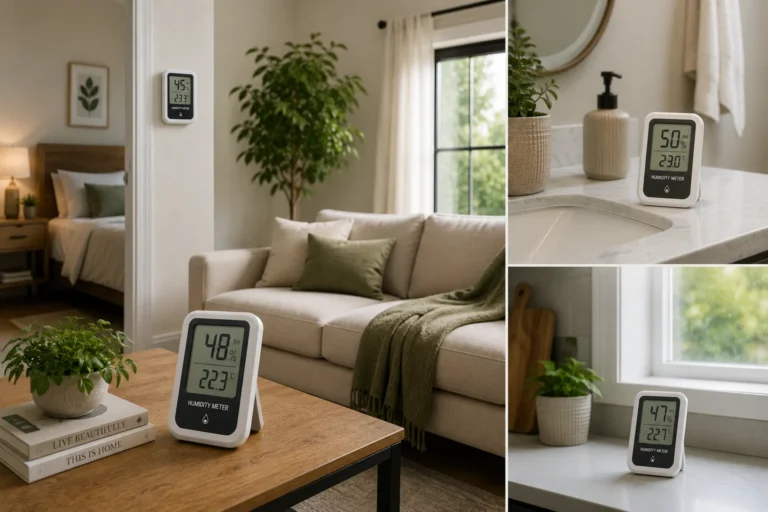
- Bedroom: use a dresser or bedside table, not the window sill
- Bathroom: place it outside the direct steam path if you want a realistic room reading
- Basement: use the area that reflects where the space feels most used or most damp
- Living room: choose a shelf or surface in the center part of the space
When to move the meter
Moving the meter makes sense when you are comparing two rooms, testing a window zone, or checking whether a closet-adjacent wall is affecting the room. The key is to move with purpose, not randomly.
Common mistakes
- Putting the meter exactly where the problem looks worst
- Changing placement constantly
- Expecting a single perfect location
- Ignoring room behavior clues such as condensation or smell
Placement checklist
| Placement rule | Why it matters |
|---|---|
| Away from windows | Avoid cold-surface distortion |
| Away from vents | Avoid airflow distortion |
| Normal room height | Better room average |
| Not in direct sun | Prevents local warming effect |
| Stable location | Easier comparison over time |
Helpful internal links: How to Use a Humidity Meter, What Is a Humidity Meter and Do You Need One?, Ideal Indoor Humidity Level, and the Moisture Tools section.
Frequently asked questions
Can I put a humidity meter on a window sill?
Usually not if you want a true room reading. Window sills often distort humidity conditions.
Is it okay to use the same meter in different rooms?
Yes, as long as you give it time to settle and compare readings consistently.
Where should I place a humidity meter in a bedroom?
A dresser or bedside surface away from the window is usually a good starting point.
Why does the reading change when I move it?
Because room humidity is not perfectly uniform. Some parts of the room behave differently.
A better number starts with a better spot
If your humidity readings seem confusing, check where the meter sits before anything else. Better placement often turns a vague number into a much more useful moisture clue.