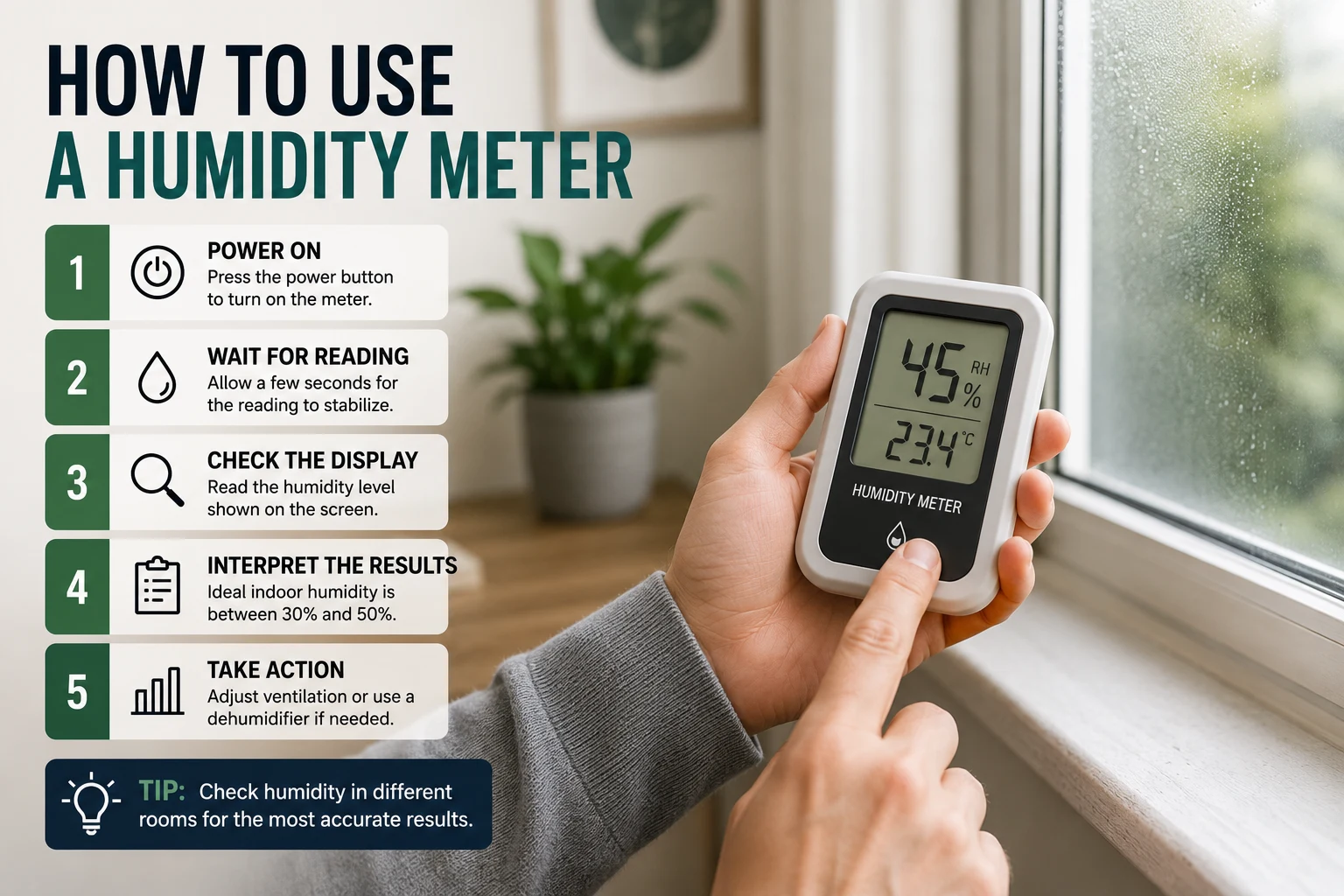
How to Use a Humidity Meter in Different Rooms
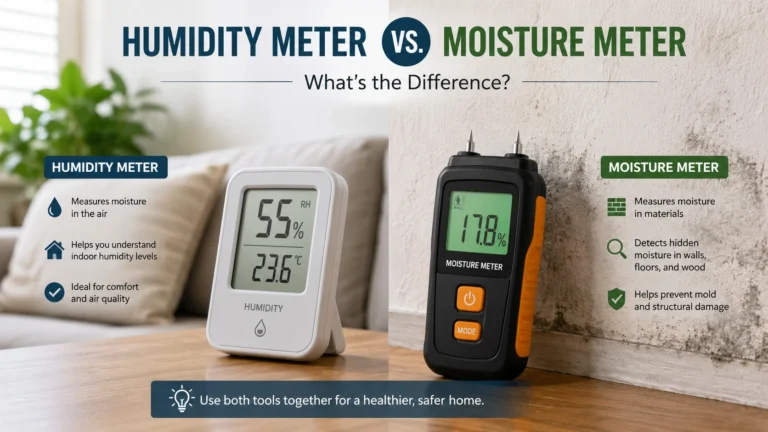
Knowing how to use a humidity meter can make indoor moisture problems much easier to understand.
Quick Answer
A humidity meter is most useful when you use it comparatively. Check different rooms, watch how readings change through the day, and look for patterns linked to windows, showers, weather, or stale air.
Quick Tip
One reading rarely tells the whole story. The real value comes from comparing rooms and noticing what changes after daily activities.
Important
A humidity meter does not need to be complicated to be useful. What matters most is where you place it, when you check it, and whether you compare one room with another.
The tool itself is simple, but the way you use it determines whether the readings help or just add confusion. A single number in one room does not tell the full story. Moisture in homes changes with weather, airflow, room use, and time of day.
That is why a humidity meter works best when you use it as a pattern tool. Instead of asking what is the perfect number right now, the better question is what is this room doing compared with the others, and when does it drift out of balance?
What a humidity meter is actually useful for
- Checking whether a bedroom is too humid at night
- Seeing if a bathroom stays damp longer than it should
- Understanding whether a basement is the main source of excess moisture
- Comparing one room with another before buying a product
How to use it the right way
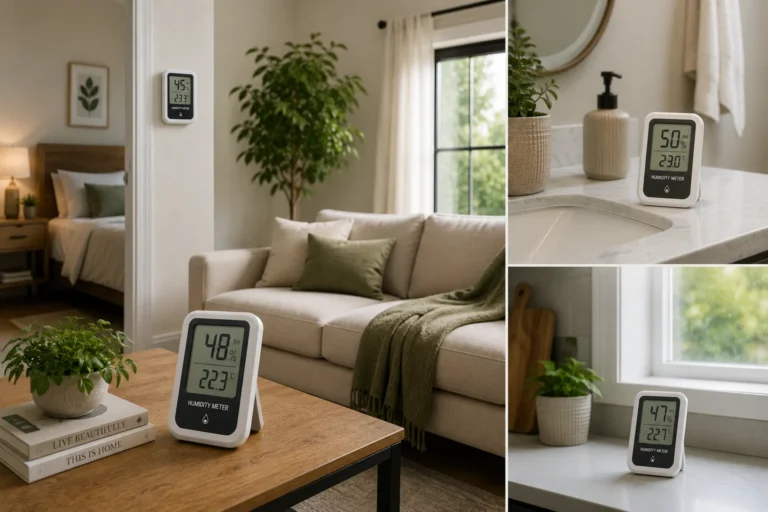
Place the meter at a normal room height, away from direct drafts, heating vents, windows, or wet surfaces. Let it sit long enough to stabilize. Then compare that reading with what you see and feel in the room.
Do not rely on one measurement only. Use the room at normal times. Check again later. Watch what happens after a shower, during rainy weather, or first thing in the morning.
Room-by-room examples
Bedroom
Bedrooms are often most useful to check in the morning. If the window is wet and the room feels heavy, compare the reading to another room in the house.
Bathroom
Check the bathroom before a shower, right after, and again later when the room should have dried. This helps you understand whether the fan and airflow are doing enough.
Basement
Use the meter in the area that feels dampest and compare it with an upper-level room. If the basement stays consistently higher, that is useful evidence.
Living room
A living room gives you a good comparison space because it usually has more open airflow than bedrooms, closets, or bathrooms.
Closet-adjacent area
If a closet smells musty, place the humidity meter just outside it and compare that reading with the rest of the room. This helps show whether the issue is room-wide or more isolated.
When to check readings
- First thing in the morning
- After showers or cooking
- During wet or rainy weather
- After windows have been closed for a long period
- Before and after ventilation changes
Patterns matter more than random numbers.
Common mistakes
- Measuring too close to a window
- Measuring right beside a vent
- Expecting one room to explain the whole house
- Checking only once
Room-by-room checklist
| Room | Best time to check | What to compare |
|---|---|---|
| Bedroom | Morning | Window condensation, stale air |
| Bathroom | Before and after shower | Drying speed |
| Basement | Midday and wet weather | Clammy feel, smell |
| Living room | General baseline | House average |
| Closet area | After door has stayed shut | Local trapped moisture |
Useful next reads are What Is a Humidity Meter and Do You Need One?, Where to Place a Humidity Meter, Bedroom Humidity, and the Moisture Tools section.
Frequently asked questions
Should I move one humidity meter around the house?
Yes. One meter can still be very useful if you compare rooms over time.
Is morning the best time to check bedroom humidity?
Often yes, especially if the room feels damp or the windows fog overnight.
Can I use a humidity meter in a bathroom?
Yes, but compare readings before and after showers rather than only during peak steam.
What if one room is always higher than the others?
That usually means the room has its own airflow, moisture, or temperature pattern worth investigating.
Use readings as a pattern, not a verdict
If you want better answers from a humidity meter, use it like a pattern tool, not just a number display. Room-by-room comparison usually tells the real story.