Best Air Purifier for Mold-Related Concerns
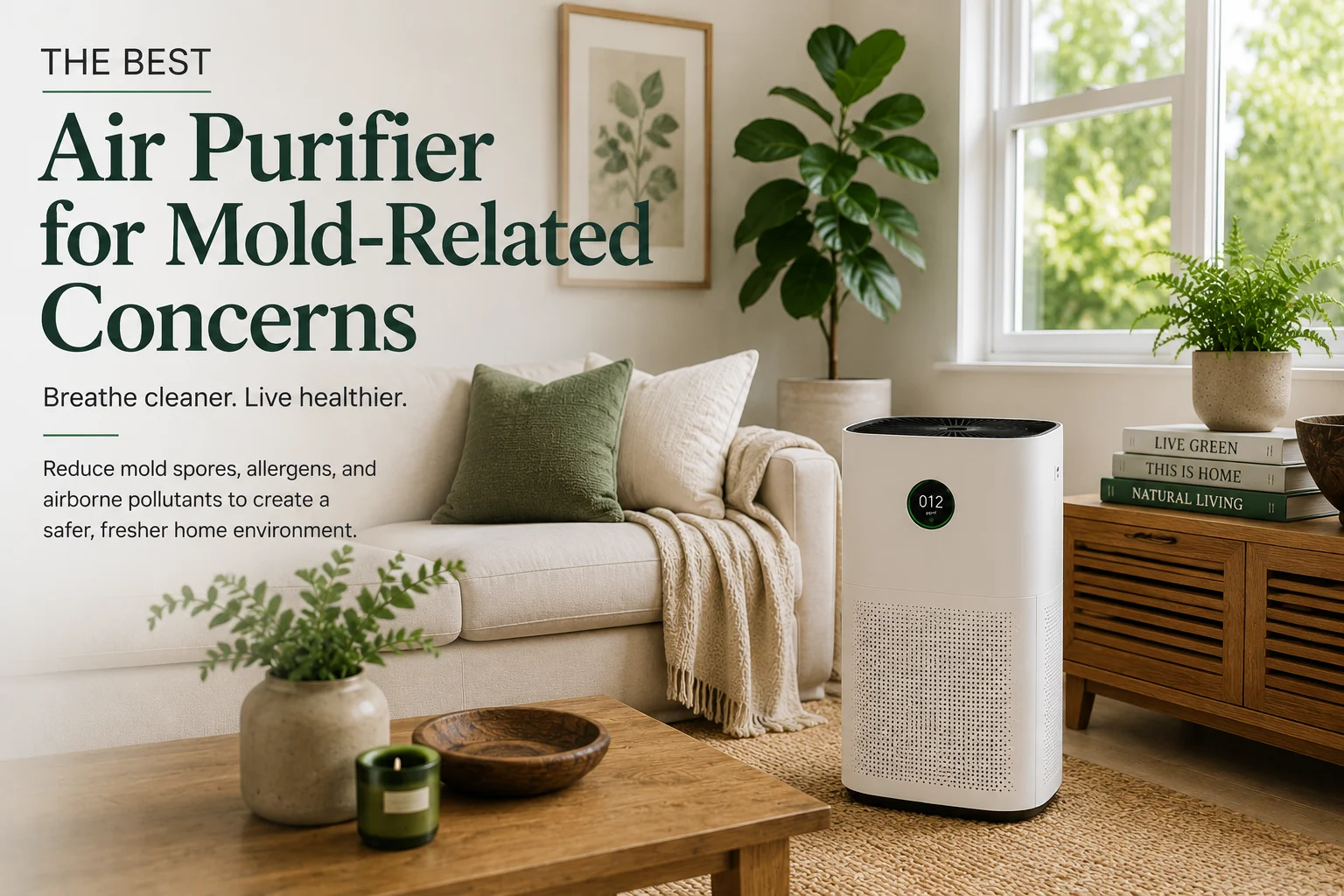
If you are researching the best air purifier for mold-related concerns, you are probably trying to make a smart decision before spending money on the wrong tool.
Quick Answer
An air purifier can help with mold-related concerns when the goal is improving airborne particle filtration, especially in stale or musty rooms. It is most useful when combined with moisture control, because mold problems usually begin with dampness, not just particles in the air.
Quick Tips
- An air purifier is not a fix for a leak or damp wall.
- Room size matters more than many buyers expect.
- Filter access and maintenance should not be an afterthought.
- Moisture control still comes first in most mold-related situations.
What an air purifier can and cannot do
An air purifier can support cleaner-feeling air and reduce airborne particles. What it cannot do is dry out walls, stop window condensation, or fix a damp basement. If the room has too much humidity, the main problem is still moisture.
When an air purifier makes sense for mold-related concerns
- You want better air handling in a stale room
- You have already addressed moisture or are addressing it now
- The problem is more about air feel than wet surfaces
- You want a bedroom or living-space tool rather than a basement moisture device
What to look for before buying
Room size
The purifier should match the room it will actually be used in.
Filter quality
Filter quality and replacement practicality matter more than hype.
Noise level
Noise matters especially in bedrooms and occupied spaces.
Maintenance
Easy filter access and realistic upkeep are part of a good buying decision.
| Buying factor | Why it matters |
|---|---|
| Room size | Helps match purifier to actual space |
| Noise | Important for bedrooms and daily use |
| Filter access | Affects maintenance and long-term use |
| Main problem | Moisture vs air particles |
Basement vs bedroom use
A basement often raises the question of whether the real problem is moisture or air feel. A bedroom may lean toward a purifier if it feels stale rather than damp, but a damp bedroom still deserves humidity control first.
Air purifier vs dehumidifier for mold-related situations
- Choose a dehumidifier when the room is damp, clammy, musty, or condensation-prone
- Choose an air purifier when the room needs better airborne particle handling and fresher-feeling air
- Some spaces may benefit from both, but they are not interchangeable
Common buying mistakes
- Buying a purifier for a moisture problem
- Ignoring room size
- Underestimating maintenance
- Choosing on hype instead of room fit
Important
A purifier does not remove humidity from the air, and a dehumidifier does not clean dust from the air. Mixing up those jobs leads to poor results.
Useful next reads are Dehumidifier vs Air Purifier, Best Dehumidifier for Home, and Signs Your Home Has Too Much Humidity.
Frequently asked questions
Do air purifiers help with mold?
They can help with airborne particles, but they do not fix moisture, which is the main cause behind mold-friendly conditions.
Is an air purifier better than a dehumidifier for mold?
Usually not if the room is damp. A dehumidifier is often more directly useful for moisture control.
Can an air purifier help a musty room?
It may help the room feel cleaner, but if the smell is moisture-related the dampness still needs attention.
What matters most before buying?
Room size, noise, maintenance, and whether your real issue is moisture or airborne particles.
Need to decide whether the room really needs moisture control first?
The cleaner the diagnosis, the better the buying decision. Start with the dampness clues before you chase the trendiest device.