What Is a Humidity Meter and Do You Need One?
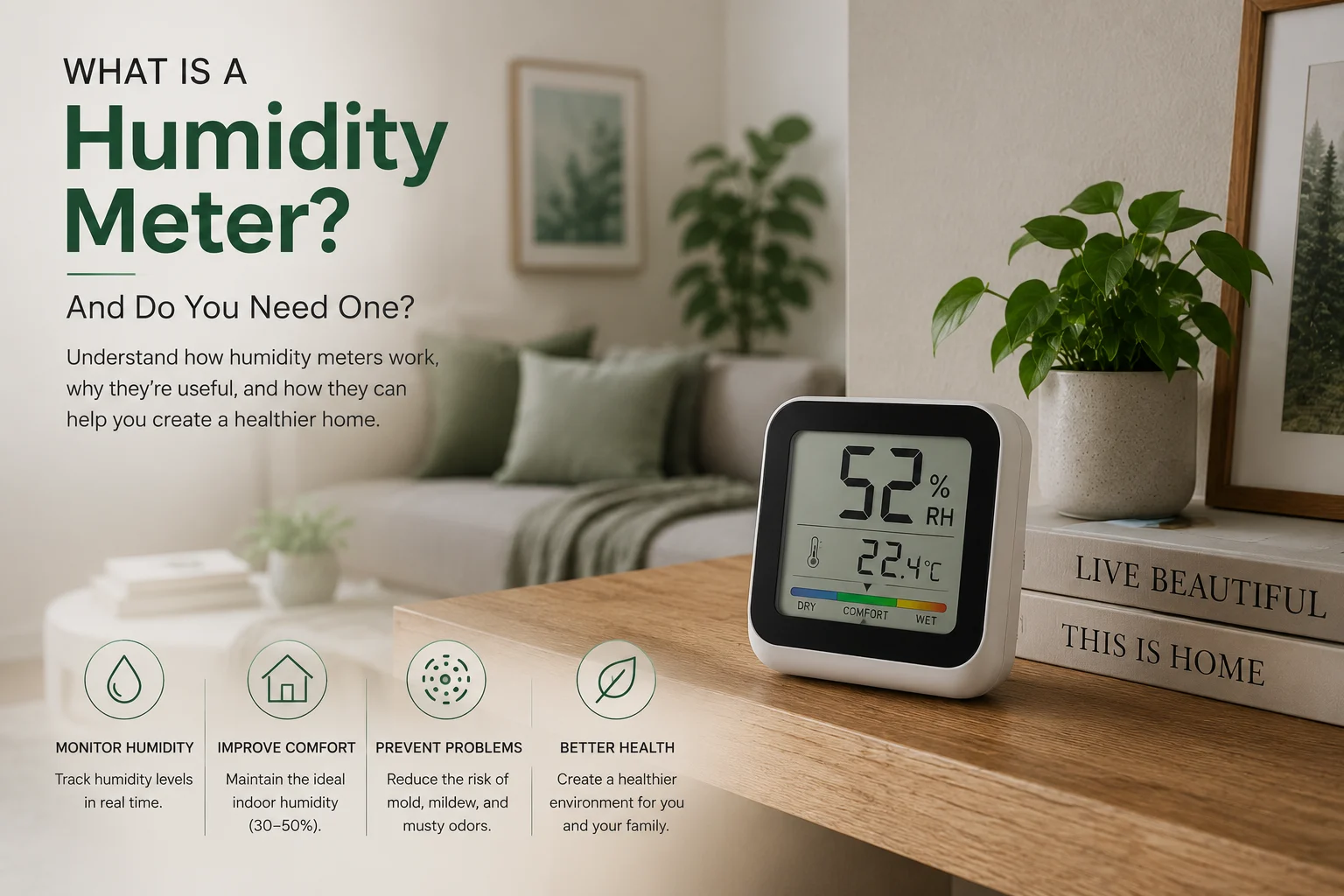
If you have ever wondered what is a humidity meter, the simple answer is that it is a tool that tells you how much moisture is in the air. You may also see it called a hygrometer.
Quick Answer
A humidity meter tells you the relative humidity in a room. It is useful when your home feels damp, windows sweat, a room smells musty, or you want better proof of what the air is doing before buying products or changing routines.
Quick Tips
- A humidity meter measures air moisture, not wall moisture.
- It is one of the cheapest useful tools for indoor moisture diagnosis.
- Use it in more than one room if possible.
- It is especially helpful for bedrooms, basements, and condensation-prone spaces.
What a humidity meter actually measures
A humidity meter measures relative humidity, which is the amount of moisture in the air compared with what the air can hold at that temperature.
For everyday home use, it gives you a practical number that helps you judge whether a space is in a reasonable range.
When a humidity meter is worth using
- Your windows keep sweating
- A room feels damp or heavy
- You have a musty smell in one room
- You are thinking about buying a dehumidifier
What a humidity meter can and cannot tell you
| A humidity meter can help answer | A humidity meter cannot answer |
|---|---|
| Is this room too humid? | Is this wall wet inside? |
| Does humidity spike at certain times? | Is there hidden moisture in drywall? |
| Is one room different from another? | Is mold definitely present? |
How to use one in your home
Place it in the room you are concerned about and give it time to stabilize. Compare the reading with other rooms and with how the room behaves through the day, after showers, during wet weather, and overnight.
Where to place it for better readings
Keep it at normal room height, not directly beside a window, heater, vent, or steamy bathroom doorway. You want a room reading, not a distorted micro-zone reading.
Common mistakes people make
- Using only one room reading and assuming it explains the whole house
- Putting it too close to a window or vent
- Expecting it to diagnose hidden leaks
- Taking one isolated number too seriously
When you may need a different tool instead
If your main concern is a damp wall, stained drywall, or floor area you suspect is wet, a humidity meter may not tell you enough. That is when a moisture meter becomes more useful because it checks material moisture rather than air humidity.
| Question | Why it matters |
|---|---|
| Is one room more humid than others? | Helps isolate the problem |
| Does humidity rise overnight? | Useful for bedrooms |
| Does it spike after showers or cooking? | Shows source patterns |
| Does the basement stay higher all day? | Good clue for dehumidifier need |
| Does ventilation lower the reading? | Helps test what works |
Good follow-ups are What Is the Ideal Indoor Humidity Level for a Home?, Signs Your Home Has Too Much Humidity, and Best Dehumidifier for Home. If you want to use the tool more confidently, also see where to place a humidity meter for accurate readings, how to use a humidity meter in different rooms, and how a humidity meter compares with a moisture meter.
Frequently asked questions
Is a humidity meter the same as a hygrometer?
For home use, yes. People often use the terms interchangeably.
What is a good humidity level indoors?
Many homes do well around 30% to 50%, depending on season and room behavior.
Do I need a humidity meter if I already have a dehumidifier?
Yes, it can still help you understand whether the room is actually improving.
Can a humidity meter tell me if I have mold?
No. It can tell you if the air is humid enough to support moisture problems, but it does not detect mold directly.
Want to compare your reading with a useful target range?
The next useful step is understanding what humidity level usually makes sense for comfort, condensation control, and healthier rooms.
Where should I place a humidity meter for a basement reading?
Place it in the part of the basement you actually want to understand, away from direct vents, off the floor, and not pressed against a cold wall or window.
How long should I wait before trusting the reading?
Give it enough time to settle in the room, especially if you have just moved it. A short wait is fine for a quick check, but comparing readings across the same area over time is more useful than one fast number.
Do I need one meter or more than one in the house?
One can be enough for spot checks, but more than one helps if different rooms behave very differently. Basements, bedrooms, and bathrooms often need their own readings.
At what reading should I start considering a dehumidifier?
If a basement or other problem room stays too damp even after better airflow, it may be time to compare where to place a humidity meter for a more reliable check and then consider best dehumidifier for basement options if the pattern keeps returning.