Bathroom Condensation After Shower: What It Means
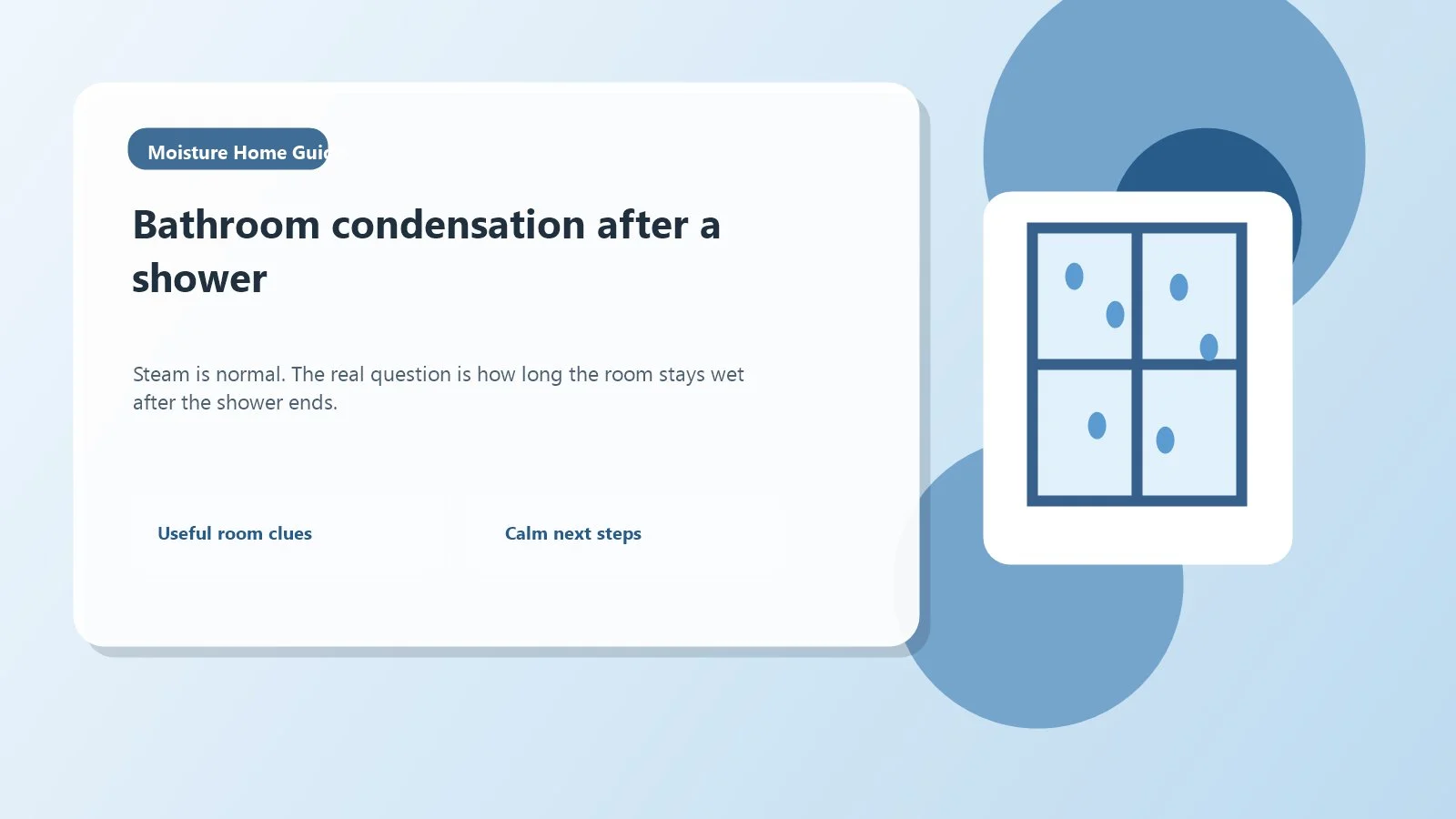
Bathroom condensation after shower use is one of the most normal moisture events in a home, but it is also one of the easiest to underestimate. The question is not whether condensation happens. The question is whether your bathroom is clearing that moisture fast enough.
Quick Answer
Some bathroom condensation after a shower is normal. The problem starts when the room stays wet too long, the walls and ceiling hold moisture, or mold-prone areas keep returning because steam is not clearing properly.
Quick Tips
- Condensation is not the same as a leak, but it can still cause damage over time.
- A fan that runs too little is one of the most common reasons bathrooms stay damp.
- Repeated wet walls matter more than one steamy shower.
- Drying time is a useful clue.
Why condensation forms after a shower
A shower fills the bathroom air with warm moisture. When that humid air touches cooler surfaces such as mirrors, windows, painted walls, or ceiling corners, it condenses into visible water.
What is normal and what is not
- A mirror that fogs briefly right after a shower can be normal
- A little condensation on a colder bathroom window can be normal too
- Walls staying wet, corners feeling damp later, or repeated drips are less ideal
Signs bathroom moisture is lingering too long
- The room still feels damp after normal use
- The fan does not seem to change the room much
- Water keeps collecting in the same places
- Mold-prone spots keep returning around grout, frames, or corners
Common causes of repeated condensation
| Cause | Why it matters |
|---|---|
| Weak ventilation | Steam cannot leave the room quickly enough |
| Cold surfaces | Windows and exterior walls collect moisture more easily |
| Closed-up room habits | Steam stays trapped in a small space |
| High whole-home humidity | The bathroom may only be showing a wider problem |
What to do first
Start with drying time. Run the fan longer, open the room up once privacy is no longer needed, and pay attention to where condensation forms first and which surfaces stay wet the longest.
Common mistakes
- Assuming all condensation is harmless
- Turning the fan off too quickly
- Ignoring how long the room stays damp
- Blaming recurring mold only on grout cleaning
Important
A bathroom can look clean and still stay too damp too often. Repeated wet walls and ceiling corners matter more than one steamy shower.
What can happen if you ignore it
The usual effects are mildew-prone grout, musty smells, recurring spots, peeling paint, and damp ceiling edges. Over time the room simply repeats the same moisture cycle every day.
Bathroom condensation checklist
| Check | What to watch | Why it matters |
|---|---|---|
| Mirror | How fast it clears | Basic moisture clue |
| Window | Drips or repeated fogging | Cold-surface condensation |
| Ceiling corners | Dampness or spots | Lingering steam |
| Fan use | Run time and effectiveness | Main ventilation control |
| Room smell | Musty later in the day | Moisture staying too long |
Useful follow-ups are How to Prevent Mold in the Bathroom, How to Stop Condensation on Bathroom Walls, and Signs Your Home Has Too Much Humidity.
Frequently asked questions
Is bathroom condensation after a shower normal?
Some is normal. The issue is when it lingers too long or keeps wetting the same surfaces every day.
How long should a bathroom stay steamy?
There is no perfect rule, but if the room still feels wet much later, it is probably not clearing moisture well enough.
Can condensation cause mold in a bathroom?
Yes. Repeated dampness on walls, ceilings, grout, and frames can encourage mold growth over time.
Is condensation the same as a leak?
No, but it can still create damage if the room stays wet too often.
Need to stop the damp cycle at the wall level?
If the room keeps wetting the same surfaces after every shower, the next useful step is usually better bathroom-specific moisture control.