Bedroom Humidity: Why It Feels Damp at Night
Bedroom humidity is one of those home issues people notice before they understand. The room does not look flooded. Nothing is visibly leaking. But by morning, the air feels heavy, the window may be wet, the corners feel cool, and the room somehow seems less fresh than the rest of the house.
Quick Answer
If your bedroom feels damp at night, the room is likely holding more moisture than it can comfortably handle once temperatures drop and airflow slows down. The most common fixes are better ventilation, less trapped moisture, improved airflow near walls and windows, and humidity monitoring.
Quick Tips
- If the room feels damp every morning, check the windows first.
- Closed blinds, thick curtains, and packed corners can trap moisture overnight.
- Bedroom humidity often gets worse in colder weather.
- A simple hygrometer can tell you more than guesswork.
Why bedroom humidity feels worse at night
Nighttime changes the room in several small but important ways. Temperatures often drop near windows and exterior walls, airflow becomes weaker, and a closed room keeps collecting moisture from breathing for hours.
That is why a bedroom can feel fine in the afternoon and damp by sunrise. The room is not necessarily wet. It is simply trapping more moisture than it can manage well overnight.
Common signs of high bedroom humidity
Damp air and a stuffy feel
A humid bedroom often feels heavier and less fresh than the rest of the home, especially first thing in the morning.
Window condensation in the morning
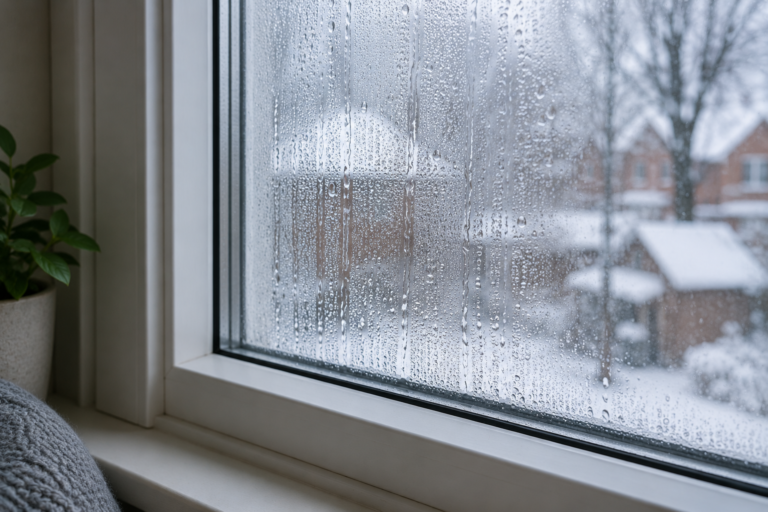
If the inside of the glass is fogged or wet when you wake up, the room is likely carrying too much moisture overnight.
Musty smell near walls or closets
A faint stale smell often points to moisture lingering too long in enclosed or low-airflow parts of the room.
Bedding that feels cool or clammy
Sheets and blankets can feel less crisp in a room that stays too humid while you sleep.
What causes high humidity in a bedroom
- Poor ventilation in a room that stays closed for long stretches
- Moisture from breathing in a tightly shut room
- Cold walls and windows that collect condensation more easily
- Humidity drifting in from showers, cooking, indoor laundry, or a damp basement
| Cause | Why it matters at night |
|---|---|
| Closed room and low airflow | Moisture has fewer ways out |
| Cool window glass | Condensation forms more easily by morning |
| Moisture from the rest of the home | Bedrooms often show the wider indoor pattern overnight |
What to do first if your bedroom feels damp
Check the window in the morning, look at exterior corners, and compare the bedroom to another room in the house. If possible, use a hygrometer for a few days so you can stop guessing and start seeing a pattern.
Open the room up during the day when conditions allow, improve airflow near cold walls, and avoid trapping the window behind heavy fabrics.
Mistakes that make bedroom humidity worse
- Keeping everything sealed too tightly for comfort or warmth
- Pushing furniture tightly against colder exterior walls
- Ignoring repeated window moisture because it wipes away easily
- Treating a musty smell as the only issue instead of the moisture pattern behind it
Important
If the room feels damp every morning and the same corners or windows keep showing moisture, treat that as a repeat pattern rather than a comfort quirk.
What can happen if you ignore it
The usual result is that the symptoms gradually become more visible: repeated condensation, stale-smelling fabrics, damp corners, mold-prone window areas, or patches behind furniture. If that pattern is already reaching the wall surface, compare it with bedroom wall mold caused by overnight humidity.
Bedroom humidity checklist
| Check | What to look for | Why it matters |
|---|---|---|
| Window glass | Moisture in the morning | Clear sign of overnight humidity |
| Exterior wall corners | Cool, damp, or stale-smelling spots | Common hidden condensation areas |
| Closet area | Trapped air, musty smell | Low airflow can hold moisture |
| Furniture placement | Large items against outside walls | Can block circulation |
| Room airflow | Closed room all night and day | Lets humidity build up |
If you want the most useful next steps, compare What Is the Ideal Indoor Humidity Level for a Home?, Signs Your Home Has Too Much Humidity, and Best Dehumidifier for Home.
Frequently asked questions
Why does my bedroom feel damp only at night?
Because the room usually has less airflow, cooler surfaces, and more trapped moisture overnight than during the day.
Is bedroom condensation always a sign of high humidity?
Most of the time, yes. Cold windows matter too, but high room humidity is usually part of the picture.
Can bedroom humidity cause a musty smell?
Yes. Lingering moisture can make fabrics, corners, and closets smell stale or damp.
Should I use a hygrometer in the bedroom?
Yes. It is one of the easiest ways to confirm whether the room really is staying too humid.
Ready to make the room feel drier by morning?
If your bedroom feels damp night after night, treat it as a moisture pattern instead of a comfort mystery. A few targeted checks can change the room fast.