How to Reduce Moisture in Your Home Naturally
Quick Answer
Natural moisture reduction starts with everyday habits: better ventilation, less trapped steam, more consistent airflow, and fewer routines that leave rooms damp for hours.
A lot of homes become damp gradually. It is not always one dramatic leak. Sometimes the issue is simply that indoor moisture keeps building faster than the house can get rid of it.
The habits that matter most
- Use extraction after showers and cooking
- Avoid drying large amounts of laundry indoors without airflow
- Let damp rooms recover instead of staying sealed up
- Reduce moisture traps around windows, curtains, and crowded corners
| Quick fix | What it changes |
|---|---|
| Short bursts of ventilation | Helps humid air leave before it settles |
| Better bathroom drying routines | Reduces steam lingering on surfaces |
| More open airflow | Stops damp pockets from building in still rooms |
Quick Tip
Natural fixes are most useful when the problem is room behavior and trapped humidity, not when a hidden structural water source is involved.
When natural fixes are not enough
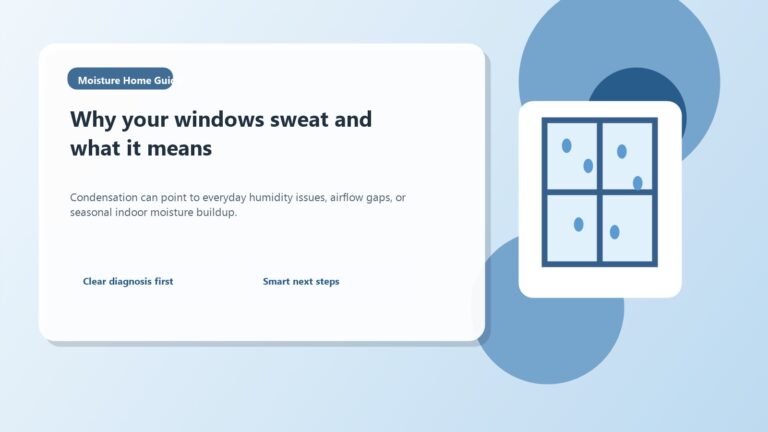
If windows keep sweating, the air smells musty, or several rooms feel damp even after you improve routines, the home may need active humidity control or a closer diagnosis.
Useful next reads are Why Do My Windows Sweat?, Best Dehumidifier for Home, and How to Tell If You Have Mold Behind Walls. If you want to measure whether those changes are actually helping, start with what a humidity meter can tell you and where to place one for useful readings.
Important
Natural improvements should make the home easier to dry out. If the same room keeps feeling damp anyway, the problem may be bigger than habit changes alone.
Frequently asked questions
Can I reduce humidity naturally without buying anything first?
Often yes, especially if the issue comes from moisture-heavy habits and weak airflow rather than a persistent damp source.
How long should natural fixes take to show results?
Some rooms improve quickly, but repeated patterns over days and weeks tell you more than one evening of testing.
Will natural fixes stop all condensation?
Not always, but they often reduce the moisture load enough to make condensation easier to manage.
What if the room still feels damp?
Then it may be time to measure humidity or consider whether a dehumidifier or deeper diagnosis makes more sense.
Ready for the next step?
If natural changes are helping but not solving the whole issue, compare the dehumidifier features that matter before you buy.