What Is the Ideal Indoor Humidity Level for a Home?
Indoor humidity affects more than comfort. It influences condensation, stale air, musty smells, and how likely surfaces are to stay damp long enough for mold to grow.
That is why a healthy home is not just about warmer rooms or cleaner windows. It is also about keeping indoor moisture in a range that feels livable without quietly feeding damp problems.
The challenge is that there is no one perfect number for every home, every season, and every room. What matters is understanding the useful target range and how to respond when your home keeps drifting above it.
Quick Answer
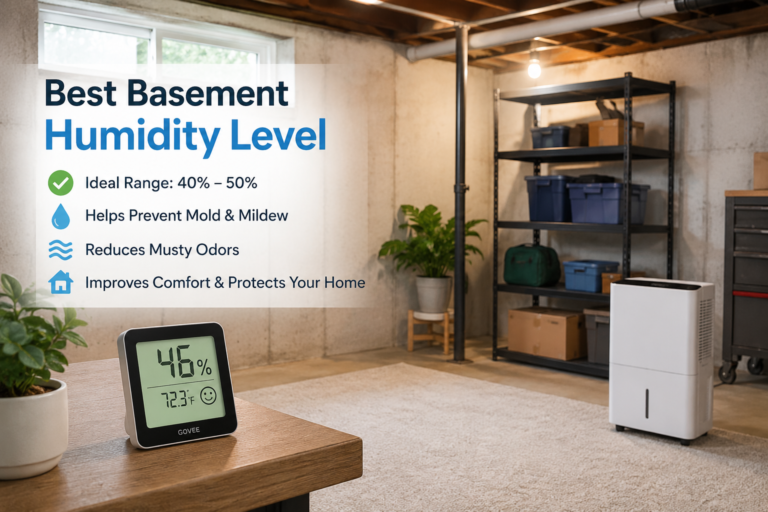
For most homes, a practical indoor humidity target is around 40% to 50%, with some seasonal flexibility. Levels that stay too high for too long make condensation, damp smells, and mold more likely.
A practical humidity range for most homes
For everyday comfort and moisture control, many homes do well when indoor humidity stays roughly in the 40% to 50% range. In colder weather you may aim a little lower to reduce condensation risk. In warmer weather, a stable mid-range can still work well if the home does not feel damp.
| Humidity level | What it often means |
|---|---|
| Below 35% | Air may feel dry, but condensation risk is usually lower |
| 40% to 50% | A practical comfort range for many homes |
| 50% to 60% | Can be acceptable in some seasons, but watch for condensation |
| Above 60% | Moisture problems become more likely if it stays there |
Quick Answer
You are not chasing perfection. You are trying to keep humidity low enough that windows, corners, and cooler surfaces can dry properly.
Why indoor humidity matters more than people think
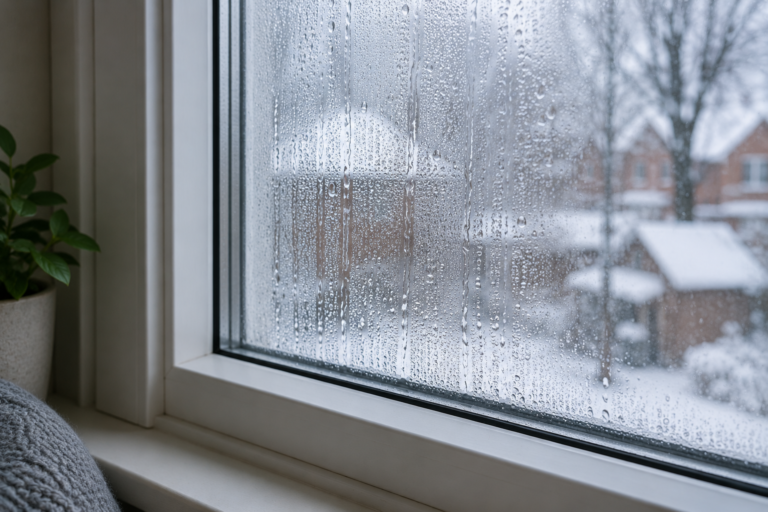
Humidity influences how a home feels, but also how it behaves. Air that is consistently too damp makes it easier for moisture to settle on windows, walls, and cold surfaces.
- Windows may sweat more often
- Rooms can smell stale or musty
- Bathrooms and bedrooms may develop recurring mold
- Laundry drying indoors can affect the whole home
- Basements can feel damp even when no leak is obvious
That is why humidity level belongs in the same conversation as condensation, airflow, and mold prevention.
Room-by-room clues that humidity may be too high
| Room | Common clue |
|---|---|
| Bedroom | Morning window condensation |
| Bathroom | Slow-drying steam and repeated mold spots |
| Basement | Musty smell and a cool damp feel |
| Closets or storage areas | Stale odor and trapped dampness |
If those signs are showing up, the number on a humidity meter becomes much more useful because it gives context to what you are already seeing.
What to do if your home keeps running too humid
- Reduce moisture-heavy habits where possible
- Improve extraction and airflow after showers and cooking
- Keep an eye on overnight condensation patterns
- Use a dehumidifier if the home stays damp despite better routines
If your windows already sweat regularly, read why windows sweat. If the air feels damp throughout the home, compare that with the signs of excess indoor humidity and natural moisture reduction habits.
Important
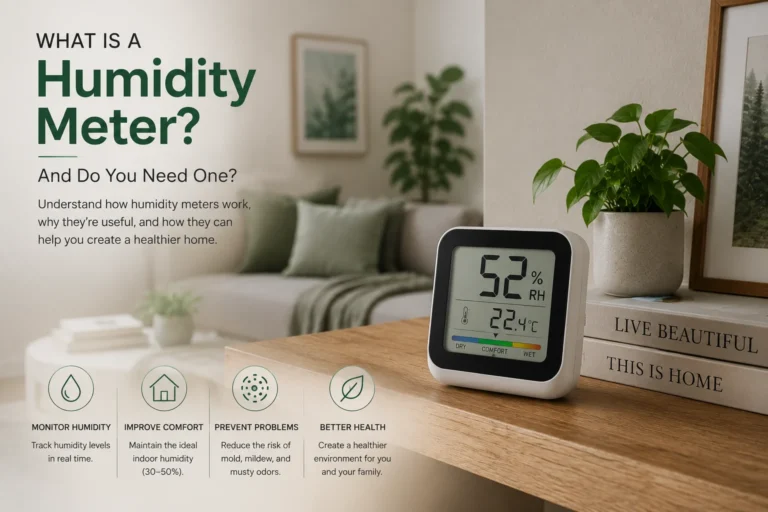
A number on a hygrometer matters most when you compare it with what the room actually looks and feels like. A reading is useful because it supports the pattern, not because it tells the whole story by itself.
When a hygrometer becomes worth using
A hygrometer is especially useful when you are dealing with repeated condensation, hidden damp suspicion, or a room that never quite feels dry. It helps you confirm whether the air is actually staying too humid or whether the issue may be more localized.
It is one of the simplest ways to move from guessing to understanding how your home is behaving day after day.
Frequently asked questions
Is 50% humidity always okay indoors?
Often yes, but context matters. In colder weather, even 50% can still contribute to condensation on colder surfaces in some homes.
Can humidity be too low as well?
Yes. Very dry air can feel uncomfortable, but this site focuses mainly on the moisture side of the equation and preventing damp problems.
Can one room be too humid even if the rest of the house is fine?
Absolutely. Bedrooms, bathrooms, and basements often behave differently from the rest of the home.
Do I need a fancy humidity meter?
Not necessarily. A simple, reasonably reliable hygrometer is often enough to spot patterns that help guide better decisions.
Want to compare the warning signs with your own rooms?
Use the symptom guide next if you are noticing condensation, musty air, or damp-feeling spaces in more than one part of the home.